
Séance Centre
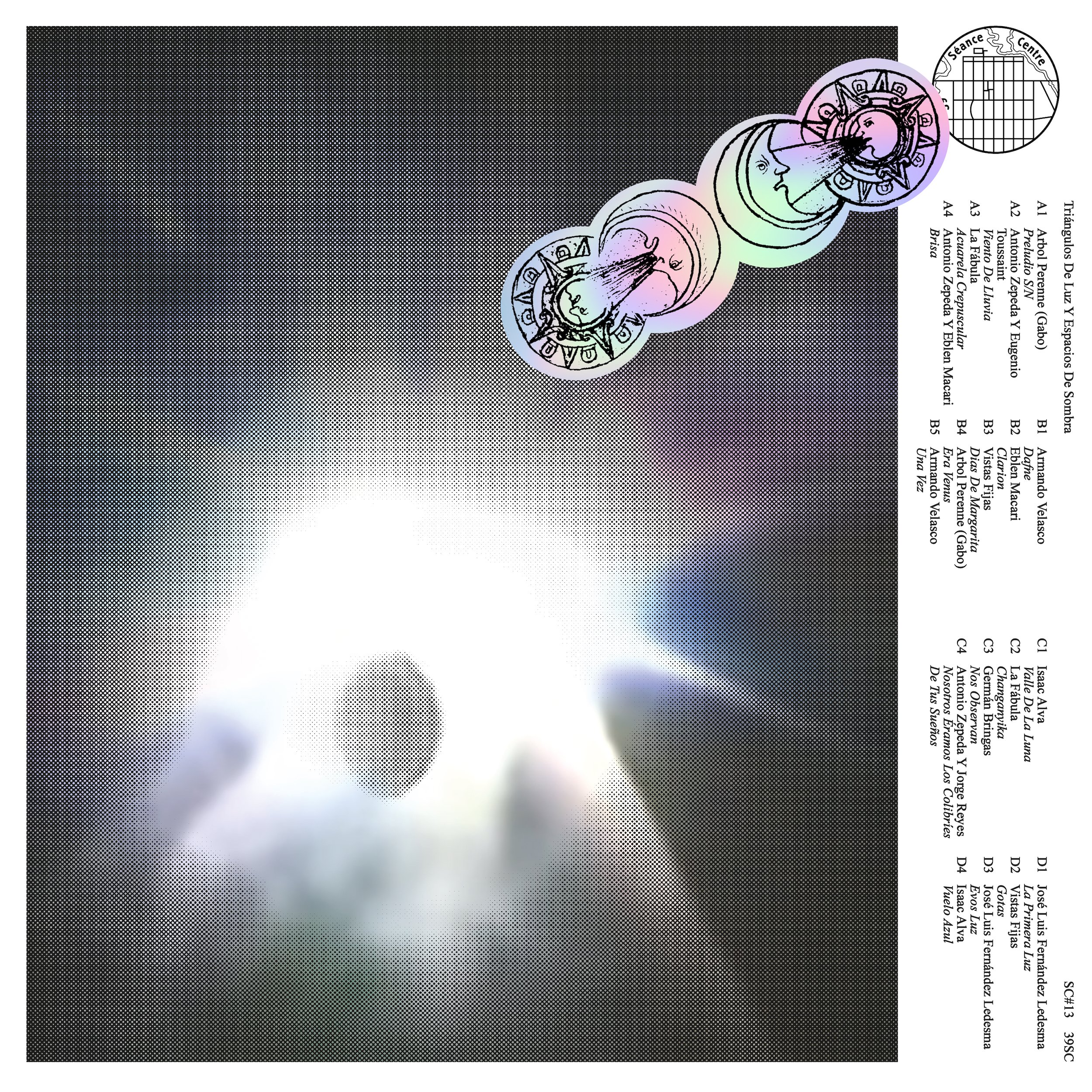
Triángulos De Luz Y Espacios De Sombra (Triangles of Light and Spaces of Shadow) is a collection of visionary Mexican electronic music sourced from obscure cassettes, CDs, private pressings, and personal archives, presented by Séance Centre and Smiling C. These works trace an expansive scene of prescient musicians who created a unique speculative cosmology, forging Mesoamerican mythologies with innovative sonic technologies.
From the mid-80s through the 90s, a network of Mexican musicians embarked on a journey to craft a musical expression distinct from the mainstream musical culture that dominated the airwaves and record industry. Based around practices of collaboration, ethnomusicology, electronic experimentation and home-recording, these artists traversed territories at the very edges of genre and musical form. Myth-scientists Antonio Zepeda, José Luis Fernández Ledesma, Jorge Reyes, Isaac Alva, and La Fábula venture into the periphery of the new age, incorporating Pre-Columbian rhythms and melodies into their dream-like compositions. Vistas Fijas, Armando Velasco, Eblen Macari, and Arbol Perenne (Gabo) move through radical new wave territories, utilizing guitars and drum machines to map their musical chronicles. Germán Bringas and Eugenio Toussaint traverse the jazz landscape, blending horns with electronics, improvising long uncharted expeditions. Pinning down a unified sound for these artists is challenging, yet they collectively cohabitate the capacious space of "ambient," employing diverse expressions through various imaginative modalities. What distinguishes these artists is a distinctly transhistorical approach which vividly imagines sonic possible worlds.
In an attempt to situate themselves within a culturally and historically complex landscape, many of the artists on the compilation reactivate ancient Mesoamerican music traditions, those of the Aztecs, Maya, and Olmecs. Their electronic compositions are intricate tapestries woven with the haunting melodies of pre-Hispanic flutes and ocarinas, resonating alongside the echoes of ancient percussive marvels like the teponaztli and huéhuetl. Ritualistic chants, undulating synths, and atavistic rhythms intertwine, conjuring a hypnotic mosaic of chimeric sound. Natural and acoustic sounds are juxtaposed within a synthetic habitat, as if towering skyscrapers cast shadows across ancient pyramids. Rather than longing for an impossible past, these works evoke fantastical visions suspended in dreams, glimpses into the mythical realm of the hummingbirds.
The title "Triángulos De Luz Y Espacios De Sombra" (Triangles of Light and Spaces of Shadow) is inspired by a public access TV show of the same name that showcased several artists featured in this compilation. Imagining triangular prisms of light superimposed on otherworldly shadows feels apt for these illusory and phantasmagoric sounds. The space between these two opposing but interdependent images is the resonant juncture where these artists create their auditory oracles. This compilation highlights the prophetic luminaries of this underground community of musicians, with many of these songs previously unreleased or only available on fugitive formats until now.
This double LP release features 17 tracks remastered from reel-to-reel, DAT, and cassette masters. It includes inserts with an essay by Mexico City based music journalist David Cortés in both Spanish and English, accompanied by archival photos of the artists and artifacts featured on the compilation. The first edition comes adorned with a luminescent sticker illustrating a solar eclipse.
RIYL: Outro Tempo, Durutti Column, Jon Hassell, Música Esporádica, Finis Africae
Co-release by Séance Centre & Smiling C
Purchase digital on Bandcamp
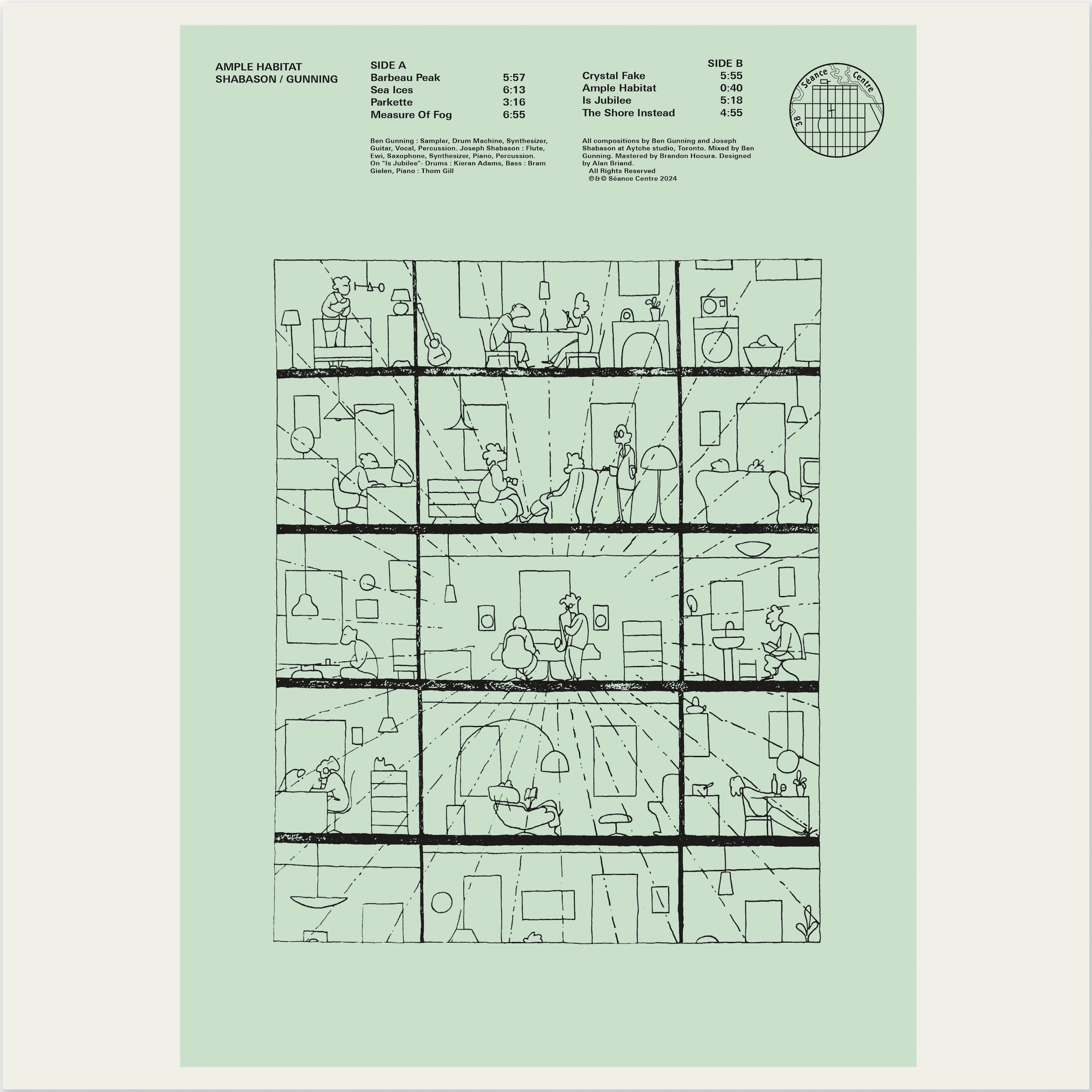
Sophomore release from Toronto dream-duo Joseph Shabason and Ben Gunning, this time a more cosmopolitan affair, mapping fragmented cityscapes from bent electronics and late-night FM jazz transmissions.
The boys are back in town. After recording their debut in a remote cottage in Northern Ontario, the duo relocated their jams to Shabason’s Toronto studio where they gained unlimited access to a virtual cornucopia of analog and digital gear and had the time to really push those instruments to the brink. In the crisp autumnal sessions the duo consciously set out to make Ample Habitat with a fresh slate; not a single melody or patch was smuggled in on a USB stick. Fuelled with off-brand club soda, the ethos was to infuse the sessions and the music itself with a sense of discovery. Another perk of the new locale was being closer to friends and neighbours; TO music-scene luminaries Kieran Adams, Bram Gielen, and Thom Gill dropped in, rounding out a full jam band for the convivial B-side surprise “Is Jubilee.” Although the album calls on a wild menagerie of digital voices, the heart is warm and human, favouring performance and play over presets and quantization. If J Dilla was able to teach an MPC jazz, Shabason / Gunning aim to teach their hardware the ECM version.
RIYL: Rephlex, ECM, The Sea & Cake, Max Ernst
Limited edition of 200 LPs with risograph artwork and hand-stamped covers.
Purchase digital on Bandcamp
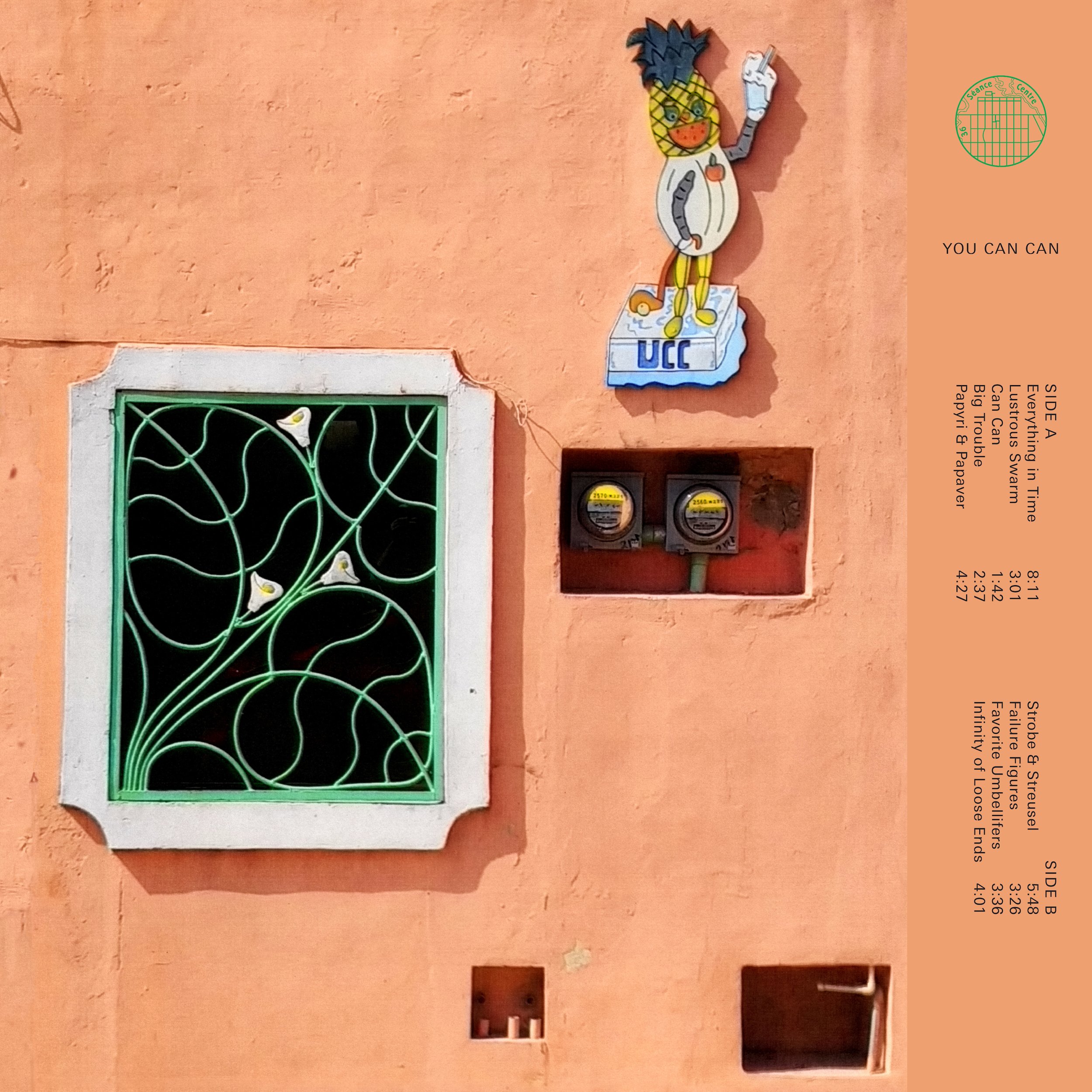
You Can Can is an echoed affirmation, an album which traces song forms around silence, field recordings, and degraded analog memories. This is folk music transmogrified and mutated, as if recorded and reconstructed in Pierre Schaffer’s GRM studio.
Not your typical Mariposa folk duo, the group is comprised of Toronto avant-music scene stalwarts, vocalist Felicity Williams (Bernice, Bahamas) and bricolage artist and synthesist Andrew Zukerman (Fleshtone Aura, Badge Epoch). The album feels like a somnambulant conversation, fragmented and half-remembered with Williams’ vocals traveling through a landscape of field recordings and Zukerman’s saturated concrète topographies. It is an electro-acoustic assemblage, both analog and digital, comprised of air, electricity, minerals, wood, and water. Although the album nods towards traditional forms of folk and musique concrète (if at this point it can be called a traditional form), it is outwardly and inwardly contemporary; non-linear, citational, opaque, and sui generis. In a way it feels like a sonic index of the narrative experiments found on the infamous Language school-related publisher The Figures, in the work of Lyn Hejinian, Clark Coolidge, and Lydia Davis. In the musical continuum, the album picks up where Linda Perhacs left off in the early 70’s—explored by Gastr Del Sol in the ‘90s—a convergence of rural acoustic idioms and urban avant-electronics. This is country music for the discerning cosmopolitan citizen of the 21st Century.
500 pressing with risograph printed insert with lyrics.
Purchase digital on Bandcamp
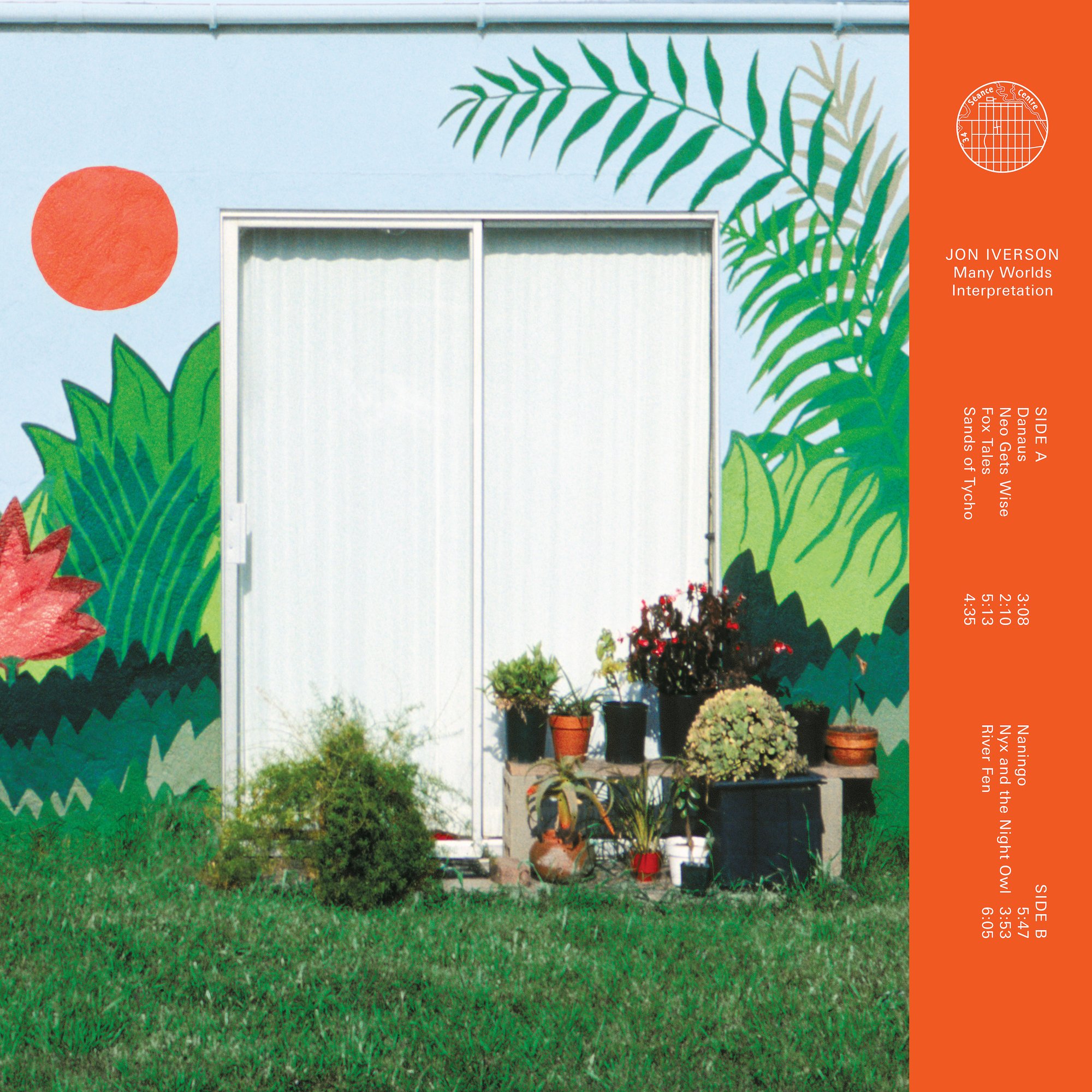
Many Worlds Interpretation is a collection of cosmic Americana for electronics, guitar, and percussion culled from Jon Iverson’s extensive home-studio archive.
1984, Los Osos, California. In a small cinderblock cottage, hand-painted with bright psychedelic flora, Jon Iverson created vibrant new worlds. He spent long days and nights immersed in sound, perfecting home recording on his 8-track reel-to-reel, combining his love for kosmische and Berlin School electronics with an infatuation with ethnographic sounds and expansive guitar music. In a duo with fellow sonic traveler Thomas Walters, Iverson released missives from the studio on a self-titled LP released on country legend Guthrie Thomas’ Eagle Records. That release featured three electro-acoustic compositions (“Naningo”, “River Fen”, and “Fox Tales”) as well as a gathering of guitar duo tapestries. Many Worlds Interpretation re-imagines those interplanetary works alongside several unreleased compositions that also feature synthesizer, guitar, and percussion, creating a re-visioned album which leans into Iverson’s electronic studio wizardry.
All songs have been carefully transferred from analog tape to high resolution digital, retaining their vintage studio warmth, but mixed and mastered for modern ears and audio systems. The album is pressed at 45rpm, further enhancing the audiophile experience.
RIYL: Innovative Communication, Eblen Macari, Priscilla Ermel, Popol Vuh, Steve Tibbetts
—
Artist Statement
I worked in a Harley Davidson parts warehouse in the summer of 1976 in the San Francisco Bay Area. The goal was to save enough money to buy transportation for college and a Teac 4 track 1/4" reel to reel tape machine. By September there was a rusting monkey-vomit green car in the driveway and shiny new Teac with a Sony condenser microphone in the bedroom. At this point I had been playing guitar for a dozen years and like most children of the sixties, dreamed of joining a band.
Went to college instead to study business.
But all was not lost. 1978-1979 was spent as Weird Al Yankovic's roommate and we recorded and created enough songs to play shows around San Luis Obispo, California, where we were attending college. Many of those recordings have yet to be heard by the public, including the first performances of My Bologna and many other parodies of pop songs of the day. We sent tapes to Dr. Demento, we auditioned for The Gong Show and were barred from playing at the local college after one memorable performance. Wild times.
I, however, was more intent on working on "serious" music, with albums from Vangelis, Tangerine Dream and Jean Michel Jarre providing inspiration. DJing at the local college radio station and then public radio outlet provided exposure to an endless stream of obscure albums (Sky Records from Germany was a particular favourite). Most of them would never make it to the air, but my buddies and I would pass them around like exotic treasure.
Fast forward a couple more years and I had picked up a Mini-Moog and eventually a Prophet V synthesizer as well as starting a collection of instruments from around the world. The Teac and synths formed the basis for a growing DIY studio that had taken over a modest-size garage (pictured on the cover) that had been converted into a two room cottage in Los Osos, California.
The Teac was eventually joined by a rented Otari 1/2" 8-track and then finally a vintage MCI JH-100 2" 16-track. The compositions on this album were recorded on these three machines between 1982 and 1989. At some point an Apple II computer with Alpha Syntauri sound card and keyboard were added and then later the first personal computer sampling hardware/software kit, the Decillionix DX-1. The DX-1 forms the rhythm track for “Fox Tales” and the Alpha Syntauri was programmed to create the pulsing synth for “Naningo”. “River Fen” was tracked with both the Alpha Syntauri and the Prophet V.
I knew this music wasn't commercial, but didn't care. It was inspiring working with the first computer-based synths and semi-pro gear. Home studios were still rare in the early 80s until the Tascam Portastudio blew the DIY door wide-open. But I was more interested in sound quality so stuck with reels of tape instead of lower fidelity cassettes.
During the time these songs were recorded, I was also collaborating with my good friend and mandolinist, Tom Walters. “River Fen”, “Naningo” and “Fox Tales”, were solo recordings that also ended up on the first Iverson & Walters album, First Collection. The other four pieces on this new LP were never fully finished or released until now.
— Jon Iverson, September 2022
Purchase digital on Bandcamp

A suite of raga-inspired compositions and improvisations that grew from a fertile collaboration between Christina Vantzou, Michael Harrison and John Also Bennett centered around a devotion to just intonation tuning, deep listening, and resonant spaces.
Michael Harrison is a composer and pianist who is a dedicated practitioner of just intonation and North Indian classical music. He was La Monte Young's protégé and piano tuner during The Well-Tuned Piano years and a disciple of Pandit Pran Nath, and has since developed his own customized tuning systems. Guided by conversations with Christina Vantzou, who provided structural frameworks for each piece and directed the sessions, the compositions drew from Harrison's daily raga practice, using its ancient forms as starting points from which the compositions could blossom and morph. A resonant backdrop of modular synthesizers played by John Also Bennett, who also contributed piano improvisations played on Harrison’s custom tuned Steinway concert grand, expanded the sessions into true collective praxis.
As noted by Parul Gupta, a conceptual artist based in New Delhi who contributed the stunning artwork for the album, “the songs feel like an extension of silence.” The notes from the piano emerge, resonate, and dissolve in measured and meditative sonic fields, allowing for a concentrated listening experience where every sound lives, breathes, and ultimately returns to silence. Contained within these aural ecologies are potentialities that emerge from a collective listening and improvising experience, and a resonant rebuttal of the standard equal tempered tuning system that has dominated Western music for centuries.
This release collects the verdant recordings from the trio’s 2019 Berlin sessions on two 45rpm records, accompanied by a risograph printed insert featuring track credits and Harrison’s handwritten tuning charts used on the album.
RIYL: Terry Riley, Pauline Oliveros, Emahoy Tsege Marium Gebru, Joanna Brouk, G. I. Gurdjieff / Thomas de Hartmann, Hariprasad Chaurasia, Utsav Lal
“An observer, a pianist and a synthesist form a triangle. The observer (Christina) is both witness and guide, the pianist (Michael) is precise and intuitive, and the synthesist (John) provides a palate of drones which offer increased resonance and a supportive framework. The piano has been carefully prepared to become a resonant body. This enhancement was achieved by tuning it to two of Michael’s just intonation tunings, based on his work, “Revelation,” and North Indian classical music, or ragas. These tunings maintain mathematically precise intervals. In place of voice, sitar or tabla, is the piano, and in place of the tanpura, is the synthesizer. Playing ragas is an ancient practice of structured improvisation. Time, knowledge and memory interplay in the body and mind of the practitioner and this is a large part of the raga practice. The raga combines with muscle memory and personal aesthetics to individuate results. Through the formation of a trio, multiple perspectives and timelines collapse and the raga mutates again. These twists and turns seem to only fall back on themselves as the raga shows us that there are multiple compositions already stored in our collective memory. They blossom, morph and spring forth like nature.
Nothing was written down to execute these recordings. The simplest forms were explored in the least complicated way. The first reflection of this process is what happens in the mind and body of the listener. The observer is always observing. Regions of sound tap into memory and imagination and the sound of the raga itself becomes a prismatic event.”
— Christina Vantzou
Purchase digital on Bandcamp
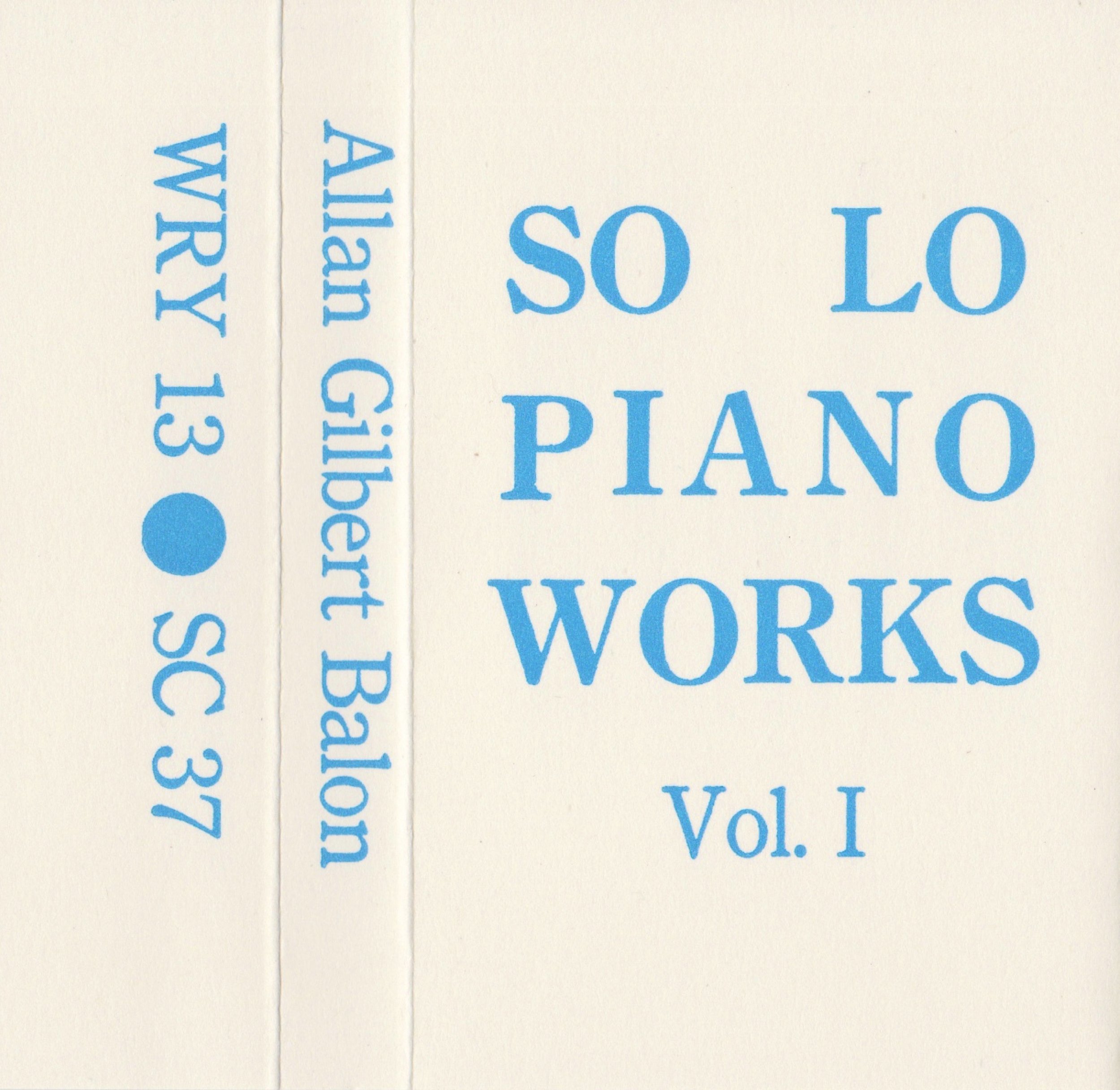
Wry Press & Séance Centre present the first release by pianist/composer/artist, Allan Gilbert Balon (b.1986). Born & raised in Les Abymes, Guadeloupe (Caraïbes), he is presently living in Ardèche, Southern France, where he creates cryptic & highly evocative compositions that explore sound as a phenomenon born of consciousness. His pieces seem to be rooted in both the more spiritually minded end of mid-20th Century composition (Scelsi, Radulescu, Sorabji, Rudhyar, etc.), as well as the woolly, lateral logic of jazz composers like Thelonious Monk, Bud Powell, or Lowell Davidson — where abrupt dissonances give way to elegantly philosophical reflections.
We first stumbled on Balon’s work after his site-specific installation, "mantra of things as they are sometimes” was performed at MOMA PS1 in February of 2022, then further investigated via his personal website — an intriguing compendium/collage of home recorded pieces, scores, drawings, writings, & performance works. To accompany the three solo piano pieces we are presenting here, Balon has designed a twenty page tabloid style newspaper publication which mirrors the concerns of his virtual world; featuring a treatise on sound, fragments of poetry, xeroxed scans of influences, artwork, and a score.
There’s something of a very private headspace we’re given privy to here; lo-fi & elliptical, notes fragment into lyrical bits which accumulate sound as both power & melodic balm. When I listen, I think of the notes the late composer Talib Rasul Hakim (another forebear to Balon’s particular brand of “mysticism of sound” I would think) wrote to accompany his piece, “Sound Gone”, which reads in part; “atmospheres-of-sound floating above and around segments of moving silence… a veil-like aura-of-sound, mystifying in its layers of introspective freedom…”
Double-sided cassette featuring the works Rafflesia Suite/Philae & Only Ma in the Ni ews. Letter pressed in clamshell case, with accompanying twenty page tabloid newspaper, oversized insert with drawing/performance notes housed in a plastic string-tie envelope. Limited to 100 copies.
Purchase digital on Bandcamp
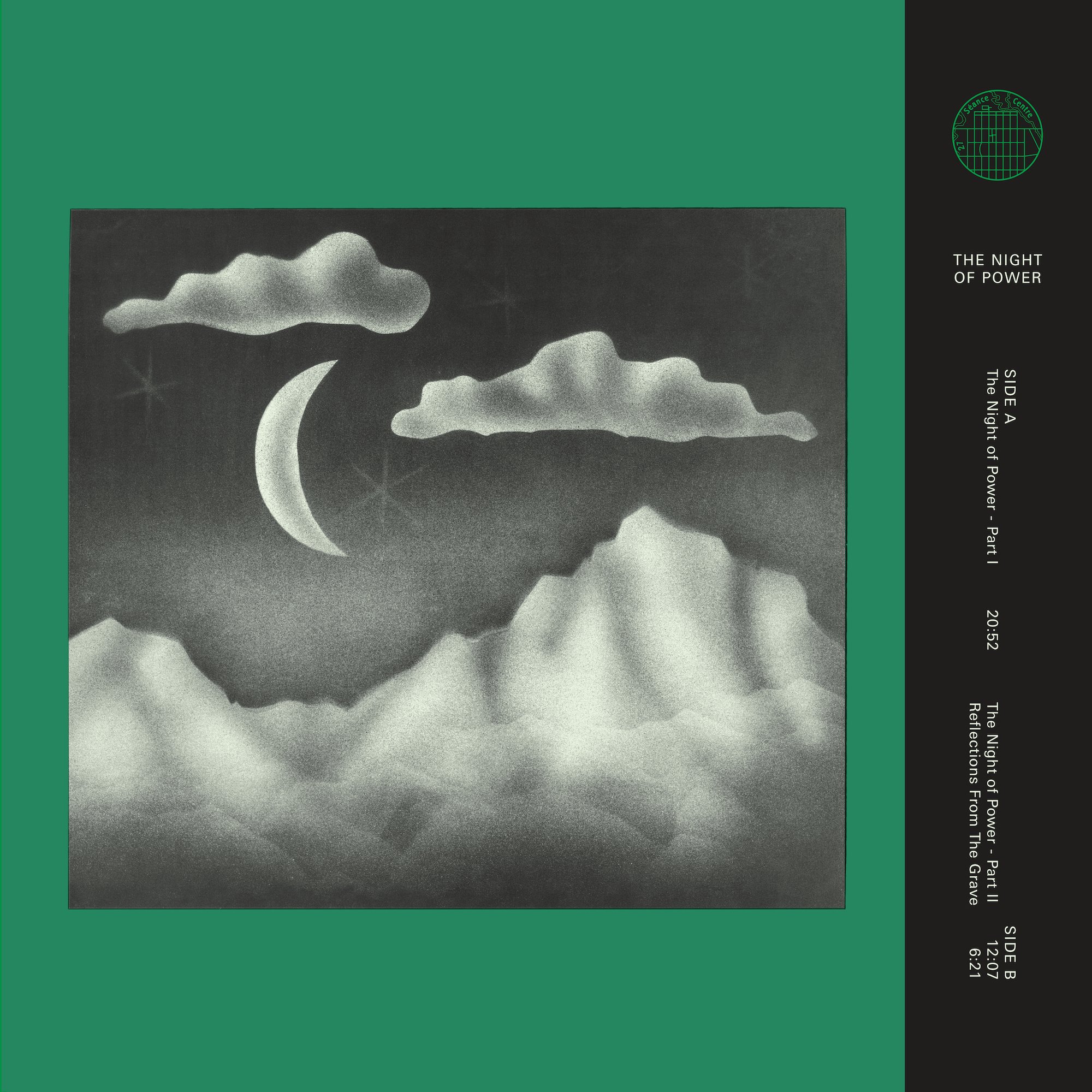
Recorded in one mystical night during Ramadan in 1982, The Night of Power (Laylatu'l Qadri) is a prophetic tapestry of politically and spiritually conscious poetry and revelatory home-studio electronic jazz.
The Night of Power was composed, performed and recorded by Dennis Matthews (credited on the record as Abdur Razzaq) in his home studio using a Fender Rhodes, Minimoog, and Roland CR-78. The album’s centre-piece is a capacious 38 minute spiritual mediation, guided by the spoken word–poet Rafiyq (Calvin Vivian). While the blueprint of Rafiyq’s grand vision might have been the inspiration, Matthews crafted the music to act as an emotional compass and add gravity to the revelations. The Night of Power is the result of multiple individual poems written in isolation, then spliced together to form a multifaceted message rooted in Islamic doctrine; upliftment and warning, the threat of cultural decay posed by materialism and new technology, the call for de-europeanization, and preservation of the world for an unborn generation. The durational tone establishes a sentiment equally alluring, melancholic, and profound. It’s a sonic space adjacent to the tradition of hip hop, birthed out of the same blues epistemology, but distinct from it—closer to the radical dialectics of Gil Scott-Heron or The Last Poets.
The album ends with a sonic epilogue, the instrumental Reflections from the Grave, an auditory afterlife grounded in the eternal rhythm of the CR-78. The song traces the shape of the human soul within the confines of modern technology, between the interplay of man and (drum)machine. Now 40 years later, the prescient record holds a mirror up to our present day reality. As we struggle against a world that defers to speed and consumption, The Night of Power is a testament to fortitude, ingenuity, and the ongoing pursuit of a more equitable future. This is the forward-leaning brilliance of the record, where notions of time are suspended, implying that anything is possible between dusk and dawn.
Remastered from the original reels, with an accompanying booklet of archival photos, reflections on the album by Dennis Matthews, and an essay by Melissa Vincent.
RIYL: Amiri Baraka, Sun Ra’s Disco 3000, Roland Young, Otis G. Johnson, Jeff Phelps, TJ Hustler
Purchase digital on Bandcamp

Jon Iverson meets Prins Emanuel, Golden Ivy & Inre Kretsen Grupp is an experiment bridging time and space. Recorded across decades and continents, the album merges ‘80s American home studio sensibilities with contemporary European kosmische.
After receiving hours of unreleased material from Jon Iverson’s reel-to-reel archive, Séance Centre’s Brandon Hocura conceived of having contemporary musicians ‘finish’ the vibrant sketches and demos that had been languishing since the ‘80s. Immediately, a group of musicians working in and around Malmö sprang to mind as sympathetic and exciting collaborators for this material: Emanuel Sundin (Prins Emanuel), Ivar Lantz (Golden Ivy) and Martin Blomberg (Inre Kretsen Grupp). They were inspired by the proposal and spent several days in the studio, weaving rhythms, textures, and melodies around loops and samples made from the original recordings. The resulting album expands Iverson’s percussive and atmospheric vignettes into wide-open 21st Century group-think cosmic music, adding violin, flute, kalimba, lap steel, percussion, guitar, organ, synthesizers, bass, samples, and effects. A sonic landscape that evoke’s Terence Malick’s Montana Badlands as much as Ingmar Bergman’s windswept Fårö Island.
RYIL: Träd, Gräs & Stenar, Dunkelziffer, Embryo, Deadline Paranoia, Peter Zummo
200 pressing with risograph printed artwork and hand-stamped jackets.
Purchase digital on Bandcamp

You’ll Never Get To Heaven (Alice Hansen and Chuck Blazevic aka Slow Attack Ensemble) returns with their fourth release Wave Your Moonlight Hat for the Snowfall Train, a collection of ethereal songs that move through the mercurial weather patterns of minimalism and dream pop.
The duo named this album after the closing track on Phil Yost’s 1967 release Bent City, inspired by its prescient use of delay processing in elevating spare beatless arrangements into haunting arrays of sonic afterimages — an approach Hansen and Blazevic explore on this outing in their own way, with a few favoured instruments and a Chorus Echo and Revox in hand. The result is a collection of sparse, lightly dub-infused songs and instrumentals, equally icy and wistful, characterized by melodic fretless basslines, spaced-out harmonics, watery piano and marimba, hushed vocals, and tape echo treatments.
Stylistically, it’s almost as if the duo was imagining what an early This Mortal Coil demo might have sounded like had Ivo enlisted in lieu of the usual cast, with a pared back L’Empire Des Sons as the session band, and June Hardin or a young Julee Cruise on lead vocals. The album evokes an overcast autumnal evening of cloud-watching, an inner journey witness to an expansive spectrum of moods, from nimbus clouds to shimmering sun showers.
RIYL: Broadcast, Weekend’s ‘81 Demos, Chantal Weber, Orquesta de las Nubes, Hydroplane, The Moon and the Melodies, Eberhard Weber
Tracklist:
A1 Setting Sun (2:59)
A2 Pink and Gold and Blue (2:56)
A3 Dust (2:36)
A4 Pattern Waves (3:30)
B1 Eye, Soul and Hand (3:18)
B2 Mad Shadows (2:33)
B3 Eternal Present (2:59)
B4 Predawn Visions (2:28)
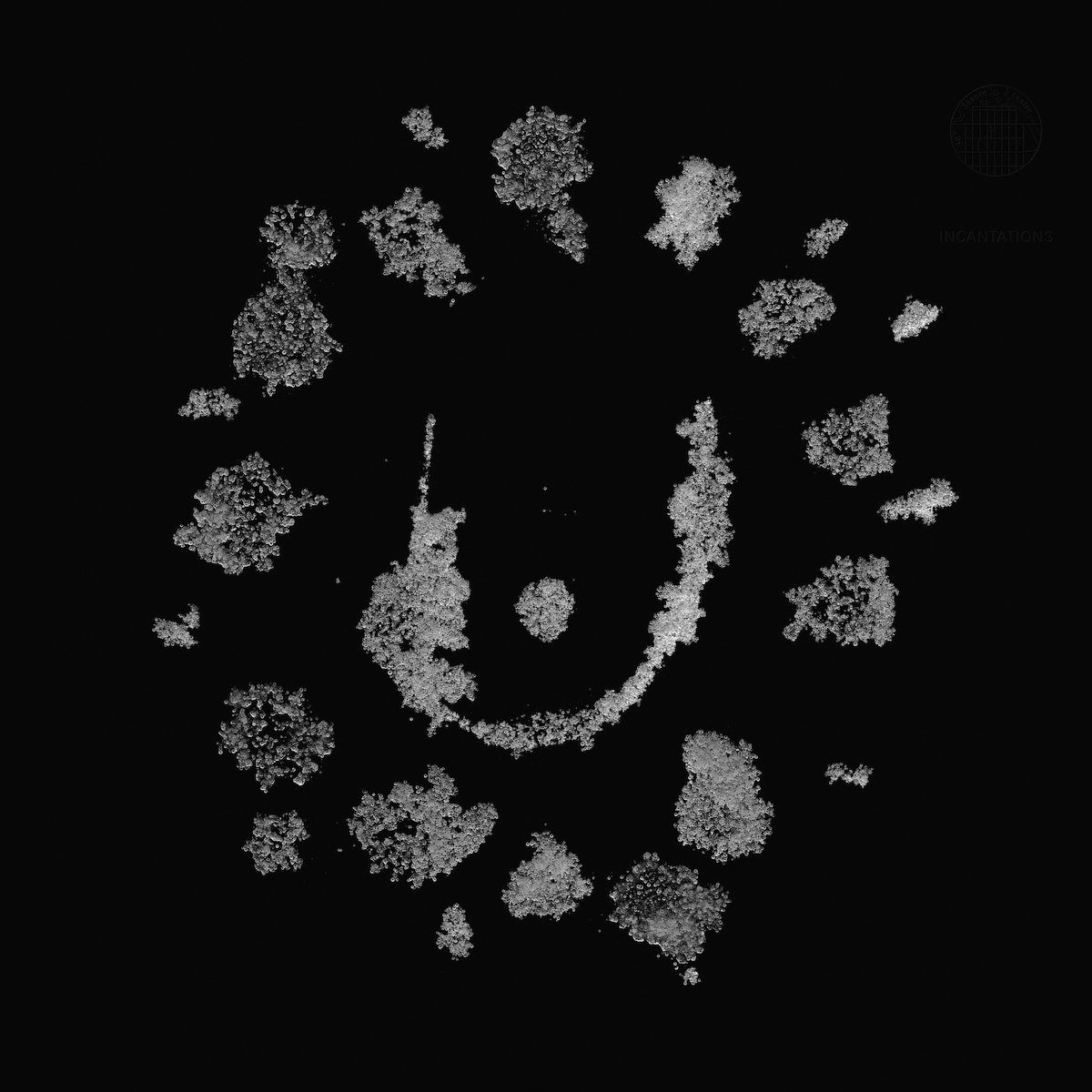
INCANTATIONS is a collection of sixteen visual and sonic experiments centred around the idea of score as spell, curated and produced by Séance Centre’s Brandon Hocura and Naomi Okabe.
A spell and its incantation are distinct, but conjoined by a symbolic, almost umbilical force. A spell is a totem text, a material call for change — a seed, a recipe, an instruction, a potential. The incantation of a spell gives it life, brings breath to body, raises hairs, moves minds. For this project, eight spell-scores were created by visual/text-based artists for a musician/composer to incant. Taking a wide interpretation of what can be considered a score, these works include concrete poetry, collage, painting, drawing, spell-poetry, instructional art, and recipe. The resulting sound works give voice to these evocative “texts”, residing in the liminal space between musical form and magical utterance.
Creating what became the cover artwork for this release, musician and artist Benjamin Kilchhofer conjured salt paintings reminiscent of ancient runes and salt circles — improvised talismans of protection. Translating these expressions into sound using a hydro harp (water drops hitting tuned water-filled porcelain bowls), musician and artist Tomoko Sauvage evokes an embryonic environment, the cleansing and purification of salt water oceans. Artist Mehrnaz Rohbakhsh created a piece that arose from a drawing ritual — a meditation on textile, pattern, and code. In response, Museum Of No Art (Mona Steinwidder) worked her composition by “weaving the piece, layer by layer”. She was “particularly interested in the state one achieves when one works repetitively, stoically and excessively towards a form. Which leads to trance or meditation and creates its own immaterial energy.”
Dani Spinosa, poet of digital and print media, created a typewriter poem that emerged after consulting Hesiod's “Works and Days and Theogony” to learn more about the witch goddess Hekate. Synchronously, interdisciplinary artist Gavilán Rayna Russom had recently returned to research on Hekate, teaching about the goddess in her class “Queering European Witchcraft Traditions”. Russom spent time with Spinosa’s spell, spoke to Hekate, and then unlocked the gate, seeking to “stir sonic emanations that were radiant, multiple and liminal.”
The side ends with a composition by musician and artist Felicia Atkinson via an instructional text from conceptual artist David Horvitz. What is it like to inhabit the mind of a crow? This simple gesture to befriend a crow, to be in relationship with something other than human implies much more, a re-orientation to our living environment and forms of intelligence.
The B-side opens with electronic composer C.R. Gillespie’s sonic manifestation of a score by bricolage artist Andrew Zukerman. Taking compositional inspiration from the Smiss stone, Zukerman created a collaged visual score on staff paper that hints at the formal aspects of occult symbols and sigils, while remaining obliquely secular. Creating an interlocking tapestry of “Roman gamelan”, Gillespie’s track dramatizes the negotiating power and structure of the abstract score.
Over three days, iconic Canadian poet bill bissett created a jazz-scape painting filled with an ecstatic gathering of eidetic spirits, “connekting trembling xploring serching remote brooding grooving melodee solo lifting n refrain filling.” Immersing himself in the energy of the painting, musician and composer Idris Rahman overlaid three takes of bass clarinet and found that “melodies, textures and harmonies emerged without thought and the piece took on a life of its own.”
As a way to explore the connection between food and music, the curators commissioned a recipe from electronic producer and home chef, Yu Su. Her simple and wholesome pudding recipe lays out instructions for texture and taste that musician Scott Gailey stirs into a sonic caldron of field recordings and electronics. The closing chant, penned by writer and activist adrienne maree brown and incanted by musician Beverly Glenn-Copeland, was the result of a synergistic conversation between the two. The refrain, “surrender to the present moment / what’s coming now is all that’s left” is a mantra reminding us of the power of speech, repetition, and the evanescent nature of temporal experience.
The eight spell cards, inspired by the format of oracle and tarot cards, are invitations for further interpretation and play. To be under a spell is to be lost in a transformation, an alternate reality, to be in collaboration with an unknowable and powerful force. The works in this collection have created a spontaneous and ludic alchemy, courageous attempts to catalyze and spark in our present moment.
INCANTATIONS is co-presented by Tone Deaf Kingston and The Witch Institute with support from the City of Kingston Arts Fund and the Screen Cultures and Curatorial Studies program in the Department of Film & Media at Queen’s University.
Tracklist:
A1. Tomoko Sauvage - Salt Spell (spell by Benjamin Kilchhofer) [5:21]
A2. Museum Of No Art - Textile Trance (spell by Mehrnaz Rohbakhsh) [5:39]
A3. Gavilán Rayna Russom - Shadows Cast By Moonlight (spell by Dani Spinosa) [5:25]
A4. Félicia Atkinson - Enter The Memory of a Crow (spell by David Horvitz) [3:30]
B1. C.R. Gillespie - Invitation To A Clog (spell by Andrew Zukerman) [4:22]
B2. Idris Rahman - incanti jazz score 1 (spell by bill bissett) [4:36]
B3. Scott Gailey - Ginger Soy Milk Pudding 姜撞豆奶 (spell by Yu Su) [3:56]
B4. Beverly Glenn-Copeland - a spell for the present moment (spell by adrienne maree brown) [1:34]
Editions:
The Corporeal
Vinyl LP + Spell Card Set (9 cards x 8”x5.5”) + Digital DL (Limited to 300)
The Liminal
Digital + Spell Card Set (Limited to 100)
The Metaphysical
Digital + Spell Card PDF Purchase on Bandcamp
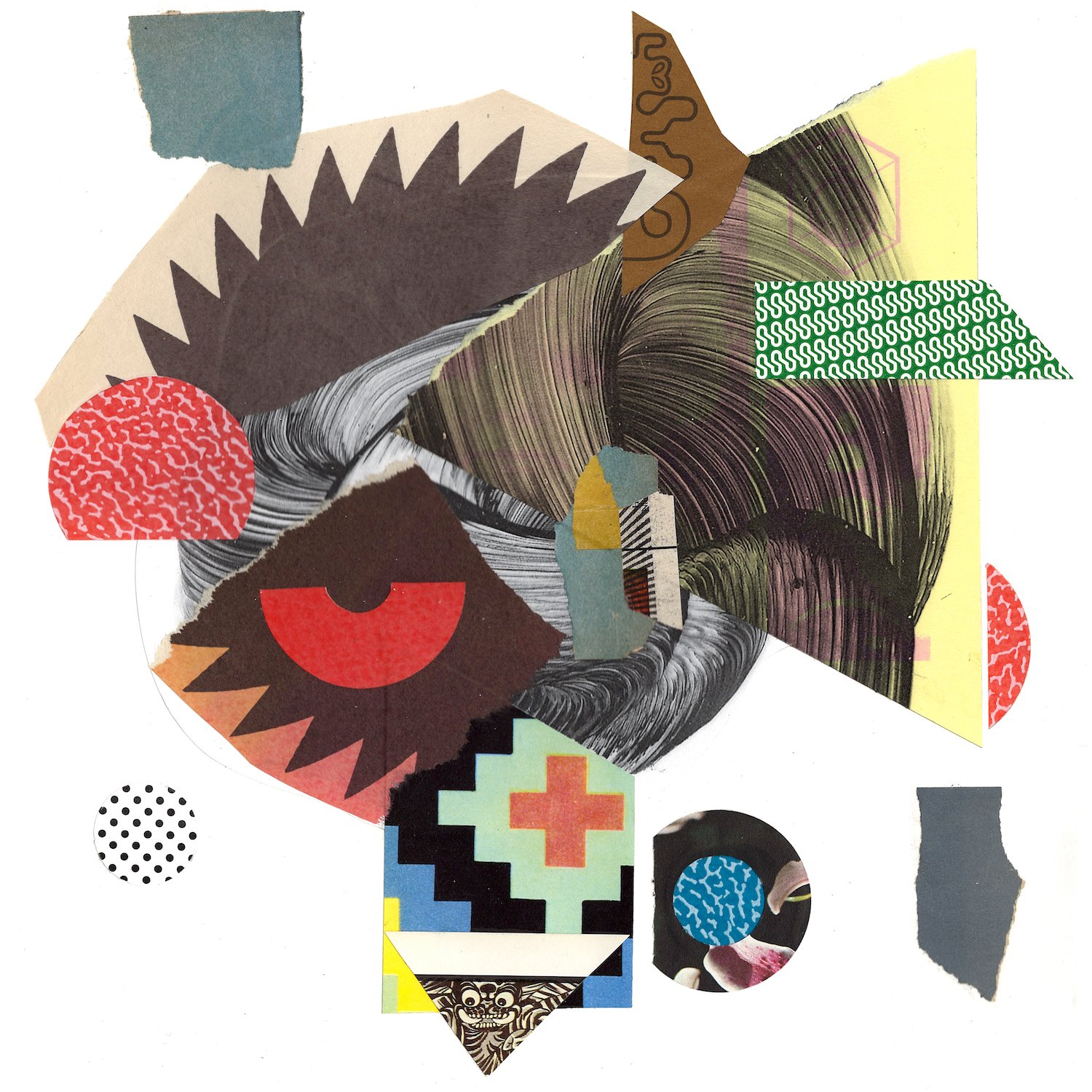
Limited edition test pressing featuring original collage art by Andrew Zukerman. Includes a visual score booklet and risograph printed insert with lyrics. Edition of 5.
You Can Can is an echoed affirmation, an album which traces song forms around silence, field recordings, and degraded analog memories. This is folk music transmogrified and mutated, as if recorded and reconstructed in Pierre Schaffer’s GRM studio.
Not your typical Mariposa folk duo, the group is comprised of Toronto avant-music scene stalwarts, vocalist Felicity Williams (Bernice, Bahamas) and bricolage artist and synthesist Andrew Zukerman (Fleshtone Aura, Badge Epoch). The album feels like a somnambulant conversation, fragmented and half-remembered with Williams’ vocals traveling through a landscape of field recordings and Zukerman’s saturated concrète topographies. It is an electro-acoustic assemblage, both analog and digital, comprised of air, electricity, minerals, wood, and water. Although the album nods towards traditional forms of folk and musique concrète (if at this point it can be called a traditional form), it is outwardly and inwardly contemporary; non-linear, citational, opaque, and sui generis. In a way it feels like a sonic index of the narrative experiments found on the infamous Language school-related publisher The Figures, in the work of Lyn Hejinian, Clark Coolidge, and Lydia Davis. In the musical continuum, the album picks up where Linda Perhacs left off in the early 70’s—explored by Gastr Del Sol in the ‘90s—a convergence of rural acoustic idioms and urban avant-electronics. This is country music for the discerning cosmopolitan citizen of the 21st Century.
RIYL: Luc Ferrari, Brannten Schnüre, Dawuna, William Basinski, Oval, Eric Chenaux, Emmanuelle Parrenin
1st image: Edition No. 1
2nd image: Edition No. 3
Purchase digital on Bandcamp

The second foray into Séance Centre's “Speculative Ethnography” series is an icy and tender missive of glacial piano, ambient electronics, samples, treated sax, and drum machine rhythms from snowbound Canadians Joseph Shabason & Vibrant Matter (Kieran Adams).
Shabason and Adams have been collaborating for years, forming the production team behind the celebrated experimental synth pop trio Diana, but their relationship has often been fraught with creative tension. Fly Me to the Moon is their ‘make up’ EP, a redemptive voyage through uncertain times. During lockdown Adams found refuge in routine, practicing drums every morning in Shabason’s Toronto studio. Afterwards, the pair would chat in the alleyway behind the studio, drinking espressos, a daily practice that became an antidote to the chaos of pandemic life. Through this daily ritual a creative spark was reignited and they decided to start exchanging ideas, but rather than working together in the studio as they had in the past, the circumstances required them to collaborate remotely. Through this distanced connection the youthful tension and ego of the past eroded, evolving into a deep trust.
Escaping the gravitational pull of a planet in distress, the duo composed a sonic love letter adrift in weightless ambient electronics, fourth world jazz visions, and cyborg IDM riddim technologies — an ode to a long friendship which has strength because it has travelled through so many galaxies and vortices. Who says you can’t fall in love all over again - ‘Fly me to the moon / Let me play up there with those stars / Let me see what spring is like on Jupiter and Mars’.
Fly Me to the Moon is a limited edition pressing with risograph printed insert and designed for future archives.
RIYL: Ramzi, Photek, Mo Wax Headz, Jon Hassell, FSOL, Aleksi Perälä, Nuron, Ismistik
Release Date: March 4, 2022
Purchase digital on Bandcamp
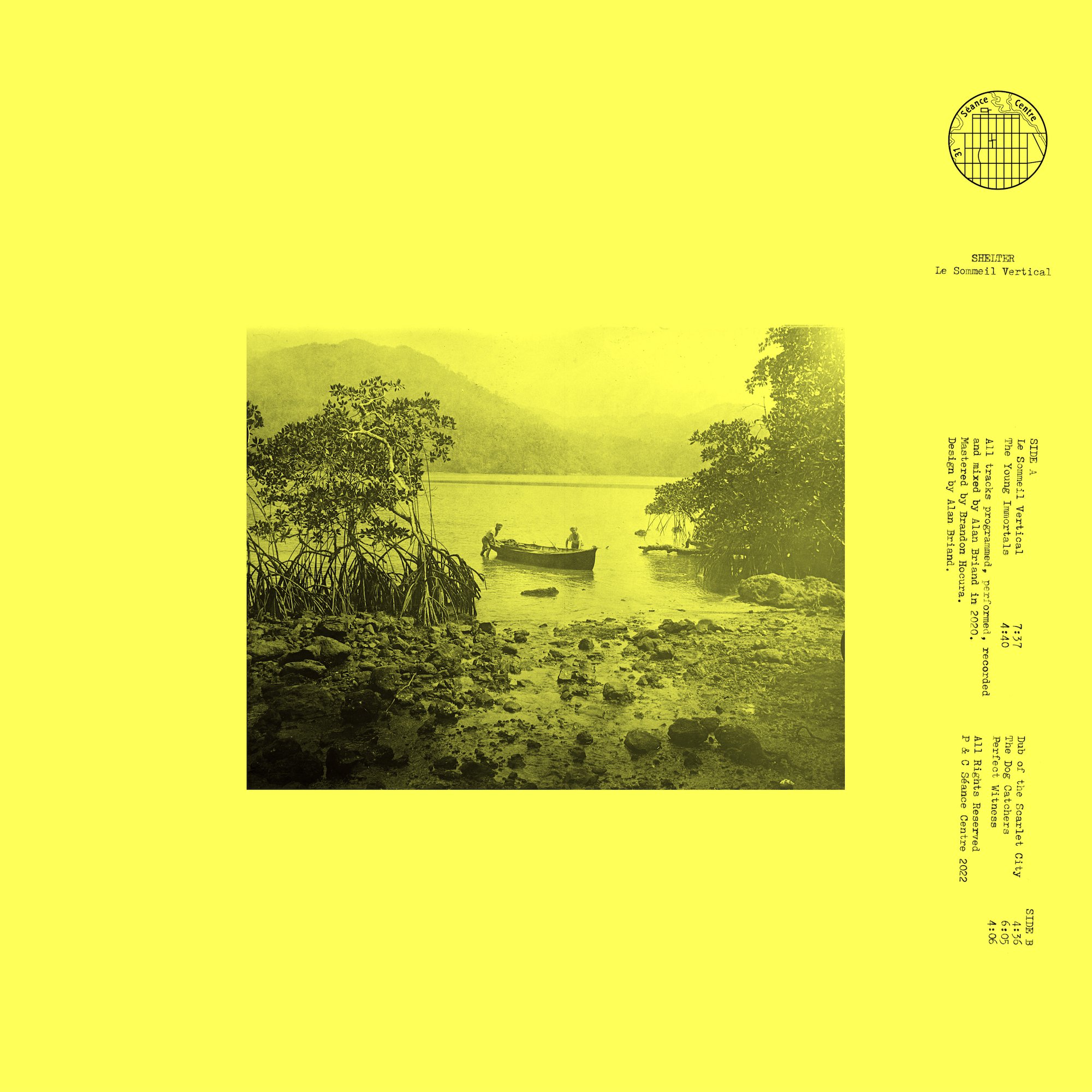
The first release of Séance Centre's "Speculative Ethnography” series is an EP of Burroughs-inspired analog rhythm-scapes, conjured from the nocturnal Parisian imagination of Shelter (Alan Briand).
Recorded directly to cassette 4-track late at night in Briand’s apartment in Paris with a gathering of temperamental vintage gear, Le Sommeil Vertical captures a somnambulant journey into vibrant analog nether-regions. The hazy sonics harken back to ‘80s DIY cassette culture, but refracted through a prism of fourth world melodics and early IDM rhythm experiments. The tracks are titled after Burroughs’ Cities of the Red Night, and the book acts as a talisman for the album, setting sci-fi surrealism within expansive arid psychic landscapes. The trance-inducing terrain, mapped out in warm 1/4” tape, moves through phased backstreets, AFX-arrondissements, and dub municipalities. This is music on the nod, an elixir for the sleepwalking flaneur.
Alan Briand has been with Séance Centre from the start, as designer and European emissary — a wunderkind of many talents, we’ve always trusted his ears as well as his eyes. We’re pleased to release this mesmerizing EP as a limited edition pressing with risograph printed insert and designed for future archives.
RIYL: Craig Leon, Seefeel, K Leimer, Aphex Twin, Ghédalia Tazartès, & Cabaret Voltaire
Release Date: March 4, 2022
Purchase digital on Bandcamp
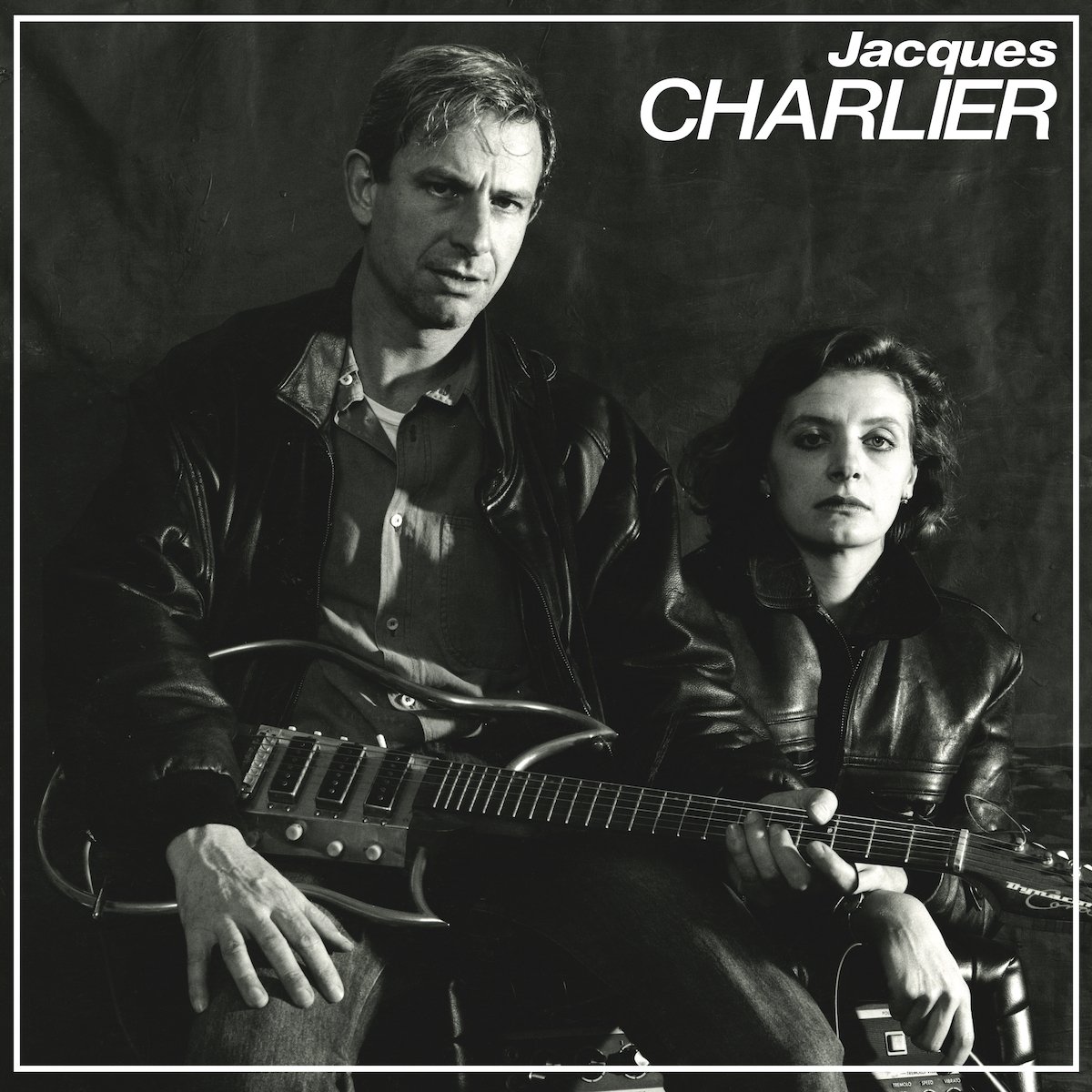
Musique Plastique and Séance Centre are proud to present Jacques Charlier’s “Art In Another Way”, a 45RPM double LP compilation of the Belgian multi-disciplinary artist’s inimitable chanson regressive recordings from the 1980s.
Throughout a long career in the visual arts, Jacques Charlier has maintained a multi-disciplinary approach that includes forays in poetry, underground comics, acting, filmmaking and music. Besides performing with his punk group Terril (sadly, never recorded), Charlier took inspiration from the minimalist sounds of Philip Glass, Steve Reich, La MonteYoung, John Cage, and Meredith Monk. Throughout the 1970s he performed psychoacoustic pieces in Liège, Antwerp, Eindhoven, Rotterdam, Milan and Düsseldorf, and in the astounding performance art video Desperados Music, filmed by Paul Paquay for Belgian television. Charlier hit a creative stride in the 1980s — armed only with a synth, drum machine, fuzz box, and his custom guitar, with occasional duets with vocalist Martine Doutreleau. He recorded a trove of proto-pop tunes which he self-released on three cassettes (Musique Regressive, Chansons Idiotes and Chansons Tristes) between 1984–1987.
“Art In Another Way” collects selections from these tapes, in addition to an ample supply of previously unreleased material, all mixed and mastered from Charlier’s original 4-track recordings for a wide angle view of his creative range. From the proto-house rhythm of “Jingle – Crepuscule”, to the minimal EBM experiment “Top” and Art Of Noise- inspired “PassingTime”. There are certain resonances within the catalogs of Belgian labels Crammed Discs and Les Disques Du Crépuscule, yet even with these genre-bending precedents, Charlier’s music is idiosyncratic and visionary to the extreme. Accompanying the release is a postcard featuring a behind-the-scenes performance photo and visual score by Charlier.
RIYL: Flying Lizards, Y Records, Young Marble Giants, Ashra, Naffi, Tuxedomoon, Aksak Maboul
Tracklist:
A1. Jingle - Crepuscule (3:09)
A2. L'Amour Dans Les Chansons (5:52)
A3. Samba (4:38)
B1. Vampirella (4:48)
B2. Perki Show (3:36)
B3. Check Up (4:55)
C1. L’Aube (3:09)
C2. L’Hésitation (4:45)
C3. Top (6:05)
D1. Passing Time (1:45)
D2. Tout Va Bien (4:35)
D3. Un Chat Dans Mon Lit (5:32)
D4. Morning (2:21)
D5. End of W.E. (1:39)
*Le Rockeur de Metro (3:28) - Digital Bonus Track
Release by Musique Plastique & Séance Centre
MP010/28SC
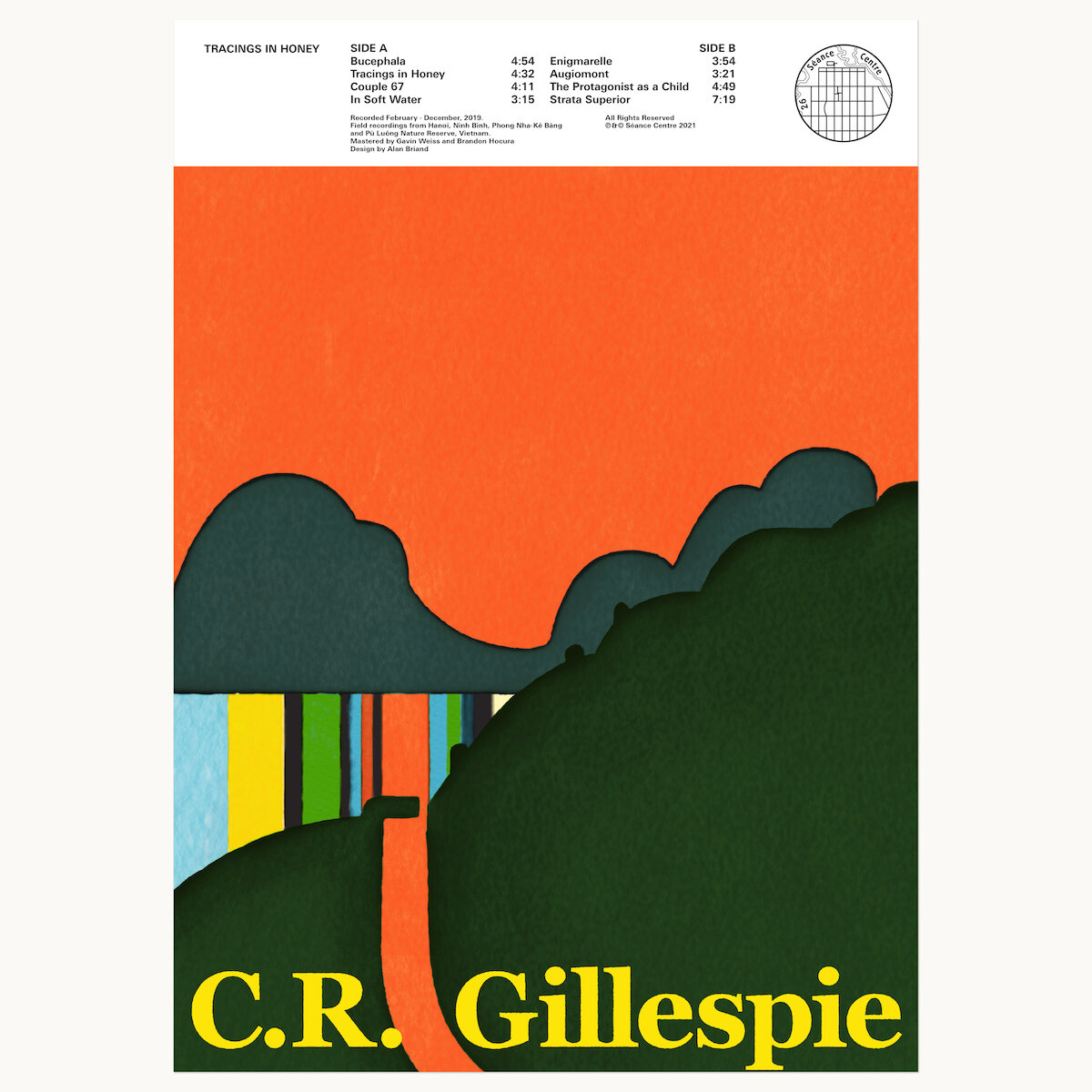
Tracings in Honey is an electronic travelogue by C.R. Gillespie, inspired equally by imagination, immersion, and the emotional terrain of both inner and outer landscapes.
In anticipation of a trip to Northern Vietnam in 2019 with his partner, C.R. Gillespie created demos that would act as sonic vessels for the experiences and encounters he would discover. On his journey, he gathered field recordings in Hanoi and Hoi An (motorcycles, bustling marketplaces, children, and stray dogs), and the countryside of Pu Loung, Nihn Bin, Phong Na (birds, insects, cave explorations, running water, footsteps). When he returned home he completed the tracks, mixing memory and fantasy of place into a document of the headspace he was in at the time: happy, grateful, excited, and in awe of everything he was seeing. The resulting works sound akin to Cybe's imaginary travelogues, but share cartographic qualities with Laurie Spiegel, Hiroshi Yoshimura, J.D. Emmanuel and Enno Velthuys. More than a sonic postcard, Tracings in Honey is an album that tries to reconcile the idea of a place with lived experience, our personal ways of listening/seeing, and the marks and mirages of travel.
Limited pressing of 200 with special artwork and hand-stamped jackets.
Tracklist:
A1 Bucephala (4:54)
A2 Tracings in Honey (4:32)
A3 Couple 67 (4:11)
A4 In Soft Water (3:15)
B1 Enigmarelle (3:54)
B2 Augiomont (3:21)
B3 The Protagonist as a Child (4:49)
B4 Strata Superior (7:19)
Recorded February - December, 2019.
Field recordings from Hanoi, Ninh Bình, Phong Nha-Kẻ Bàng and Pù Luông Nature Reserve, Vietnam.
Equipment used: Moog Voyager, Electron Digitone, Korg Minilogue, Korg Volca FM, Korg MS-20, Winston Teardrop Guitar, Aria Pro II Electric Bass (his Dad's), Roland SP-404 Sampler, H1 Zoom Field Recorder
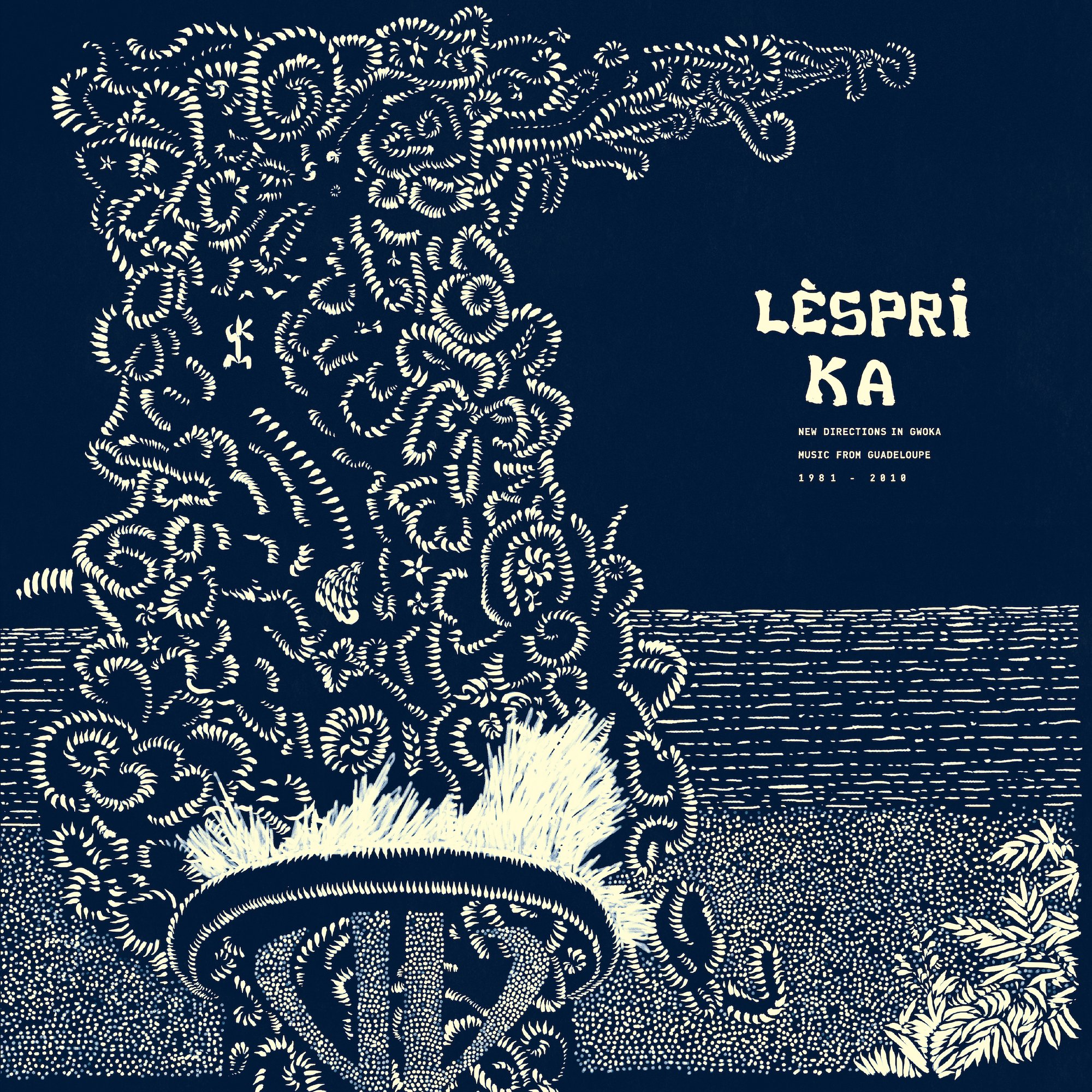
The innovative, radical soul of Guadeloupe explored across thirty years of contemporary gwoka music, released by Time Capsule and Séance Centre.
As Guadeloupean vocalist and composer Marie-Line Dahomay writes in her liner notes to the compilation, gwoka is more than a style of music, it is “a way of living and thinking.” Rooted in the social, musical and ritual practices of enslaved African people and their descendants on Guadeloupe, gwoka has always sought to express the spirit of independence and resistance authentic to the island. Building on its traditional call-and-response form and the ideas of pivotal figures like Gérard Lockel and Christian Laviso, modern gwoka evolved throughout the second half of the twentieth century to include funk, jazz and electronic influences.
Defined by its propensity for innovation, this compilation charts the most radical changes to modern gwoka, capturing a sensory riot of traditional répertoires, rhythms and makè techniques fused with genre-defying experimentation. Whether heard in the deeply cosmic, spiritual music of Dao, Freydy Doressamy and Gaoulé Mizik, or the jazz funk inflections of Gui Konket and Horizon, the music here is united by the feeling of santiman ka, crucial not only to gwoka music but the identity of Guadeloupe at large.
As co-curator Cédric Lassonde (Beauty & The Beat) writes: “What unifies these selections is the depth of the compositions, the experimentation around the santiman ka, and the spirit of resistance and liberation against slavery, be it modern or ancestral. With a thirst for innovation typical of the island’s creole culture, the ka spirit is deeply rooted in collective history and in a quest for identity.”
Co-curator Brandon Hocura (Séance Centre) continues: “The creative energy of these musicians is powerful and demonstrates a universal pursuit of resistance, freedom and identity. Their voices are distinct, but the chorus rises high and carries their message far across the sea.”
Lèsprit Ka: New Directions in Gwoka Music from Guadeloupe 1981-2010 is the first compilation of its kind to bring the sound of modern gwoka to a wider audience, with many of the featured musicians still active today. Presented as a double LP, the release features a specially commissioned essay by Guadeloupean musician Marie-Line Dahomey, and extensive liner notes from the curators.
True to the hybrid nature of the music, the compilation seeks not to provide a definitive sound, but express the variety of contemporary forms that have evolved from gwoka. Just as Guadeloupean trailblazers Kassav fused gwoka with funk and cadence to create zouk, so did the musicians on this collection push gwoka in new directions rarely heard beyond its shores.
In the words of Gérard Lockel, “gwoka is the soul of Guadeloupe”.
Tracklist:
A1. Dao - Chen'n La (1984) 8:14
A2. Gaoulé Mizik - Sonné Lékla Sonné (1985) 6:24
B1. Emboule Jean-Claude, Louison Gerome et Le Groupe Kako - Enjafann Kann (1985) 5:26
B2. Thibault "Freydy" Doressamy - O Fon A Kê An Nou (1987) 5:15
B3. Gui Konket - Kimbé Rèd! (1985) 4:16
C1. Michel Laurent - Matla La Mouyé (1992) 4:01
C2. Horizon - Ti Malo (1990) 6:43
C3. Kalindi Ka - Yo (2000) 4:16
D1. Selekta Ka - Nou Woukou Mansé A Zero (1981) 7:15
D2. Groupe Béloka - Menm Chimen-La (2010) 5:18
Release by Time Capsule & Séance Centre
TIME012 / 25SC
*We have limited copies of this release. Not available for wholesale.
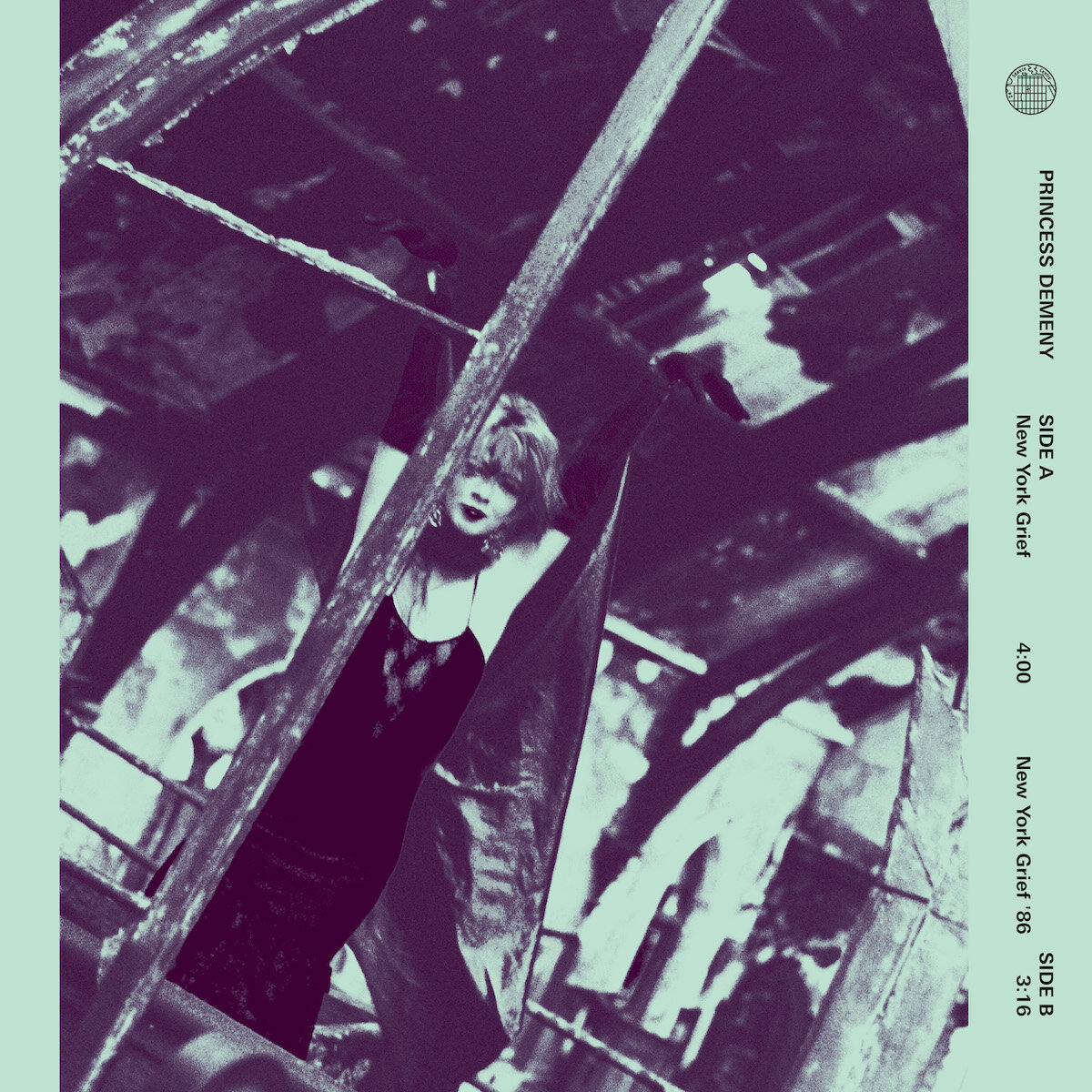
New York Grief is a nocturnal new wave incantation for the sleepless metropolis by Montréal singer, filmmaker, painter, and poet, Princess Demeny. In the early 80’s Princess started creating music for her poetry and in 1986, she partnered with Jean Mineau, her then boyfriend, who did the arrangements on what was to be her first EP, Distant Voices. Not long after the start of their collaboration, Jean was diagnosed with terminal cancer and was immediately hospitalized. Against the doctor's wishes, Jean left to record demos of five songs including New York Grief. He sadly passed shortly after returning to hospice and the recordings were never released.
“New York Grief was inspired by several trips to New York City in the mid eighties. I was in love with the city's nightlife. At times, I would stay awake and watch the city that never sleeps as its night creatures came out to play, and I would watch as they would vanish, replaced by the suited nine-to-fives, waking up and starting the machine of the metropolis madness again and again. It felt to me as though, in New York, there was more darkness by day than at night. I felt the city's intense rhythms and the chaotic pulse of the urban grind. It made me question if, sometimes, I was awake or still sleeping. I would have vivid dreams; horrific nightmares of burning buildings and people running and even though it was exhilarating, it also scared me.”
In 1989, Princess recorded a new version of New York Grief with arrangements by the Montréal new wave group Vini Vidi Vici. She also produced and directed a music video for it, which evokes both Maya Deren’s Meshes of the Afternoon and Slava Tsukerman's Liquid Sky, but set in ultra-cool nouvelle vague Montréal in the late 80s. Both the demo and 1989 version are featured on this 7” release with a bonus digital track of her cover of Listen, The Snow Is Falling by Yoko Ono. This single is a glimpse of the alluring universe of Princess Demeny, with more revelations on the horizon.
Limited 250 pressing. No repress.
Tracklist:
A1 New York Grief (4:00)
B1 New York Grief ’86 (3:16)
*Digital Bonus: Listen, The Snow Is Falling
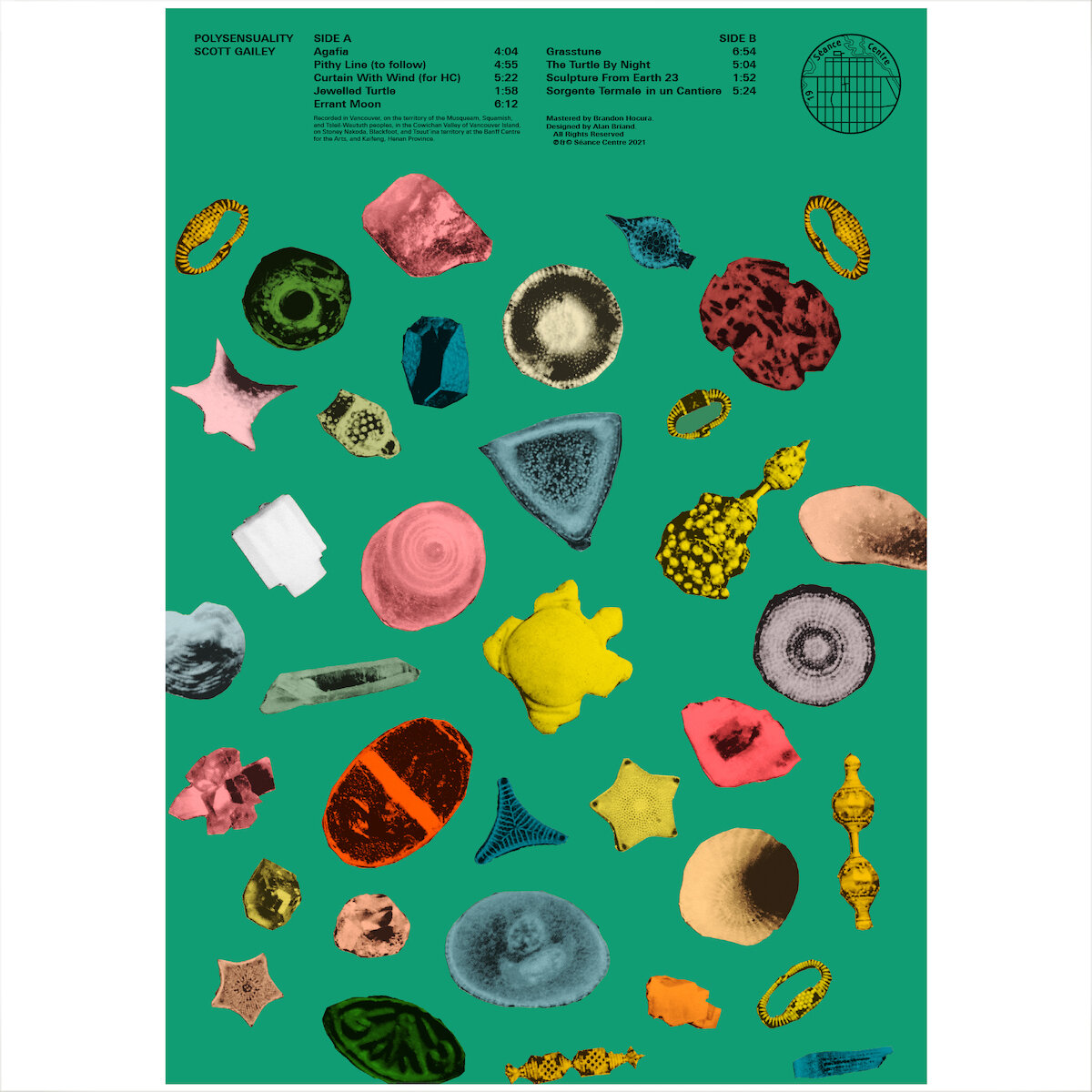
*Second pressing with new artwork now available*
It all began eight years ago with a copy of R. Murray Schafer’s The Tuning of the World found in a box in a cabin, deep within the Pacific coast rain forest. This catalyst provoked Scott Gailey to draw inspiration from the sublime environment that surrounds his home on the West Coast of British Columbia. This exact landscape had a profound effect years earlier on a group of composers centred around Schafer and Simon Fraser University, including Hildegard Westerkamp and Barry Truax, who banded together as the World Soundscape Project (WSP). Where the WSP was primarily interested in field recording as sound ecology - documenting, preserving, and archiving a changing landscape - Gailey explores the musicality of field recordings through various synthetic approaches, a way to access the ambiguous emotional content latent in the natural world. There is a subjectivity to Gailey’s work, and in that sense it has more in common with the sensual musique concrète of Luc Ferrari, or even the Fluxus tape works of Henning Christiansen, than with the WSP. Despite having roots in this well of thought, Polysensuality is undeniably modern, finding kinship with contemporary works by Sugai Ken, Visible Cloaks, and Meitei, while also dipping a toe in the sound pool created by Haruomi Hosono and Hiroshi Yoshimura. Gailey has previously explored this palette in his duo You’re Me with Yu Su, but here there is more space, more silence, greater extremes, and in this way it is more personal, like a soliloquy rather than a conversation.
In a way Polysensuality is a sonic addendum to Diane Ackerman’s A Natural History of the Senses, a proclamation for approaching the lived sensation of your environment in a way that doesn’t privilege any discrete element of perception. This approach gives voice to the in-between and shared areas of our five senses, which have been sublimated due to our scientific approach to feeling. From Luigi Russolo through Brian Eno, music has often been prone to experiments in synesthesia, but rather than explore the ways in our senses get crossed, the focus here is on how they relate to each other, and how that affects the ways humans interact with their lived environments, their ecologies. And in this sense, the sounds on the album - field recordings, percussion, voice, piano, clarinet, guitar, synthesizer, and bass - all live in inchoate and transitory states, somewhere between silence, landscape and song.
The recent revival of ambient music encourages a subsumed form of listening and composing, optimistically suggesting a repositioning of mankind within natural order rather than superior to it. An idea slowly making its way across disciplines over the last half-century, from the ephemeral works of Robert Smithson and Andy Goldsworthy to the radical gardening techniques of Piet Oudolf. Polysensuality shares this worldview, and asks us to focus on the relationships between ourselves, our perceptions and our environment, revealing that they are inseparably linked.
Limited edition risograph artwork.
Tracklist:
A1 Agafia (4:04)
A2 Pithy Line (4:55)
A3 20180622-18274 (2:46)
A4 Curtain With Wind (5:23)
A5 Jewelled Turtle (1:59)
A6 Errant Moon (8:29)
B1 Grasstune (6:55)
B2 Turtle By Night (5:04)
B3 Sculpture From Earth (1:53)
B4 Wordless Sentence (7:05)
B5 Sorgente Termale in un Cantiere (5:24)
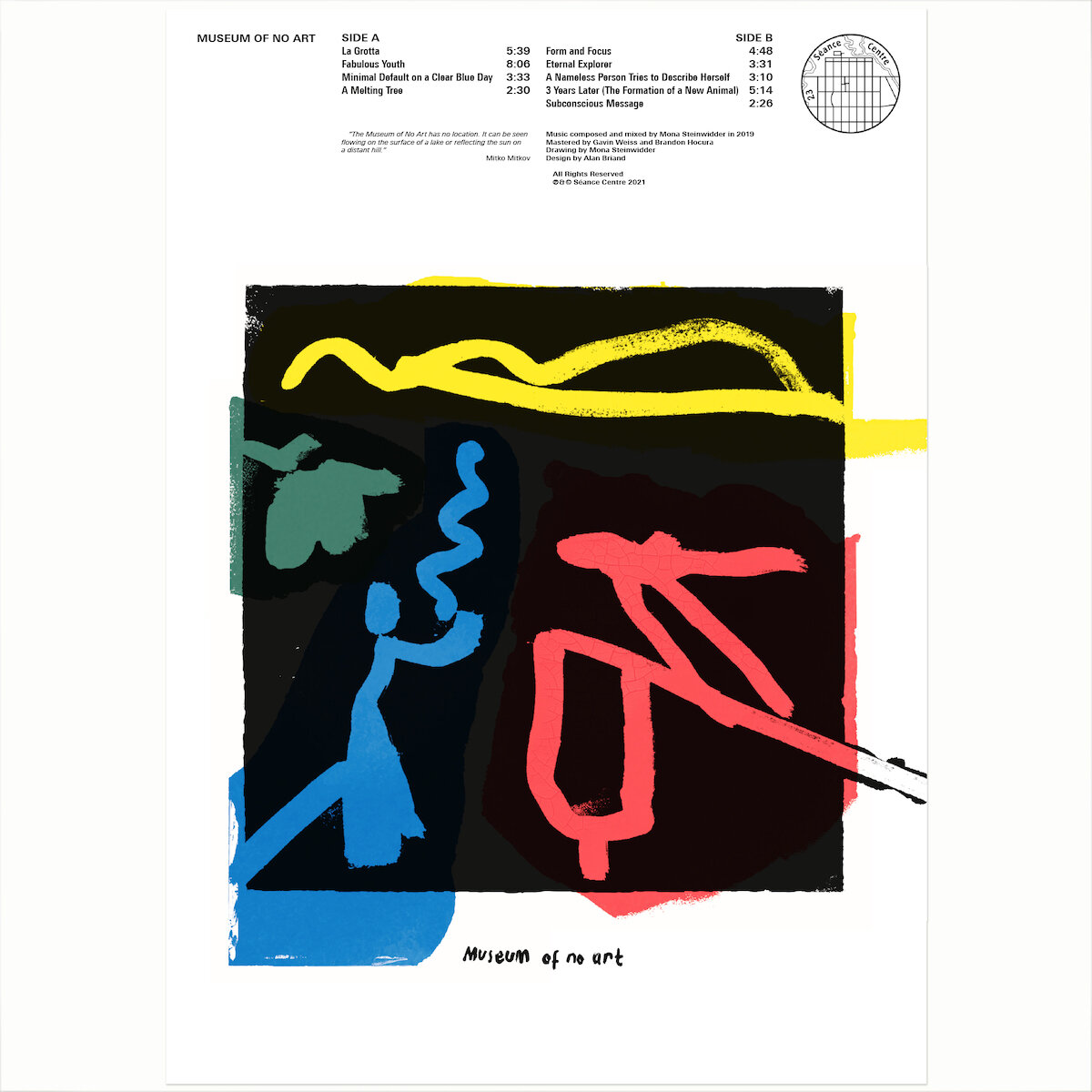
*Second pressing with new artwork - now available*
What is in the Museum Of No Art? Not paintings, but visions. Not sculptures, but empty spaces full of potential. It is within this inverted gallery that Mona Steinwidder traces fabulous forms with voice, sampler, synthesizer, clarinet and effects. Under the moniker Museum Of No Art, she has created an album that floats in a hazy lacuna between realities, rooted in propulsive and deep bass resonance, but also footloose, playfully deconstructing language and mixing in layers of echoing synthetic and organic tones. The fascinating result of these unfettered experiments resonate as an imaginary cadavre-exquis played by DJ Screw, Arthur Russell, Hiroshi Yoshimura, MJ Lallo, Poppy Nogood, and Laurie Anderson.
With a background in fine art and music, over the years Steinwidder has created and released music under the pseudonym Mohna, as part of the experimental pop band Me Succeeds, and collaborates with composer Alexander Schubert and electronic dance music producer Christian Löffler. Recently, shifting her focus more on improvisation and experimental music, she moved to Vienna for six months to concentrate on experimenting with synthesizers, samplers and voice. Her intention was to build a “playground” that would leave space for improvisation and allow for a meditative and intuitive process. This solo exploration allowed her to return home with a new way to play.
“I like this idea of an open and light structure that can grow and transform and leaves space in all directions. Something without a clear beginning and ending. A rough, short note. Today I’m in the mood to sing, but tomorrow I might be in the mood to just float on an ocean of synths or to play a solo on my clarinet. I am a never-ending process and I am many. The Museum Of No Art album is a collection of days and moods, images and circumstances I experienced and immediately recorded in the last year.”
Limited edition of 200 LPs with risograph printed artwork.
Tracklist:
A1 La Grotta (5:39)
A2 Fabulous Youth (8:06)
A3 Minimal Default on a Clear Blue Day (3:33)
A4 A Melting Tree (2:30)
B1 Form and Focus (4:48)
B2 Eternal Explorer (3:31)
B3 A Nameless Person Tries to Describe Herself (3:10)
B4 Three Years Later (The Formation of a New Animal) (5:14)
B5 Subconscious Message (2:26)
Flight on Carpet (5:36) - Digital Only Bonus Track
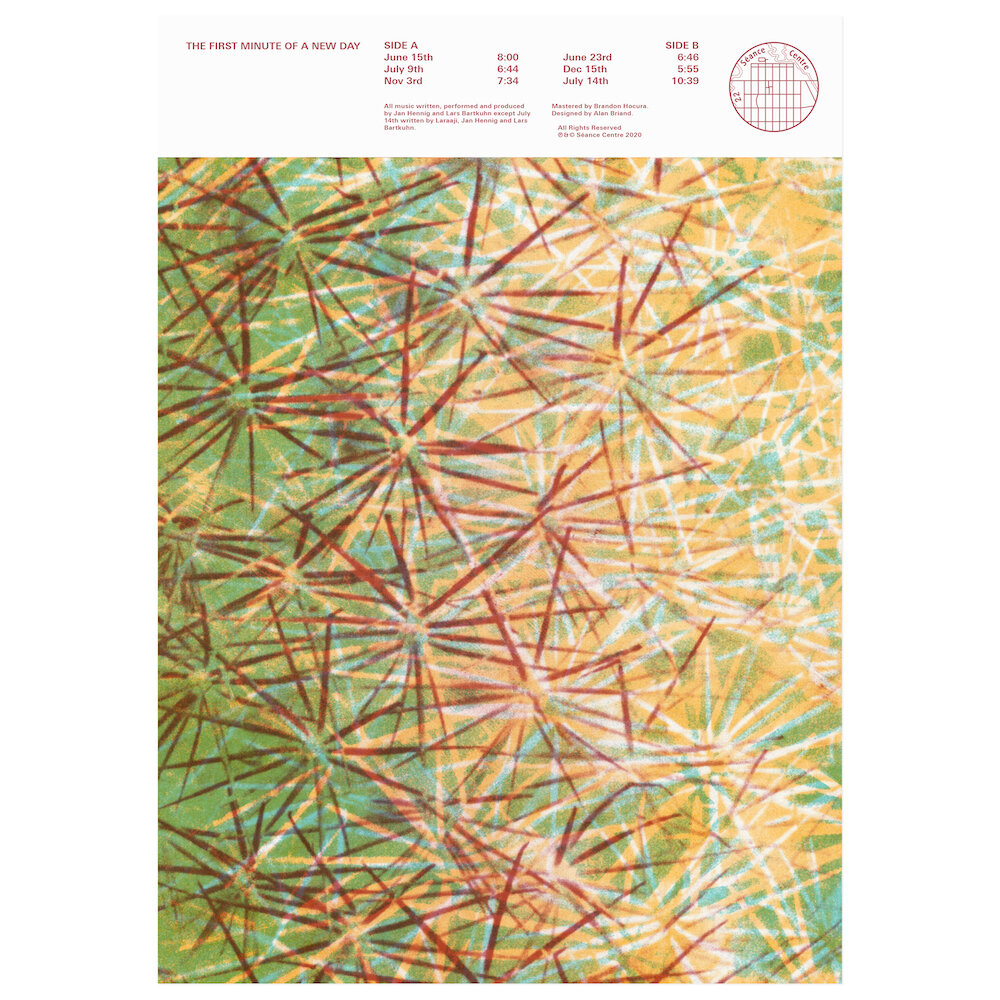
Lars Bartkuhn and Jan Hennig (better known by his artist name Kabuki) have been friends for 20 years, but it wasn’t until late 2017 that they started collaborating musically. Both veterans in their respective corners of club culture (Kabuki in Jungle, Bartkuhn in House), their experiments together saw them drift away from beat-centric, floor-filling music, and land on the deep-listening side of soundsystem culture. These sessions saw both producers combine their individual strengths — Kabuki as an engineer, sound designer and modular synth wiz, Bartkuhn as a classically trained musician, composer and guitar player — into something that carries their sonic fingerprints, yet achieves something greater than the sum of its parts.
Impressed with the results of these sessions they decided to name their project The First Minute of a New Day, and focussed on mixing and editing down the sessions with an album in mind. The duo also enlisted fellow sound-traveler Laraaji, who jammed long-distance, layering his characteristic phased zither over one of their sketches, which became “July 14th”.
All of the tracks on their self-titled LP are named after the day of the initial session, proclaiming their improvisatory genesis. The resulting recordings have the looseness and heady structure of jazz sessions, but with deeply felt electronic production, like something born from Can’s Inner Space Studio or touched by the magical hands of Conny Plank. The deep mix of electronic jazz, new age and ambient, combined with the deft abilities of the players, makes the album feel like a decidedly modern addition to the ECM or Windham Hill canon.
Tracklist:
A1 June 15th (8:00)
A2 July 9th (6:44)
A3 Nov 3rd (7:34)
B1 June 23rd (6:46)
B2 Dec 15th (5:55)
B3 July 14th (10:39)
Limited edition LP with risograph printed artwork.
Purchase digital on Bandcamp
Also check out Missing Pages, a digital single of two unreleased tracks from The First Minute of the New Day studio sessions discovered in the lacuna of time and distance. Purchase on Bandcamp
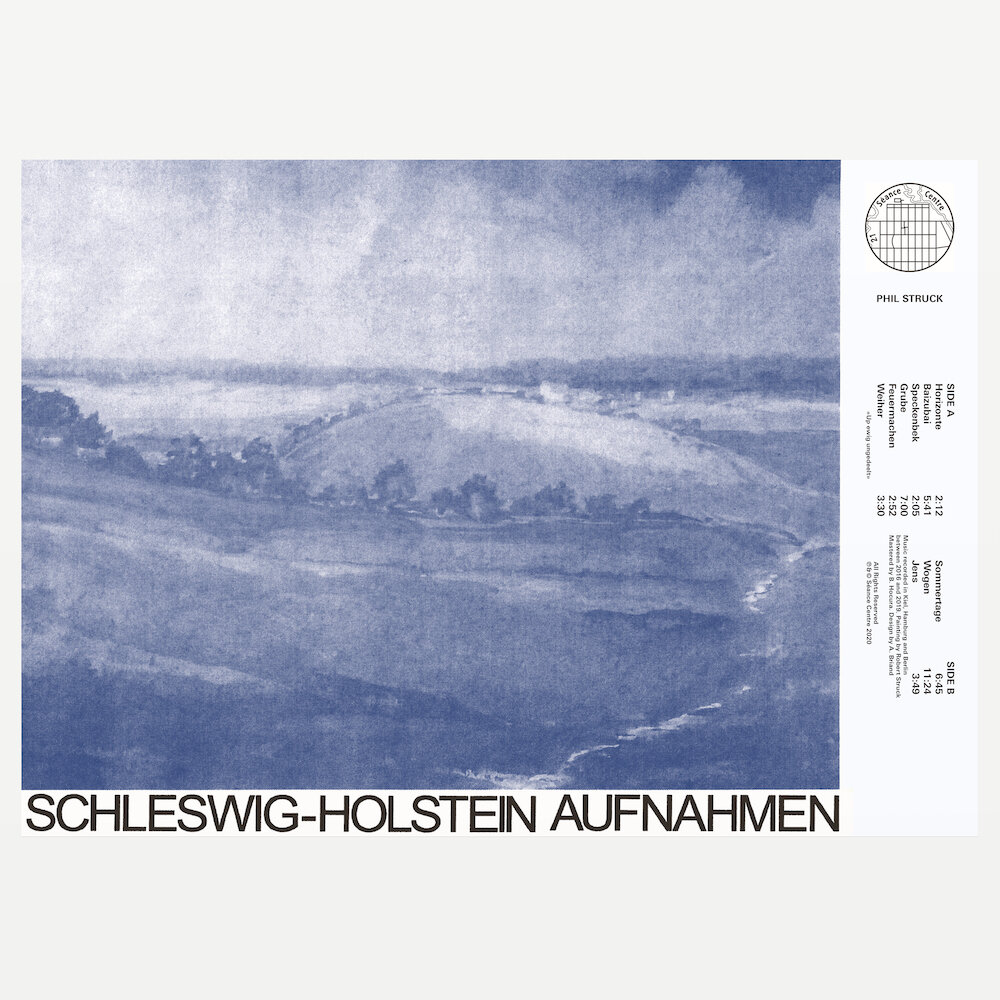
Limited repress with blue artwork now available!
Schleswig-Holstein is a thin land bridge between the mighty hull of the North German lowlands and the long pointed head of the Jutland peninsula, with the gentle Baltic Sea on one side, and the rough North Sea on the other. Numerous lakes, deciduous forests and wide corridors have shaped this region since its formation during the last ice age. The varied landscape, covered with fertile clay and littered with countless large and small granite blocks, is the legacy of the glaciers.
Fascinated by the cultural and geographical history of his homeland, Phil Struck recorded sonic impressions after hikes, wanderings, daydreams, historical readings and childhood memories. Schleswig-Holstein Aufnahmen is the distillation of these diaristic recordings, made between 2016 and 2019, using a sampler, synthesizer, and worn flea market records. Much like the cyclical musings of W.G. Sebald, or Cluster’s pastoral electronic miniatures, these works are intrinsically tied to the landscape of which they were born. The wobble and crackle of the samples is evocative of the craggy scenery of the lowlands, and also describes the patinated atmosphere of memory, found in the work of Vladislav Delay, Pole, Caretaker, Philip Jeck, Ken Jacobs, and Bill Morrison. The painting adorning the album cover was done by Struck’s great grandfather who was also seduced by this meandering windswept land.
Limited edition of 100 LPs with risograph printed artwork.
Tracklist:
A1 Horizonte (Intro) (2:12)
A2 Baizubai (5:41)
A3 Speckenbek (2:05)
A4 Grube (7:00)
A5 Feuermachen (2:52)
A6 Weiher (3:30)
B1 Sommertage (6:45)
B2 Wogen (11:24)
B3 Jens (3:49)
Digital Only Bonus Tracks:
Morast (4:40)
Im Knick (3:35)
Tieden (3:03)
Schauer (2:29)
Feldstein (2:06)
Krug (2:23)
Ungunst (2:38)
Eider (5:54)
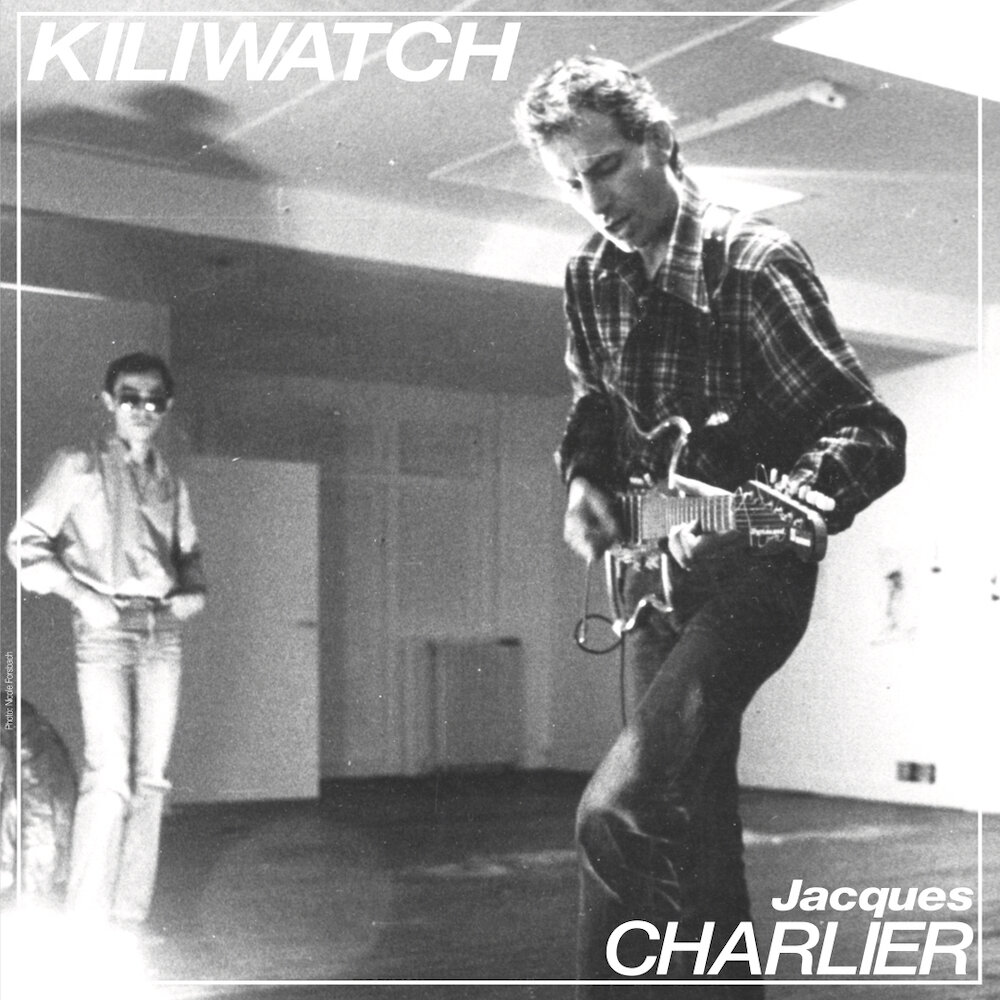
Two tracks exclusive to this single, limited to a 150 copies and only available direct from Séance Centre and Musique Plastique.
Jacques Charlier is primarily known as a visual artist, which obscures the fact that he’s been actively multi-disciplinary for the entirety of his career. Born in 1939 in Liège, Belgium, his interest in all forms of art began at a very early age when he aspired to be a poet, writer, musician, comic book artist, actor, and movie director, and in his own eccentric way became all of these things.
In the 1970s, inspired by the minimalist sounds of Philip Glass, Steve Reich, La Monte Young, John Cage, and Meredith Monk, Charlier armed himself with a custom guitar, and sound modulating effects and started experimenting on his 4-track. He performed psychoacoustic pieces in Liège, Antwerp, Eindhoven, Rotterdam, Milan and Düsseldorf, and in the inimitable performance art video “Desperados Music”, filmed by Paul Paquay in 1979 for Belgian television. Charlier hit a creative stride in the 1980s, recording off-kilter tunes influenced by everything from post-punk, EBM, Yé-yé and psychedelic rock. Similarities reside in the catalogs of Belgian labels Crammed Discs and Les Disques Du Crépuscule, yet even with these genre-bending precedents, Charlier’s music is idiosyncratic to the extreme. In 1984 and 1987, he self-released two cassettes incorporating synth, drum machine, his custom guitar, and vocalist Martine Doutreleau on occasional duets.
This limited edition 7” single offers the previously unreleased jangle/darkwave jam “Kiliwatch”, backed with “Loulou”, a scorching psychedelic oddity from one of Charlier’s original cassettes. It precedes the upcoming double LP compilation of Charlier’s music, and is the perfect introduction to his curious and complex artistic vision.
Co-release with Musique Plastique
Limited to 150 copies, only available direct via Séance Centre and Musique Plastique.
20SC/MP007
Release date: January 17th
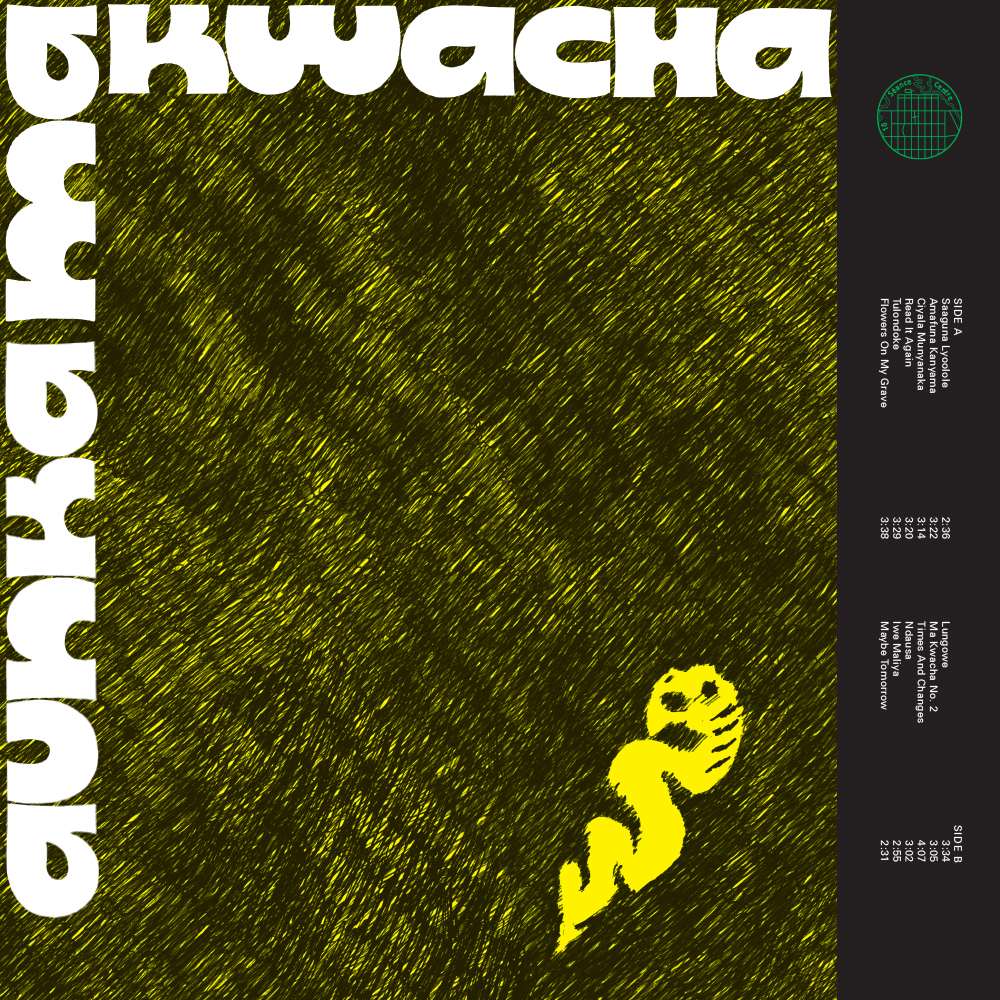
There is music that falls right into place, a perfectly articulated expression of a few distinct influences. Then, there is another kind of median music, something more mysterious, the result of time, place, technology, and alchemy. Zambian writer and musician Smokey Haangala’s Aunka Ma Kwacha (The Money is Gone) released in 1976 is an example of this more mystical metallurgy, falling somewhere between psychedelic Zamrock, US folk, Kalindula, and Sundown Beat (music played after dark) from Tongaland. The unique mix of languages on the album (Bemba, Tonga, Lozi, and English) also suggest this complex cultural crossroads. Underlying the whole album is the insistent beat of a simple drum machine, which was totally unheard of in Zambia at the time, and parallels pioneering experiments by Francis Bebey, Sly Stone, and Shuggie Otis, utilizing a technology which would later come to define dance music. Then there’s the album’s original artwork by Peter Kependa, done in style similar to the infamous Jamaican dancehall illustratorWilfred Limonious, interpreting the album’s title and primary theme; the burden of financial inequality. In this sense the album is political, but the theme is extrapolated and explored through its impact on personal life; love, marriage, social status, and diet. The album is full of cautionary tales, folklore and references to magic, aspects of Zambian culture simultaneously mystifying and alluring to outsiders, part of what attracted Western readers to Nigerian writer Amos Tutuola’s hallucinatory Yoruba folktales. After becoming a household name in Zambia for his music, writing, and television appearances, Smokey Haangala died at the age of 38, the very week his book The Black Eye was published, abruptly ending his brilliant and ascending career. We are lucky to have his inimitable work to remember him by, Aunka Ma Kwacha resting comfortably in the pantheon of re-visionary works by Rodriguez, Kissoon Ramasar, TJ Hustler, and William Onyeabor. There will always be some flowers for your grave, Smokey.
Tracklist:
A1 Saanguna Lyoolole (2:36)
A2 Amafuna Kanyama (3:22)
A3 Cinyala Munyanaka (3:14)
A4 Read it Again (3:20)
A5 Tulondoke (3:29)
A6 Flowers on My Grave (3:38)
B1 Lungowe (3:34)
B2 Ma Kwacha No.2 (3:05)
B3 Times and Changes (4:07)
B4 Ndausa (3:28)
B5 Iwe Maliya (3:02)
B6 Maybe Tomorrow (2:31)
For EU distribution contact: info@rushhour.nl
For NA distribution contact: info@seance-centre.com
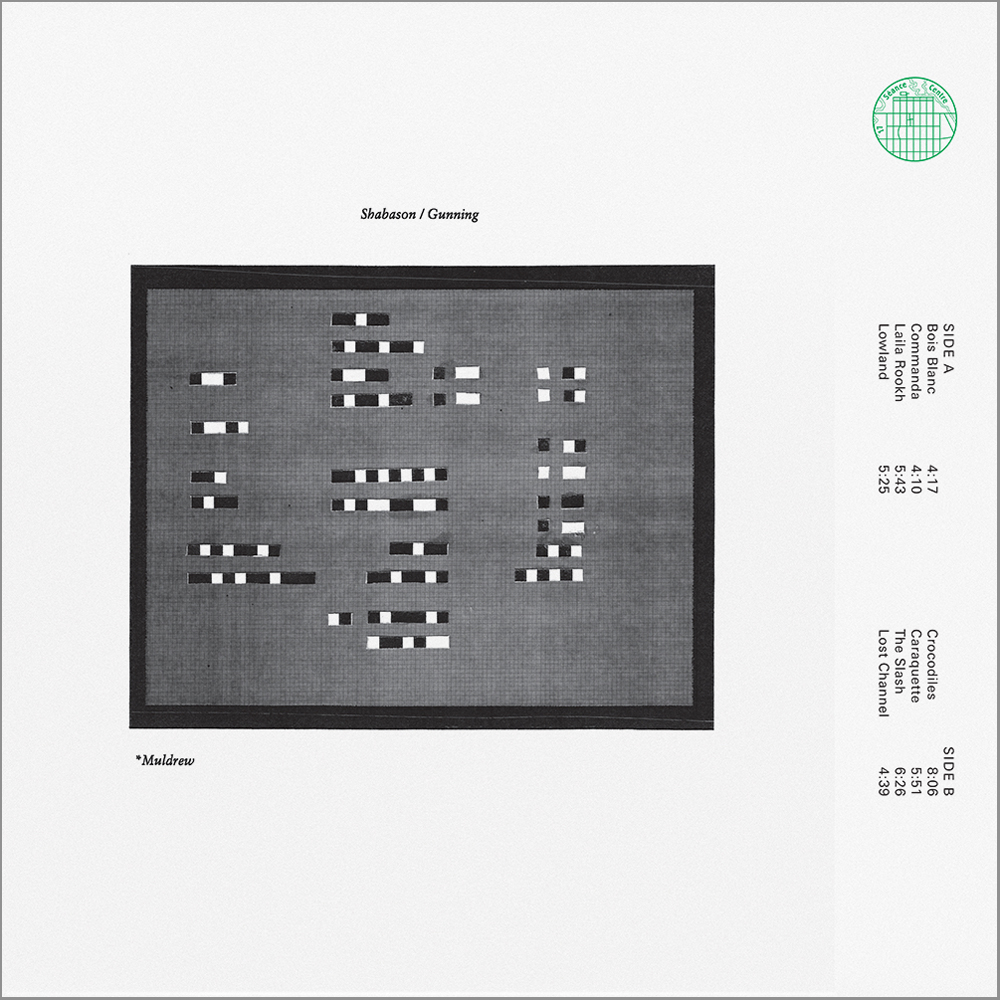
Like many Canadians, Joseph Shabason and Ben Gunning like to untangle themselves from urbanity and disappear up north a few times a year. Unlike other cottage-goers, Ben and Joseph don’t while away the ur-time on jet-skis and lounge on docks reading pulpy mysteries. Instead, they bring a car full of synths, drum machines, saxophones, guitars, samplers, effects, and recording equipment to jam the days away in a cabin-fever inducing haze of wood smoke, cedar musk, hot wires and jazz sweat.
Muldrew, recorded on the northern Ontario lake by that name, is the culmination of several years of this collaborative tradition. Resisting their penchant for composition and arrangement, the duo embarked on this project with only an open framework that encouraged restraint. The result is a sparse and improvisational album, hung on enough structure for each song to evoke a distinct, albeit ambiguous mood. Space is paramount and even the most digital elements breathe with the resonance of the room and mingle with creaking floors. The resulting album is steeped in the placid stillness and northern ambience of a lake at dawn, and the emotive expanse of a forest at dusk. Imagine an ECM cottage-series, or Jon Hassell, Hiroshi Yoshimura, and John Martyn scoring a Bela Tarr film set in rural Canada. This is the future-proof music of metropolitan polyglot minds invigorated by nature’s mute refusal to follow a click-track.
DMM Pressing. Limited Edition of 500.
Tracklist:
A1 Bois Blanc (4:17)
A2 Commanda (4:10)
A3 Lalla Rookh (5:43)
A4 Lowland (5:25)
B1 Crocodiles (8:06)
B2 Caraquette (5:51)
B3 The Slash (6:26)
B4 Lost Channel (4:39)
Release date July 5th 2019
For EU distribution contact: info@rushhour.nl
For NA distribution contact: info@seance-centre.com
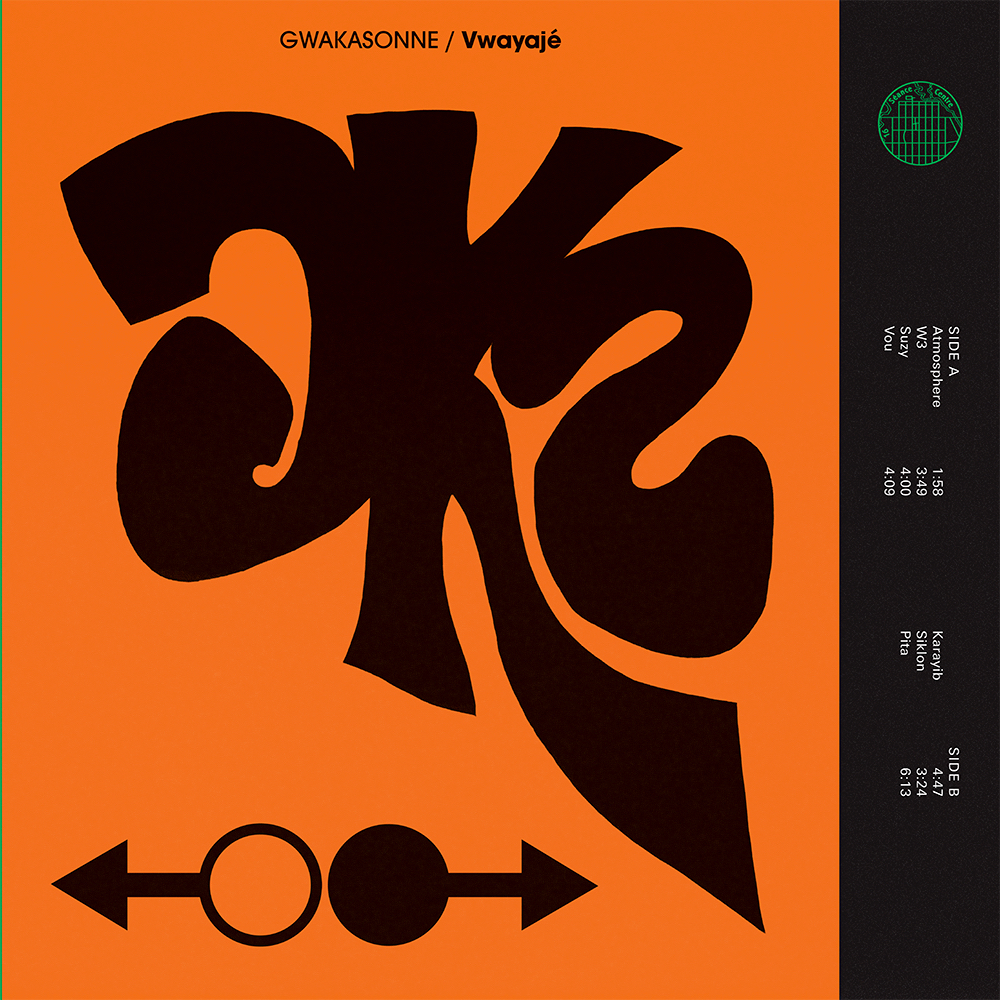
“Stop here!” exclaimed Robert Oumaou as we passed a mango tree on the side of the road just outside of Point-a-Pitre, the balmy capital of Guadeloupe. He filled a plastic bag with ripe fruit, and we set off on our journey across the small Caribbean island in search of musicians he hadn’t seen in years. On the way, we shared stories in broken French and English, stopping at truck stops to eat delicious fried fish. Robert took me to his hometown, and placed a mango and a flower on the grave of his teacher and mentor, a local poet. The seeds of Vwayajé (Traveller) were sewn on this trip, but shortly after returning home, I heard that Robert was ill, and he sadly passed away in 2018. This compilation was originally intended as a way to share Robert’s brazen work with a wider global audience, but it now also serves to immortalize his indomitable spirit.
Gwakasonné is the ecstatic articulation of Robert Oumaou’s artistic and political vision, a unified expression of his interests in American jazz, pre-colonial rhythms, Guadeloupian independence, and Créole poetics. Over the course of three albums, all released in the 80s, Robert piloted a revolving cast of musicians, a venerable who’s-who of Point-a-Pitre avant-jazz pioneers, to deftly intone his creative communal concepts. The songs on Vwayajé are compiled from these three releases, Gwakasonné, Temwen, and Moun, along with an electronic mantra taken from his 2007 solo album Sang Comment Taire. Viewed from our current artistic and cultural landscape, Robert’s work is exceptionally enduring, grounded in its declarations of freedom and foundational use of the Ka (drum) and voice, and prescient in its borderless explorations of protest folk, electronics, ambient atmosphere, music from the African diaspora, and spiritual jazz. The long-form hive-mind expression of the group has parallels with similar explorations by The Grateful Dead, electric Miles, Pharaoh Sanders, and even the Boredoms, but these are only oblique references for a truly peerless sound. Like other conceptual children of Gérard Lockel, the group was part of a progressive movement of like-minded musicians, such as Serge Fabriano, Dao, Erick Cosaque, and Gaoulé Mizik, who embraced Lockel’s modernist ideals, fusing Gwo Ka drumming and tuning systems with contemporary jazz and vanguard recording technologies. Robert’s ecstatic phrasings, embrace of electronic instruments, and daring lyrics set the group apart as the beatific expression of a sagacious soul.
Tracklist:
A1 Atmosphere (1:58)
A2 W3 (3:49)
A3 Karayib (4:47)
A4 Suzy (4:00)
B1 Vou (4:09)
B2 Siklon (3:47)
B3 Pita (6:13)
C1 Nirvacina (3:39)
C2 Respé (5:08)
C3 Lewoz (4:06)
D1 Rekreasyon (3:38)
D2 Algerie 62 (10:35)
For EU distribution contact: info@rushhour.nl
For NA distribution contact: info@seance-centre.com

Plus or Minus Two compiles 4 songs from Kansas City wave pioneers Short-Term Memory’s first cassette album, Every Head Needs Cleaning, with with a song each from their last cassette release Cinema Mind, and their digital retrospective, Flub Dub and Other Love Songs. This EP focuses on the group’s prescient dance-floor DIN-sync workouts which share sensibilities with contemporaneous early Detroit experiments by Juan Atkin’s Cybotron, Ron Hardy’s visionary Kikrokos tape edit, Shoc Corridor’s extended 808 exercises, and 90s Techno Pop by Haruomi Hosono. Rounding off the EP is the existential electronic soul ballad Words. Remastered from the original reels, 45rpm DMM pressing.
Kansas City, 1983: a band formed, wires connected and synapses fired. Three friends, tired of guitar/bass/drums rock started jamming with newly acquired synths and Roland TR 606. They called themselves Short-Term Memory. Thanks to the vanguard technology of the time, these electronic instruments spoke to each other, and Jim Skeel, Kevin Dooley & Jon Paul could program their instruments and ride the DIN-sync wave. Weekly jams became more ambitious, and in 1983 they released their first album Every Head Needs Cleaning on their own Silly Poodle Music label. Over the 80s members drifted in and out of the group, and they released 2 cassettes, an LP and a 7” EP. By the 90s Jim Skeel was at the helm, the only original member, and joined by Tim Higgins he continued to record in MIDI mode for a few years before pulling the plug, leaving recordings and memories that resisted the great fade-out of time, and today sound vibrant and more visionary than ever.
Tracklist:
A1 Twitch & Jerk (4:53)
A2 Yelping Doggies (2:57)
A3 City in Mind (3:30)
B1 Hysteria (4:11)
B2 The Veldt (4:14)
B3 The Words (5:08)
Release date January 19th 2019
For EU distribution contact: info@rushhour.nl
For NA distribution contact: info@seance-centre.com
Design by Alan Briand.
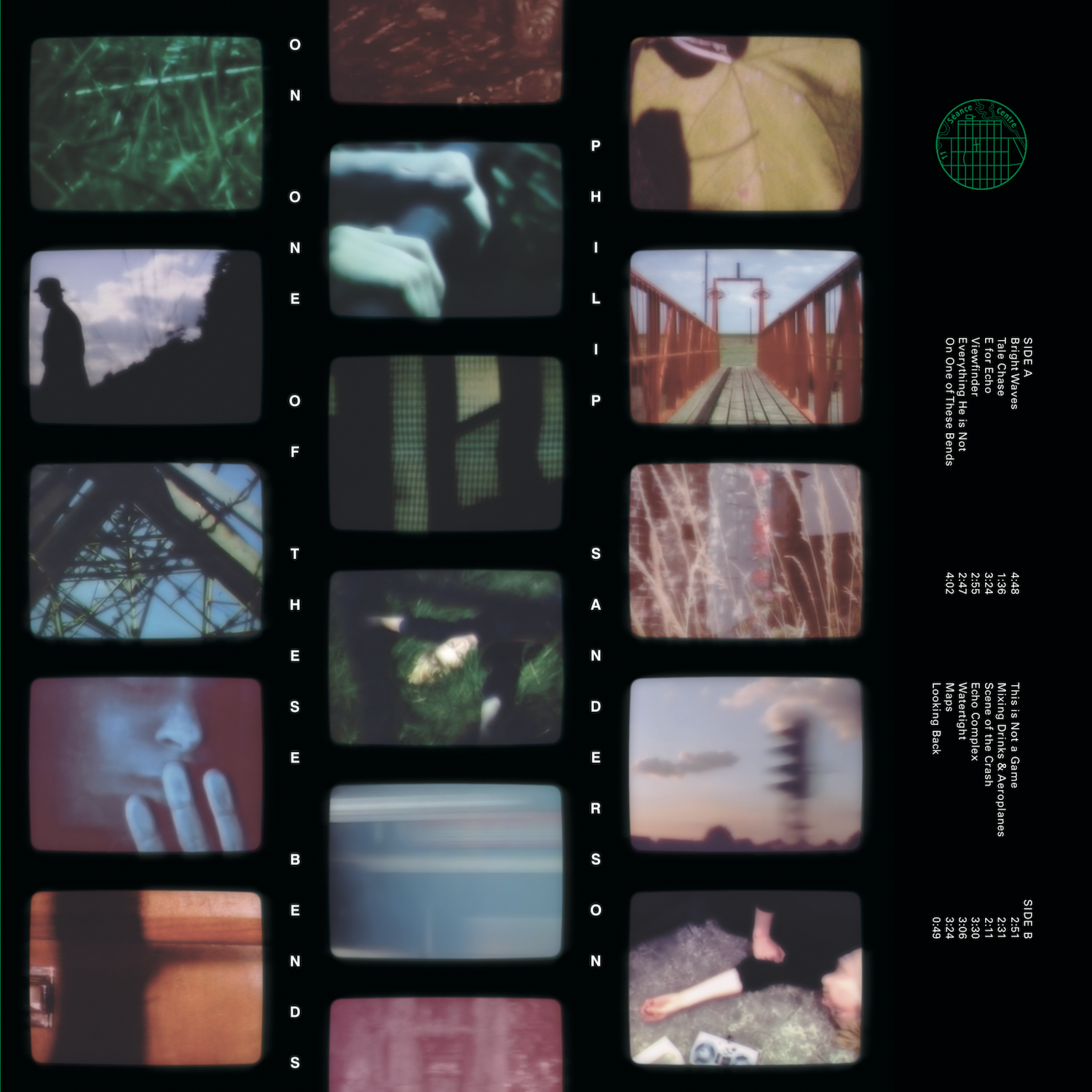
By 1981, after four years of DIY electronics, it was time for a change. For Philip Sanderson that change came in the form of film. At first, requests came from friends for soundtrack work, and by the end of the decade he was making short experimental 8mm films himself. On One Of These Bends is a collection of unreleased songs, soundtrack work and obscure cassette-only pieces from the 80’s which reflect Philip’s shift in focus. It was a departure from the industrial music he had been making with his group Storm Bugs, having more in common with Nino Rota and Henry Mancini, albeit as seen through a DIY lens, and with a reel-to-reel orchestra comprised of an EMS VCS3, vibraphone, DX7, Roland SH-101, Roland TR-606, tape delay, acoustic guitar, fretless bass and Yamaha FB-01. On two numbers, Philip jokingly asked an American chanteuse to “sing it like a cross between Streisand and The Shangri-Las”, and to his surprise she did, the results sounding like a loungey AC Marias, or a lost early Crépuscule recording by Anna Domino. Counterpointing this are tracks such as E For Echo made with just an acoustic guitar, and the very first piece Bright Waves which combines the choral vocal talents of Nancy Slessenger with a Revox tape delay system, originally released on his own label Snatch Tapes, under the pseudonymous duo Claire Thomas & Susan Vezey.
These tracks are presented with the ‘picture turned down’ so to speak, and as such the music acts as a kind of memento mori for the absent moving images, and maybe even for the decade itself. Remastered from the original reels, DMM pressing.
For EU distribution contact: info@rushhour.nl
For NA distribution contact: info@seance-centre.com
Design by Alan Briand.
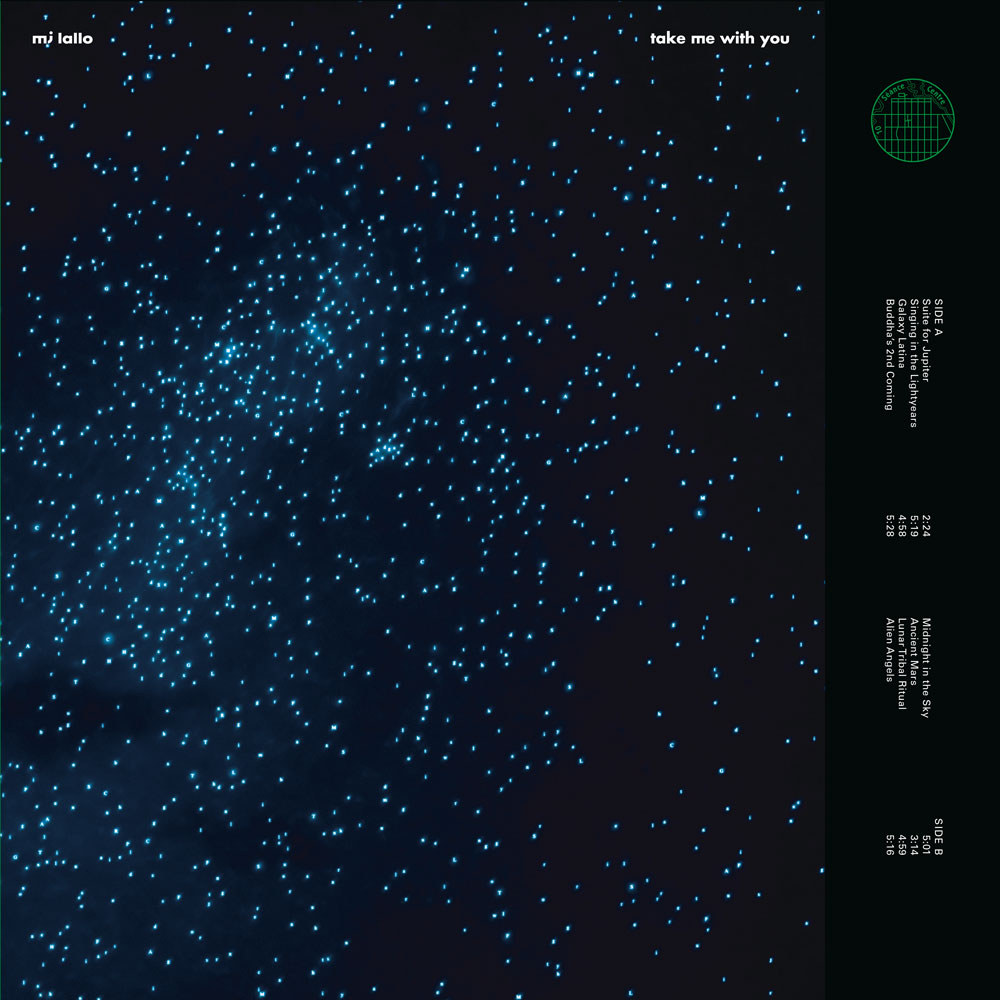
Take Me With You is a revelatory voyage through the captivating universe of voice artist and poet MJ Lallo. The works on this 2LP compilation were all recorded in her home studio between 1982 and 1997, primarily using drum computer, synth and her own voice processed through a Yamaha SPX 90 digital effects unit. They range from wordless harmonizer mantras and primitive drum computer meditations, to psychedelic latin dance-floor anthems and synth-drenched end-of-the-nighters.
Lallo has created her own inimitable galaxy of sound where the human voice, liberated from the constraints of language and abstracted using digital technology, is able to explore the outer realms of human expression, like Joan La Barbara with an Eventide and a new-age sensibility. Although Lallo’s flight path is distinctly her own, her journey converges with other travellers as diverse as Jon Hassell, Laraaji, Stereolab, William Aura, Laurie Anderson, Meredith Monk, Gertrude Stein and even Terry Gilliam (whose film Brazil was a big influence on Lallo). Like something beamed in from another planet, Lallo’s work is both fascinatingly strange and strangely familiar, and will leave a lasting impression for lightyears to come. Double gatefold LP, remastered DMM pressing.
For EU distribution contact: info@rushhour.nl
For NA distribution contact: info@seance-centre.com
Design by Alan Briand.
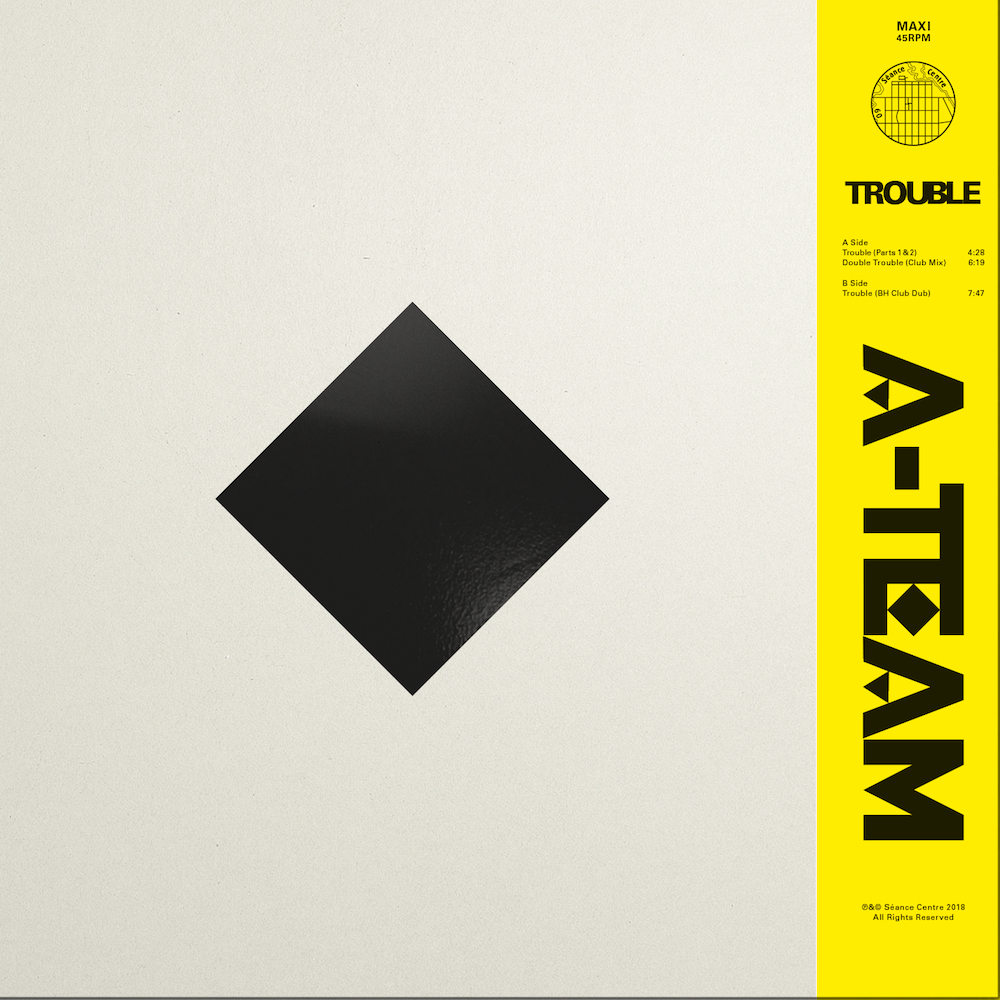
In 1982, a group of friends deep into post-punk, jazz and dub got together in Mad Professor's legendary Ariwa studio and lay down their youthful interpretation of a NYC disco cut. Their unique take included trombone, vibraphone, piano and an ital dose of tape delay. They called the song Trouble and released two versions (vocal and dub) on their friend Tony McDermott's !Drum! label with artwork inspired by Russian Constructivism. The group, comprised of Justin Langlands, Chrysta Jones, John Schofield, Tom Dixon, and Dave Killen, decided to call themselves A-Team, having no idea that Mr. T and Co. would make them almost totally un-google-able 30 years later. The result of their adolescent studio idealism sounds akin to other disco misfits like Arthur Russell, Maximum Joy, Talking Drums and wouldn't sound out of place on legendary NYC label 99 Records. Remastered with an extended Club Dub for maximum dance-floor action.
For EU distribution contact: info@rushhour.nl
For NA distribution contact: info@seance-centre.com
Design by Alan Briand.
Mixed Signals

Mixed Signals and Left Ear Records team up again to refresh LITIA=LOE’s mid-90s album Life Love Dance. On this timeless release, the group channel the golden age of Nu Groove, foundational Warp releases, and the Ibiza days of New Order, all rooted in a uniquely Chicago sound.
Five years after their EBM-tinged cerebral house anthem “Each Dawn Every Dawn”, the Litia~Loe (Life In The Insane Asylum = Life On Earth) crew dropped a lush album of wider proportion — six songs that feel more mature, more confident. Yet, despite this cultivated style, they continue to maintain the distinctive jest of their first outing. Grant, Leon, and Simeon’s new approach was more exploratory, traversing adventurous channels of pop, wave, IDM, and house. Not only are the songs more varied, but the growth of the trio’s technical skills are apparent. These songs feel more considered, like they have been refined over time, given just the right amount of polish without losing the ecstatic rawness that gives them breath and bounce.
“The Rush” follows the crooked path that was featured in their first single, with a vocal performance that maintains a murky half-singing- half-spoken-word opacity; the optimistic lyrics juxtaposed with sinister synthetic strings. “Whisper To Me” demonstrates a new side to the group which shows their ability to break from an orthodox house sound and highlights their pop sensibilities with a narcotic Depeche Mode-ish bassline. “Peep Show” reveals a mellower mode, drenched in euphoric echo and sensuous synth pads. Also featured on this reissue is an unreleased CD instrumental “First World” having its first ever vinyl release.
Life Love Dance captures the sound of primetime Chicago melodic house music, but offers something more expansive. Uninhibited by the borders of genre, the trio took a more inclusive approach to their music, which catalyzed in a playful and peerless production style which makes their work stand out from the droves of generic dance records from that era.
ARTIST STATEMENT
LIFE, LOVE, DANCE was CONCEIVED solely for the dance community worldwide. It is filled with songs of romance and observations on the spiritual and physical side of love while simmering with a social consciousness throughout. It is music for the soul filled with metaphors of truths and reasons. Our music is healing it provides hope and inspiration. A lot of the LP was written spontaneously as we jammed. One of us would come up with a vibe. The others would add their particular flavor to it until we put it all together.
Our music is spiritual. We are asking the listener to look inside for peace and outside for answers. We are exploring music through our heritage and culture. There lies the beginning of understanding. if we water the seeds that were planted before us strong trees will grow in our foundation.
LITIA=LOE (Li-tee-ah-loe)
Is synonymous with the unusual. A movement which absorbs the very essence of life itself. Creating culturally diverse music that is unique, startling and progressively compelling. Its roots lie in Chicago and consist of three ambitious young musicians who play music of the mind, soul and spirit, dedicated to guiding the listener to a higher consciousness.
LITIA=LOE formed in the summer of 1986. The band members met at Ray College Of Design where they majored in Communication Design. They also love fashion which is a major part of their image.
From art came their extension of love for music which they shared. “We all partied at the same clubs, Frankie Knuckle’s famous POWERPLANT where he put everybody up on the hottest Crispy Disco and Ron Hardy’s hardcore dance palace the MUSIC BOX. Ron Hardy would work the turntables so hard your body would be on fire from dancing. We like to party at the clubs that cater to the serious underground crowd.” The band members were taught briefly under the tutelage of LaFayette Leake. (He was a session keyboardist for many of the blues great such as Willie Dixon, Muddy Waters and Memphis Slim). He also backed many of today’s stars. LaFayette taught us that music can be learned at any stage in life. “The essence of music is the pallete of life, let’s paint with the many hues of the earth.”
Release by Mixed Signals / Left Ear Records
Purchase digital on Bandcamp
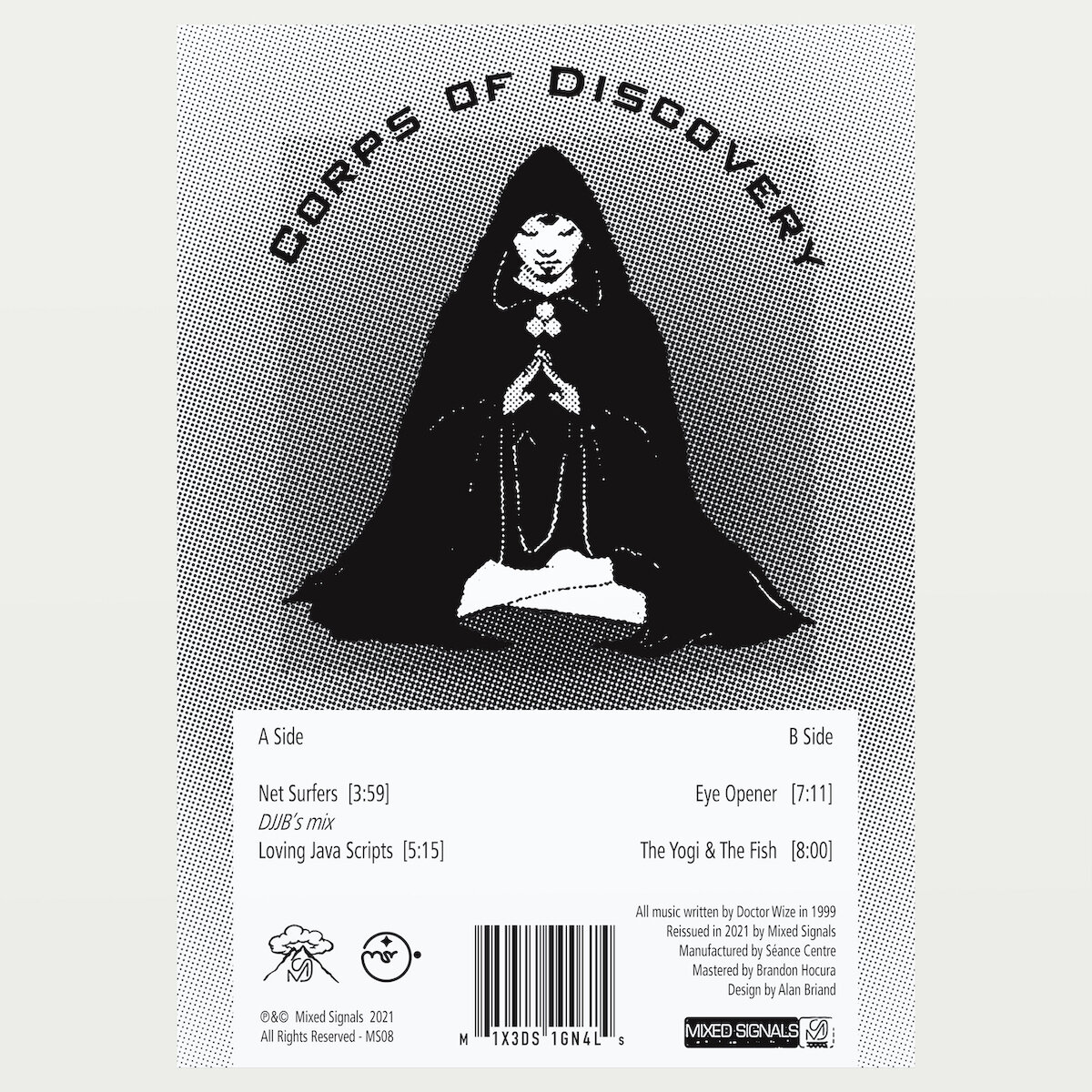
Mixed Signals is proud to shed some light on Doctor Wize’s mercurial dance moves from the 90s with the release of this 4-song compilation EP by Corps of Discovery.
One balmy night in Florida, sometime in the mid 90s, psychologist and electronic iconoclast Doctor Wize (Dennis Weise) and his then wife Czara (Sarah Younger) had a revelation while watching a documentary about the Lewis and Clark expedition of the Pacific Northwest. The name of the exploration party was Corps Of Discovery. The couple were looking for a name for their nascent electronic dance unit, and the idea of setting off on a sonic adventure into uncharted territory fit perfectly.
Ra (Raul Areallno) and Angel (Peggy Powers) joined Wize and Czara on their trip, rounding out the voyage. The group travelled between psychedelic house, day-glo techno, mutant trance, bent jungle, and out-there electronic mantras. No stranger to outlying musical forms, Wize had already self-released two, now legendary sui generis solo records Valhalla and Consciousness Program. Before that he cut his teeth playing with The Wailers in Jamaica, Gong in Europe, and even played on Herbie Hancock’s Rock-it. The music world is starting to wise up, beginning with the 2018 Finders Keepers retrospective compilation, Wize Music. This new release adds another pin on the map, tracing another region of Wize’s unparalleled aural journey.
Limited Edition of 100 with risograph printed artwork. Regular Edition of 200 with disco sleeve and sticker.
Tracklist:
A1 Net Surfers (DJJB Mix) [3:59]
A2 Loving Java Scripts [5:15]
B1 Eye Opener [7:11]
B2 The Yogi And The Fish [8:00]
Release by Mixed Signals
Purchase digital on Bandcamp

Visionary “Rap” EP by precocious 18-year-old duo Eric Davis (ELV) and Chuck Prater (Chuk Chu) from 1989. Imagine if Schoolly D had joined Native Tongues and made an early hip-house EP produced by Larry Heard.
The story of Me & E took shape in Avalon Park in South Chicago, a vibrant, diverse, and politically active community with a rich musical culture. This was the fertile playground for producer Eric Davis (ELV) and lyricist Chuck Prater (Chuk Chu). The park itself was adjacent to Eric’s backyard and they would hop the fence to listen to music, drink beers, and freestyle, even in the middle of the notoriously cold Chicago winters. Eric’s dad, Arlington Davis Jr., was a jazz drummer who played in the legendary spiritual jazz group The Awakening in the ‘70s. Jazz ran deep in their family with proud connections to Miles Davis. Arlington would host weekly jam sessions at his home, and Chuck & Eric were in regular attendance. On those evenings, Eric and his brothers were able to take turns on the sticks alongside the veteran players, honing their fledgling chops. These experiences gave them the confidence to take music seriously, and start a group.
Channeling his drumming skills through an array of synths and drum machines, Eric produced tracks in his bedroom, inspired by artists like The Art Of Noise, Kraftwerk, and New Order. Combining their atmospheric electronic elements with his jazz background, and beat-making skills, he created a distinct sound that still sounds fresh today. Chuck was listening to Hendrix, Joplin, Public Enemy, MC Lyte, and Big Daddy Kane and developed a unique and uplifting lyrical flow. They met up after school almost every day to make music, and quickly produced the four songs that make up their Rap EP.
The music duo never lost touch, and continued to produce throughout the 90’s, forming Rich Boys, another rap group with their crew from Avalon Park. In 1995, Chuk Chu released a solo album, Memoirs of a Blue Light Special, focussing on a more sample based production style. Eric inspired by the house scene in Chicago, produced some ethereal and otherworldly electronic music, which Mixed Signals is compiling for future release. The Rap EP is just an introduction to the ongoing story of Me & E.
Limited Edition of 100 with risograph printed artwork. Regular Edition of 350 with disco sleeve and sticker.
Tracklist:
A1 Whatcha Need (3:50)
A2 The Wrath (3:43)
B1 Swing On (4:03)
B2 Silent Is The E (3:37)
Release by Mixed Signals
Purchase digital on Bandcamp

Wet Silk was a rare digression into house music by the legendary star-crossed duo of Lamar Thomas and Judy Taylor. For this sonic liaison, Thomas brought aboard his high school friend, disco impresario Patrick Adams to co-produce, and the resulting Let Me Do You Baby is a slow and seductive sunset soirée with champagne and caviar. The track is skillfully arranged with slippery 808 programming, serpentine guitar, and silky pads, all sliding around Thomas and Lamar’s playfully suggestive vocals. For the first 12” release of this hypnotic track, Mixed Signals have paired it with two other sumptuous Thom/Tay productions, the rare and dubby house mix of Shelly Pearse’s If You Want My Love, and the instrumental end-of-the-nighter I’ll Be Waiting.
Limited edition of 100 with risograph artwork and hand-stamped covers.
Tracklist:
A1 Let Me Do You Baby
B1 If You Want My Love (House Mix)
B2 I’ll Be Waiting (Instrumental)
Release by Mixed Signals
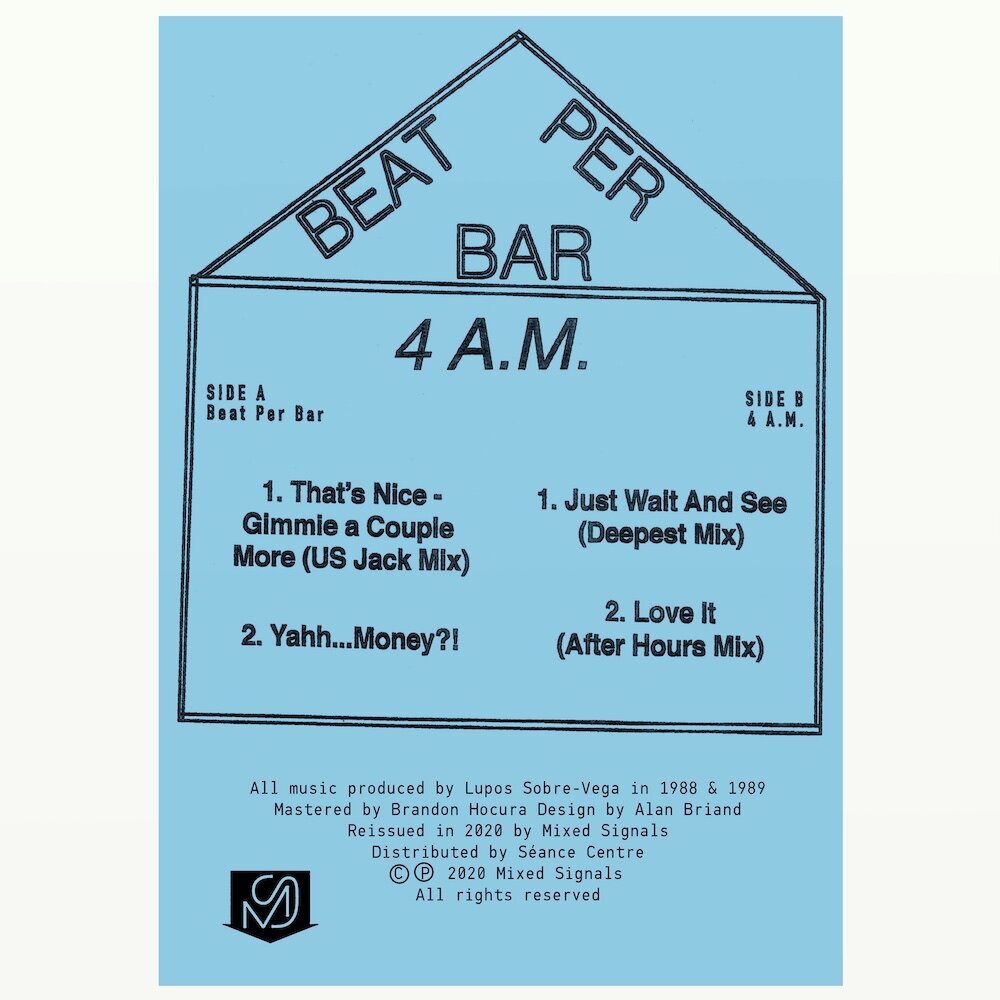
“The 4 A.M. era was marked by energetic evolution. There was always a new, earth-shattering theory to challenge a composer to go beyond the easy "tink, tonk, bleep, blop" sound of the sequenced rhythm.” - Lupos Sobre-Vega
Under the pseudonyms 4 A.M. and Beat Per Bar, Lupos Sobre-Vega released two eccentric 12”s, of what, in retrospect, can be called vernacular house music. Both records are individualistic collisions of New Wave, Bass, Freestyle, Hi-NRG, Acid, and Sample House recorded in Sobre-Vega’s home studio in Orange County, Los Angeles. Using a Yamaha QX-5, Roland S-50, his mom's Roland Juno 60, EMU drum machines, and Yamaha DX-7, he put his nascent jazz chops to use and laid down the idiosyncratic dance tracks that he would self-release on his own label, House Hold Records, in 1988 and 1989 respectively. Although both 12”s were credited to groups, Sobre-Vega confirms that “the so-called band members were club friends. A couple were models and actors, or just plain good ol’ dancers. They were strategically picked by me, of course. So yeah, 4 A.M. and BEAT PER BAR are 300% me. There is no other.”
Despite working within the confines of dance music’s ready-made rhythms, Sobre-Vega’s sensitivity transcends the inarticulate 4/4 beat - vulnerable, idealistic and yearning. The timeless themes on the records reveal his youthful worries about money, intimacy, love and sex. Looking back at dance music history, it is luminaries such as Arthur Russell, Sylvester, Grace Jones, Theo Parrish, and Larry Heard, that stand out as enduring visionaries that transcended stylistic trends. Mixed Signals is proud to illuminate Sobre-Vega’s work in the constellation of dance music’s radical dreamers with this EP comprised of two songs from each his scarce and singular 12”s.
Limited edition of 200 with risograph artwork and hand-stamped covers.
Tracklist:
A1 That’s Nice - Gimme a Couple More (US Jack Mix)
A2 Yahh...Money?!
B1 Just Wait And See (Deepest Mix)
B2 Love It (After Hours Mix)
Release by Mixed Signals

David Webb’s hypnotic and raw Elevate 12” from 1994 reveals an overlooked region in Detroit’s seemingly-endless musical landscape, linking the narcotic minimalism of Theo Parrish’s Ugly Edits with the uninhibited, spontaneous, and jazzy jamming found on J Dilla beat-tapes.
Raised in the musically fertile and adventurous atmosphere of Detroit, Webb got his start as a mobile DJ while in high school during the late 70’s. Captivated by the local boom of soul, funk and disco, he’d frequent the social clubs, soaking up sounds. His earliest experiments in mixing led him to form a DJ crew with his pal Paul Johnson. Paul enlisted a friend, Jeff Mills, pre-Underground Resistance, to join the trio and they called themselves Frequency Sounds. The three would play underground parties and college events for Michigan State students. Throughout the 80’s, Webb and his friends would play at the local clubs around town, like 431 East (now called Saint Andrews), where he played alongside Ken Collier and other Detroit legends. Each week he found new sounds at his local record shop Buy Rite Records on West 7 Mile, where he’d dig for Italo, New Wave, Disco and House, buying 12”s from labels like Prelude, Trax and Beggars’ Banquet on sight.
Webb’s earliest experiments with producing his own sounds started when he bought an Echoplex and ASR-X Drum Machine. During his sets he’d add live effects & rhythm to his favourite songs. This led to building a mini home studio where initially he would record all his songs overdubbing on two tape decks. Two of his earliest experiments, Elevate and Who Am I? Were self-released as a small- run promo 12” that he would hand out to his friends and local DJs. Webb quickly sold out and gave away the pressing, and he would often hear it played by DJs around town, but over time it drifted in the margins, as an obscure footnote in the history of Detroit Techno. Mixed Signals is proud to bring this important record back into circulation, seducing a whole new generation of DJs and dancers with Webb’s dark and silky pleasures.
Limited edition of 200 with risograph artwork and hand-stamped covers.
Tracklist:
A1 Elevate
A2 Elevate (Broke Down Mix)
B1 Who Am I?
B2 Who Am I? (Sweet Hi End Mix)
Release by Mixed Signals

LITIA=LOE’s Each Dawn Every Dawn is a nearly-lost existential house anthem from Chicago’s second generation, heavily under the influence of Ron Hardy, European EBM, and the struggle of daily life in the city’s marginalized neighbourhoods.
LITIA=LOE (Life In The Insane Asylum = Life On Earth) formed in Chicago amidst the burgeoning house movement of the 80’s. Leon Williams, Daryl Wilson, and brothers Grant and Simeon Rogers would meet up every weekend to soak up the sounds at local clubs like Music Box, Medusa, PowerPlant, The Warehouse, and Frankie Knuckles’ Dance Palace, where DJs would mix everything from disco to new wave, industrial to house music. After the clubs closed, they would retreat to Leon’s basement to experiment with synths, inspired by what they had just witnessed at the clubs. Wired with excitement, they would stay up all-night, jamming and sequencing beats together late into the next afternoon.
Simeon was the technician of the group, programming drums, layering sounds, and finding the right synth textures. Leon was the creative wild card, coming up with conscious lyrics and vocal melodies and tweaking the sounds to be more expansive. Grant kept things anchored in song, composing and coming up with structures. Daryl helped compose a lot of the unreleased songs and was a great arranger and bass player, but decided to leave the band for personal reasons.
With a Tascam 8-track Portastudio, the group would cut rough tape mixes of their tunes to share with friends who would DJ the demos around town. Influenced by groups like Nitzer Ebb, Bauhaus and Chris & Cosey, they came up with a track heavy with distortion and feedback. A tape of that track started circulating around the clubs, and legend has it that Lil Louis liked it so much he claimed it as his own. Realizing that competition was fierce in the DJ world, they decided to cut a record next time so they could lay claim to their work. This led to the release of Each Dawn Every Dawn, released on their own Facade label in 1989. The group distributed the record themselves, handing them out at clubs, and dropping them off at local shops and record pools.
At the time, the record barely made it out of Chicago, but the group did have a few chances at notoriety. Once with Rocky Jones of D.J. International Records who offered a “Blood contract” for joining the label. The group declined. In the mid 90’s they had an opportunity to open three nights with Living Colour, but the night before, one of the keyboardists got stage fright and they had to bail on the gigs.
Left Ear Records and Mixed Signals is proud to offer a new dawn for this incredible unsung group with a remastered DMM reissue of Each Dawn Every Dawn, including the original alternate mix called “The Morning After”. A redux of LITIA=LOE’s Life Love Dance EP will follow later this year.
Release by Mixed Signals / Left Ear Records

Reconnected is compiled from Harold Lucious’ addictive 1990 release Connections, a visionary mix of soulful house, New Jack Swing and RnB, an American predecessor of street soul.
Deeply connected to music from an early age, Harold started his music career in the early 70s at the age of 16. He sang in his first group, The Final Seconds, who pressed a 7” single in New York City in 1973. The group would go on to record a full album called Neo Cosmic Blues, but never had the chance to press it. They would continue to perform and write together throughout the 70’s and searched in vain for a label to work with.
During that time, Harold landed a guest spot on the legendary Brother Ahh record Move Ever Onward, set up by his manager who was Brother Ahh’s sibling. Harold is listed as having played koto, but really he provided background vocals. Throughout the 80’s, Harold worked at WBI radio programming talk shows. On air, he would act out modified scripts to Richard Wright novels like “The Outsider”.
Connections was his effort to finally release a record after years of recording and playing music. Experimenting with dance music he came up with an album that was inspired by his love of house music and RnB. He sold the record out of his backpack, ending up with boxes of copies that were eventually destroyed when he had to move from his long-time apartment in Brooklyn. Few of the original LP remain, and it has become almost impossible to find.
Reconnected is a remastered redux with four songs taken from the original LP, and pressed onto a loud 45rpm 12” for maximum dance-floor potential. Mixed Signals is honoured to introduce Harold’s music to a contemporary audience around the world.
Release by Mixed Signals

Eros’ Go For It is a fearlessly original take on Paradise Garage disco, mixed in a way that feels equally Mad Professor and Walter Gibbons.
The story of Eros begins in a high school in Vauxhall, New Jersey in the mid 70s when four kids began a friendship based around their mutual love of soul, funk, rock, disco, and bands like Earth, Wind & Fire and Funkadelic. Assanouan G’Bado, Fletcher Gaines, Bobby Jones and Mike Freeman started off jamming after school, playing occasional gigs in New York and honing in on an original sound. When the group graduated, Assanouan and Bobby went off to the service and Fletcher went to university.
Eros reunited in the late 70’s and began taking things more seriously, producing a set of songs with the intention of getting a deal with Motown. The morning after recording a full album’s worth of material, the group flew to Detroit hoping to sign a record deal. The legendary label was interested in the songs, but made them an offer that didn’t feel right for the group. The songs were shelved and Fletcher and Bobby moved on to new ventures.
Mike and Assanouan pursued a self-released single on their own DAP records, reinterpreting two of their Motown demos with drum machines and overdubs to fill in for their two missing bandmates. Go For It was their individual take on disco, and the new 1985 remake took the AOR-oriented demo version, and transformed it into a transcendent dance floor illusion, that, in an alternate universe, would have turned dancers at the Paradise Garage upside down. Similar to Stephen Encinas’ un-classic, the song mutates deftly at the half-way point, opening up into a stripped-down and dubbed-out denouement, adorned in cascading electronics and the soaring vocals of Barbara Green. Go For It is the first of two releases from Eros on Mixed Signals, and pairs the group’s expanded electronic remake with the original Motown version, rescued from the last surviving demo cassette. Stay tuned for the unreleased demo album Motown missed out on, slated to come out later this year.
Release by Mixed Signals
Other Releases
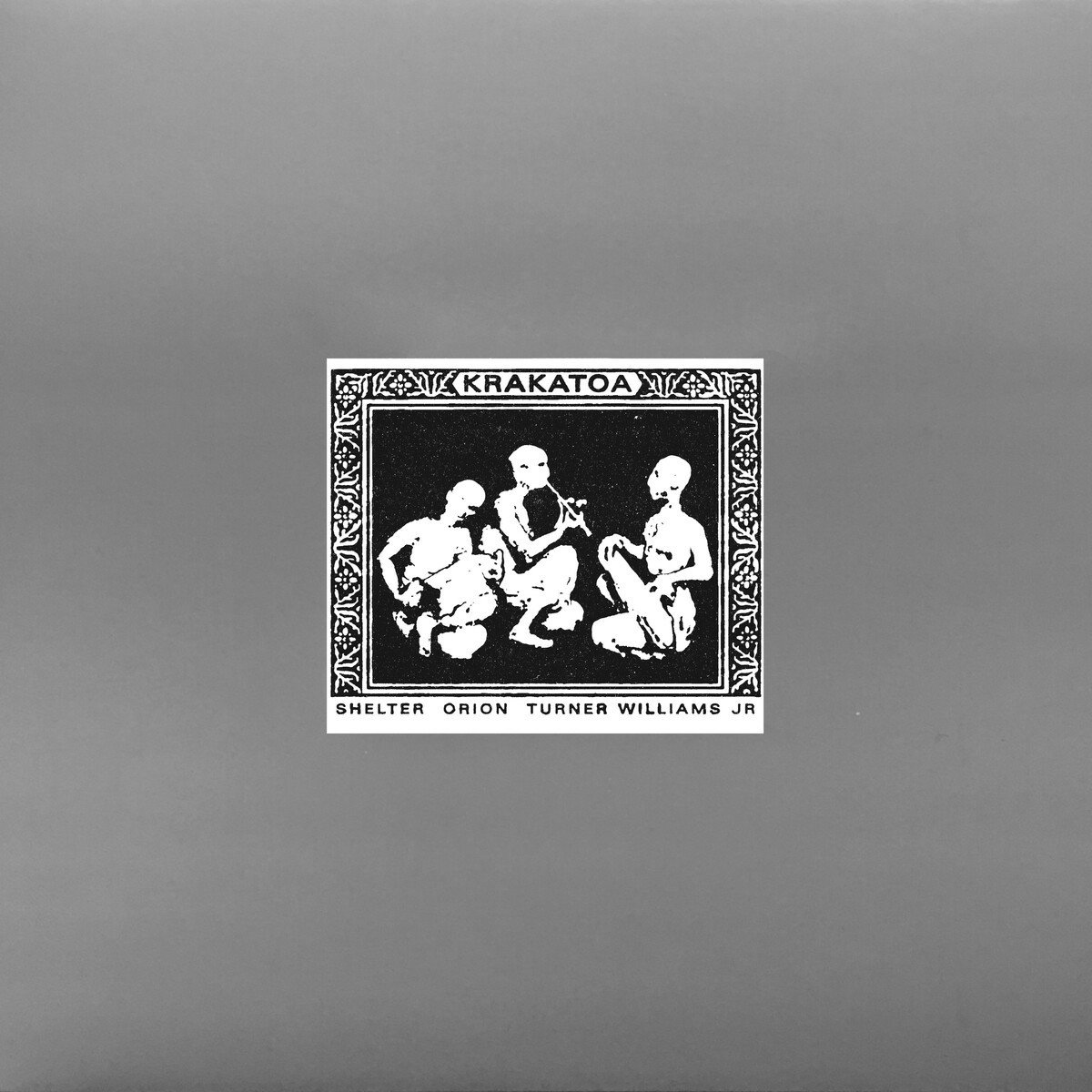
Canadian Edition on white sleeve with paste-on riso artwork and SC stamp!
Recorded during two sessions at Shelter's Studio 121, the trio carved out this heavily psyched post-ancient LP which they later decided to call Krakatoa. The title was not choose for a hint of any kind of orientalism, but to evoke a total freeness, a deep dive into the furnace of a volcano that comes to mind when listening to the record. Even if it also reveals elements of pan-traditionalism, with a mixture of electronic tablas, dub delays, deep flutes, bagpipes organ (?!), and of course Turner's electric shahi baaja; these elements are much more twisted into an alien-eerie to the core than use to evoke a "West meets East" connotation. With common inspiration taken from Jon Hassell, Don Cherry (especially his late work with Latif Khan), Leven Signs, Pierre-Jean Croset, Terry Riley, John Fahey, the trio managed to produce music that is of its time and quite incomparable. Far from being a tribute to their masters, they continue the legacy of plugged-in weirdo fourth dimension dreamy jams.
New release on Les Disques Omnison and Protopost.
Formed in Berlin at the turn of the millennium, Kulku have evolved as a highly unique and free-formed collective of musicians that make trance-inducing, jazz-entwined, percussive and soulful (mostly) acoustic music that takes cues from the rhythmic propulsion of Jaki Leibezeit’s Can, the street-folk of Moondog, the minimalism of Steve Reich, and the droning rock n’ roll of the Velvet Underground, forming a sound that they themselves have coined ‘No-Age Krautrock’.
Following on from last year’s sold out debut LP ‘Fahren', 'Reset To Be’ offers 5 new songs across 2 sides of vinyl. This is a record that perfectly showcases the unique identity the band have been developing over the past 20 years, a sound crafted through experimentation and innovation with primarily acoustic instruments; droning harmoniums, repetitive and phasing xylophones, timpani, cello, scrap metal and woodwind reeds, all sitting alongside soulful saxophone and the voice of frontman Andreas Riska, singing in both German and English.
New release by Phase Group.

Mystical modern soca from Panman Pat, a brilliant addition to the Local Dish community. Pat has backed up everyone from Sparrow to Shadow, played with Cyril Diaz in the very first Caribana in 1967 and was the first person to bring steel band programs to Toronto schools. This is his second single for Local Dish featuring laid-back disco soul and a heavy old-style calypso.
Extremely limited hand-made lathe release on Local Dish.

Debbie Gaskin returns with another soca winner on Local Dish. This time with a deep cumbia version on the flip by Eternal Rhythm Combo, irresistible!
Very limited lathe-cut with hand-stamped sleeve. One per customer, please!

Unreleased cuts from a dreamy session on Dupont St. many moons ago. Tchaikovsky's "Swan Lake" and disco groove on the robab by Syed Aref, a Canadian multi-instrumentalist and composer currently based in Tehran.
Very limited lathe-cut with hand-stamped sleeve. One per customer, please!
Mystical modern soca from Panman Pat, a brilliant addition to the Local Dish community. Pat has backed up everyone from Sparrow to Shadow, played with Cyril Diaz in the very first Caribana in 1967 and was the first person to bring steel band programs to Toronto schools.
Extremely limited hand-made lathe release on Local Dish.

Psychedelic bouzouki and Greek dub from multi-instrumentalist Demetri Petsalakis!
Extremely limited hand-made lathe release on Local Dish.

The second record in a series of unissued recordings made by Prince Jimmy Osula during his time in Toronto. Prince is now living in Benin City, Nigeria and awaiting coronation as Arala of Benin Kingdom. This is Osula dubwise!
Extremely limited hand-made lathe release on Local Dish.

The first record in a series of unissued recordings made by Prince Jimmy Osula during his time in Toronto. Prince is now living in Benin City, Nigeria and awaiting coronation as Arala of Benin Kingdom.
Extremely limited hand-made lathe release on Local Dish.

Originally released on tape by SicSic in 2014, Aprilnacht commemorates a decade of music from Brannten Schnüre and marked the spring in a tetralogy of albums about the four seasons when it came out. Back then the Würsburg-based project consisted solely of Christian Schoppik, who later welcomed Katie Rich to take over the vocals. He used to perform as Agnes Beil, but dropped the name when, while making this album realized his music was becoming "much gentler and more fragile". Aprilnacht already captured the particular musical ideas that Schoppik would thoroughly keep exploring, delving deeper and deeper into the use and manipulation of samplers from sources so diverging as to wander between the five continents to post-war German family television and cult cinema. Heir of the ritualistic intensity of Coil, of the intricate sampler assemblies of Ghédalia Tazartès', and of the dusty, dismal old ballads from around the world, Brannten Schnüre manages to make these paths cross in a territory that is as inherent as it is uncanny; sieged by the past and intimate as a hearth. An organic approach to folk, ambient, and sound collage, where ethereal yet thoroughly textured pieces coalesce in enthralling, delicate, and innermost musical rituals.
New release on Aguirre.

“On one of the year's most staggering weirdo club records, Príncipe MVP Rogério Brandão sets expressive new levels for batida/kuduro and progressive African dance music with an extraordinary set of slow/fast and humid head-wreckers that sound like some indescribable melt of Matias Aguayo/Closer Musik, Villalobos and futuristic funk.” — Boomkat
‘Chá Preto’ invites the dance to the furthest reaches of DJ N-Fox’s imagination. Since debuting in 2013, the Lisbon-based artist has been a radical force in contemporary club music, physically making everyone move to his different beat and vibe. Perhaps best compared to Nídia in his field for an ability to juice unique motion and emotion from his music, in ‘Chá Preto’ he follows his nose for outright weird and singular style and pattern on all counts, seducing the mind/body with liquified syncopations and synth sensations that just feel alien and highly satisfying to even the hardest-to-please quibblers.
On his first mission since 2022, Brandão follows the form of his ‘Música Da Terra’ EP and a string of Warp bullets into the beyond. The spectral carousel of lop-sided subs and haunted fairground melodies in ‘Ondas da Terra’ is slow and screwed, like several tracks cut in concentric circles and playing off one another, battling the grid, before ‘Má Rotina’ pushes a more bittersweet sort of bloozy introspection with clipped West African rhythms trotting on bombed out bass laced with ambient pads and a hooky chant that sets up ‘Mutadoree’ on a tip like Lolina adrift in Yorgos Lanthimos’ oneiric depiction of Lisbon in ‘Poor Things’, conveying fantastical feelings we can’t quite translate, or fathom.
‘Bom Te Ver’ recalls Marina Rosenfeld’s electro-dub as if kerned by Autechre’s AI, while the diffracted flow of the closing ‘4 Fantasias’ most strongly reminds us of Closer Musik’s ‘You Don’t Know Me’ alltimer with its humid landscaping and sensual, snake-charming melodies.
New release on Príncipe.

Boomkat: Blacksea Não Maya’s DJ Kolt serves pure kuduro hoof and wiggle on his penultimate 12” with Lisbon’s Príncipe powerhouse.
Previously heard on jams with DJ Noronho and DJ Perigoso in 2015, DJ Kolt recently signalled his intent to retire from the kuduro game, but not until he’s dropped two final 12”s on the deadly Príncipe. ‘Verdadeciro’ features four swingeing variants toggling the pressure gauge between sub-loaded and breezy canter, galloping badness, and a lethal, UKF-style winner that’s bound for summer destruction.
Vibes steadily escalate in intensity from the pendulous, scything drums and bloozy string motif tucked into bolshy motion on ‘Fiqexpert’, to the big room-sweeping rave flares and powerful slosh of ‘VUGUVUGUU’, to dial in wickedly discordant bleeps and see-sawing leads with a wide-eyed UK ’91 gnash and surprisingly moody finish on ‘BATESTE’, then utterly finishing us off with the laser-guided hardcore pressure of ‘Shaman’, complete with diva stabs and fanfares synched to subbass in a way recalling Pinch’s post-UKF productions, but with bags of extra wiggle room.
New release on Príncipe.

Boomkat: DJ Danifox of Tia Maria Produções delivers the deadliest Príncipe since that incredible last Nídia album with a highly developed take on humid, slow club and soul music that’s practically dripping with sweat. Essential late night gear of the highest order, tipped if yr into Theo Parrish x Nídia!
‘Ansiedade’ is another one of those perfect deployments from Príncipe, full of Afro-diasporic, rhythmic psychedelic energies spliced with electronic echoes of Portuguese fado’s melancholic blooz. Active since 2014 in Tia Maria Produçuões’s rotating assembly, Danifox really came into his own with 2020’s ‘Dia Não Mata Dia’, and here builds on that EP’s dare-to-differ club purview with a compellingly deep, eyes-down appeal.
New release on Príncipe. All copies have one very slightly bent corner.

“Venus Rising From The Sea’ is a collection of love-themed cover versions featuring Teresa Winter, Susu Laroche, Alex Zhang Hungtai, aya, Maria Minerva, Christina Vantzou, Spivak, Salamanda, clare rousay, Wild Terrier Orchestra, Dania and Flora Yin Wong herself covering songs by The Cure, Robert Wyatt, Mariah Carey, The Cranberries, Pentangle, The Carter Family, Spiritualized, Debussy and more.” - Boomkat
‘Venus Rising From The Sea’ takes its cues from the classical deity Aphrodite - whose name literally means “sea foam” - for an ever necessary expression of love in the modern age. The label asked friends and collaborators to interpret “love” in whichever way they saw fit, be it obsession, self-love, unrequited, unconditional, whatever. But despite the open brief, and the vastly different modes of execution, all the artists involved somehow ended up linking hands with a shared determination to smudge the original songs into bleary-eyed, uncanny traces of the originals.
New release on Doyenne.

Dancehall Showdown is a wild non-place world where 60’s Spaghetti Westerns, 70’s Library Synth Records and 90’s Golden Era Dancehall come together for a death-defying communion inna Yard! The old posse of SKRS and MX7 ride once again under the banner of their co-run label, ICS Library Records, off into the fringes of sound-based reality.
SKRS' OG Papa Coolbreeze reinforces their select palette, "This album is our reiteration of influences ranging from Spaghetti Western era Upsetters to Raymond Scott's Manhattan Research Inc. to early Horsepower Productions. Now the soundtrack we paint, however, is something entirely unique on its own".
Simply put: there's NOTHING like it out there!
New release on ICS Library Records.

“First time vinyl issue of a killer, impossibly rare document from NYC no wave pioneers Don King, the short-lived mid-'80s post-Mars band from Mark Cunningham, featuring Arto and Duncan Lindsay, Lucy Hamilton and John Erskine in their all-star lineup, on a hyper-sensual and humid, screwed Jazz tip.” - Boomkat
Centred around two members of Mars - Lucy Hamilton and Mark Cunningham - renowned for featuring on Brian Eno’s legendary ‘No New York’ (1978) survey, as well as affiliates of Sonic Youth and Swans; Don King were a lesser known vehicle for the no wave rogues to follow their nose into the weirdo recesses of art-rock/free jazz that followed the rudimentary, DIY tenets of the original no wavers. The skronk quota is high on this one, but their performances are so much more sensual, humid and slower than the no wave bracket would suggest, revealing the band like some loose echo of Sun Ra or a spangled Arthur Russell jam with Peter Zummo in their performances surrendered from shows in Geneva, Lausanne, Toulouse, Barcelona, Padova and Parma, and first issued by Barcelona’s 4 Sellos label in 1987, in the years after their s/t debut and a 1985 single for Cabaret Voltaire’s Double Vision label.
The 10 pieces, room recorded in all locations, are replete with audience chatter in the air hovering through a brassy rabble in operation. Led by the twin trumpet and bass clarinet bleat of Mars’ Mark Cunningham and Lucy Hamilton, Sonic Youth producer John Erskine provides taped percussion tracks with backing from the Lindsays, and Toni Nogueira, as they roll out from the minimalist reps of ‘Fern Gully’ to a sonorous industrial tango, and Hamilton’s operatic wail on ‘Obsolescence’, taking in a skew of jazz standard ’Summertime’, fraying into proper no wave shred and racket on ‘Mediterrain’, and like a punk Sun Ra in ‘Don Rey’, reminding us of Alex Zhang Hungtai’s recent foray into voice-note recorded spiritual, concrète jazz.
New release on Nashazphone.
Khotin Industries is a one-man Warp and these two lysergic missives further decentralize the normative electronic music narrative, throwing Edmonton, Alberta into the mix. Putting the WoW in wild rose country.
New release on Khotin Industries.

Planing axes between iridescent new age ambient, sublime folk and avant-classical, to miasmic drone and plangent shoegaze; ‘A Day or Two’ charts the Non Standard Institute’s first actions in 6 years and serves as a compelling reminder of their intuitive work in abundance. Expanding and contracting their sound across 18 parts, they arc from heaving, oddly-tuned drones to smoggy, surreal soundscapes, bringing a wealth of fine-tuned instincts to the table. With Max Loderbauer’s 35+ years as Berlin ambient pioneer with Sun Electric, jams with Villalobos, and roles in Vladislav Delay Quintet and the Moritz von Oswald Trio, he’s matched by Freund’s 40 years of deep engineering expertise embedded in the experimental industrial and techno trenches.
“Japan’s exceptional NAKID label follows up AOTY-worthy records from goat (JP) and KAKUHAN with a total curveball, the first album in years from Max Loderbauer (Sun Electric) and Tobias Freund’s cult Non Standard Institute. Delving deep into the aether with a double LP - almost an hour and a half in length - featuring ruined, vaporous and engrossing ambient variations on a theme, it comes highly recommended if yr into Selected Ambient Works Vol II, Chained Library, Jan Jelinek, or TCF’s generative works.” — Boomkat
New release on NAKID.

“Rat Heart lands on Modern Love’s 7” series with two asymmetric ohrwurms, featuring Ben Vince on the stunning saxophone-led A side, with a wildly morose Spanish guitar ballad on the flip.” — Boomkat
Tom Boogizm’s Rat Heart has already given us AOTY-worthy excursions into fizzing ambience, fritzed Arthur Russel-esque scuzz, flipped neo-soul and bleary-eyed bangers, always with those timeless hooks and wild-but-insular production. Never one to care much about fitting in with any one thing or another, Rat Heart evokes that golden stretch in the mid-late 80’s when heads got past the shine of new technology and started getting deep into the thing - you know the stuff - Thomas Dolby, Prince, Prefab, Scritti.
In other words, Rat Heart is supremely well suited to the 45, giving sharp focus to his pop instincts, tightening the screws in a way that echoes contemporary work by Dean Blunt or Vegyn, you can imagine his thing properly going off too.
In fact, you don’t really need to stretch the imagination too much with this one, the A side guided by the spirit of Sade via Prince in a slow love mode, Ben Vince’s Saxophone providing an added layer of moody romance. On the flip, it’s all Spanish guitar and broken (heart|)strings, just a solitary synth and that gutted vocal for company.
New release on Modern Love.

Red-eyed exhalation from West Mineral daytrippers Florian TM Zeisig and sound engineer Jordan Juras (aka PVAS). Wake and bake material if you’re into GAS, Reagenz, Ulla, Huerco S, et al.
“Successor to their Mo Wax flavoured debut album ‘Napping Under God’ (3XL, 2022), the languorous wooze of ‘BonGBoaT’ derives from a week the duo shared soaking up nature in and around a small Bavarian village, where days were spent hiking, boating, and recording flutes in caves - that sort of thing.
The music follows to metaphorically represent that atmosphere on a spiritual, rather than literal, level. Zeisig’s acclaimed feel for lushly variegated texture has already been well documented on these pages, and that space is here beautifully accentuated by the technical suss of Juras, between them bestowing a carefully plotted calmness and soothing conception of environmental ambient for discerning listeners.
The cotton-weft bleep dub of ‘Row’ pushes us off into scenes of lonesome folk strings heard over bobbin waves in ‘Kneippen’, and ‘Mud’ highlights their knack for projecting prismatic fantasies with its 3D swill of murky textures and glittering harp. ’Sky’ clearly recalls Wolfgang Voigt’s somnambulant waft around the Black Forest as GAS, and ‘Heat’ inverts jungle breaks, train horns and smoke puffs as heard from the sea bed. They reserve a voluminous burst of shoegaze bliss for the smudged finale ‘Drift’, lilting into the evocative dread of ‘Night’, calling lights out for listeners probably already firmly slanted to the horizontal.
Not overly sentimental or nostalgic, 'BonGBoaT' is a humid, after-hours descent into waterlogged bliss that takes elements from the dub-ambient canon and floats them into prismatic abstraction, providing much needed succour for the world weary. In other words, all of us.”
New release from West Mineral.
Vintage
Home-made drum machine mellow from the Pelton brothers from Kirkland, Washington. Released on indie label Whatever Wreck-Ards in 1991.
RIYL: Guitar Red, Spike, R Stevie Moore, and Smiling C
Unplayed vintage deadstock, may have slight storage warp, dnap.
Home-made drum machine mellow from the Pelton brothers from Kirkland, Washington. Released on indie label Whatever Wreck-Ards in 1991.
RIYL: Guitar Red, Spike, R Stevie Moore, and Smiling C
Unplayed vintage deadstock, may have slight storage warp, dnap.
One-off EP from 1997 by Bristol’s mysterious Light. Dreamy home-recordings for fans of Flying Saucer Attack, Slowdive, Spectrum, and You’ll Never Get to Heaven.
Unplayed vintage deadstock: may have very slight storage warp (dnap) and some light surface noise from pressing.
A Soft Look is an impressionistic documentary from 1983 by Canadian filmmaker Perry Mark Stratychuk. The 16mm film follows the lives of painter Andrew Valko and his model/partner Julia Lam in and around their Winnipeg studio. A complete auteur, Stratychuk also created the soundtrack using borrowed and rented analogue synthesizers. He released the soundtrack in a tiny edition on his own Destiné Films label in 1983 and then again in 1997 on Twisted Mind Recordings. This is the original 1983 pressing.
Only two copies available!
Unplayed vintage deadstock. Bit of a poor pressing with some surface noise, please listen to the audio for an example.
Soft & mercurial private pressed new age jazz LP from pianist Mitsuhiro Sakakibara.
RIYL: ECM, Motohiko Hamase, Morgan Fisher, Joanna Brouk
"Mitsuhiro Sakakibara, a jazz pianist/composer born in Sendai, Miyagi Prefecture. After graduating from the prestigious Berklee College of Music with a degree in jazz composition and arranging, he worked in various musical fields based on Sendai, including film, theater, TV, radio, and produced works, while composing the train melody for Sendai Station and being a key member of a free jazz festival, and is known for his efforts to develop the music scene in the Tohoku region. "Clouds In The Water" is self-released work in 1989. The title track "Clouds In The Water" filled with ambience, was used as the closing music for Miyagi Television, also includes "Dancing Fairy" with a variety of soundscapes, exquisite solo piano tune "First Light" thats appears to blend in with the surroundings, as well as other smooth jazz and fusion tunes."
-- Galapagos Records
Vintage deadstock (may have very slight edgewarp from storage, dnap)
In 1985, April Masten, art historian and daughter of folknik poet and songwriter Ric Masten, self-released her sole album Not So Much to Want. The album is an early morning missive expressing the trials and tribulations of life and love as a young Californian in the mid-80s. The soft-focus dreamy mood of the album is interrupted by anti-war AOR and rebellious lyrical cries for independence. This was Reagan's California after all. A brilliant and complex document from a sun-drenched era; brighter days shining on turbulent waters.
Sealed deadstock, may have a slight storage warp, dnap.
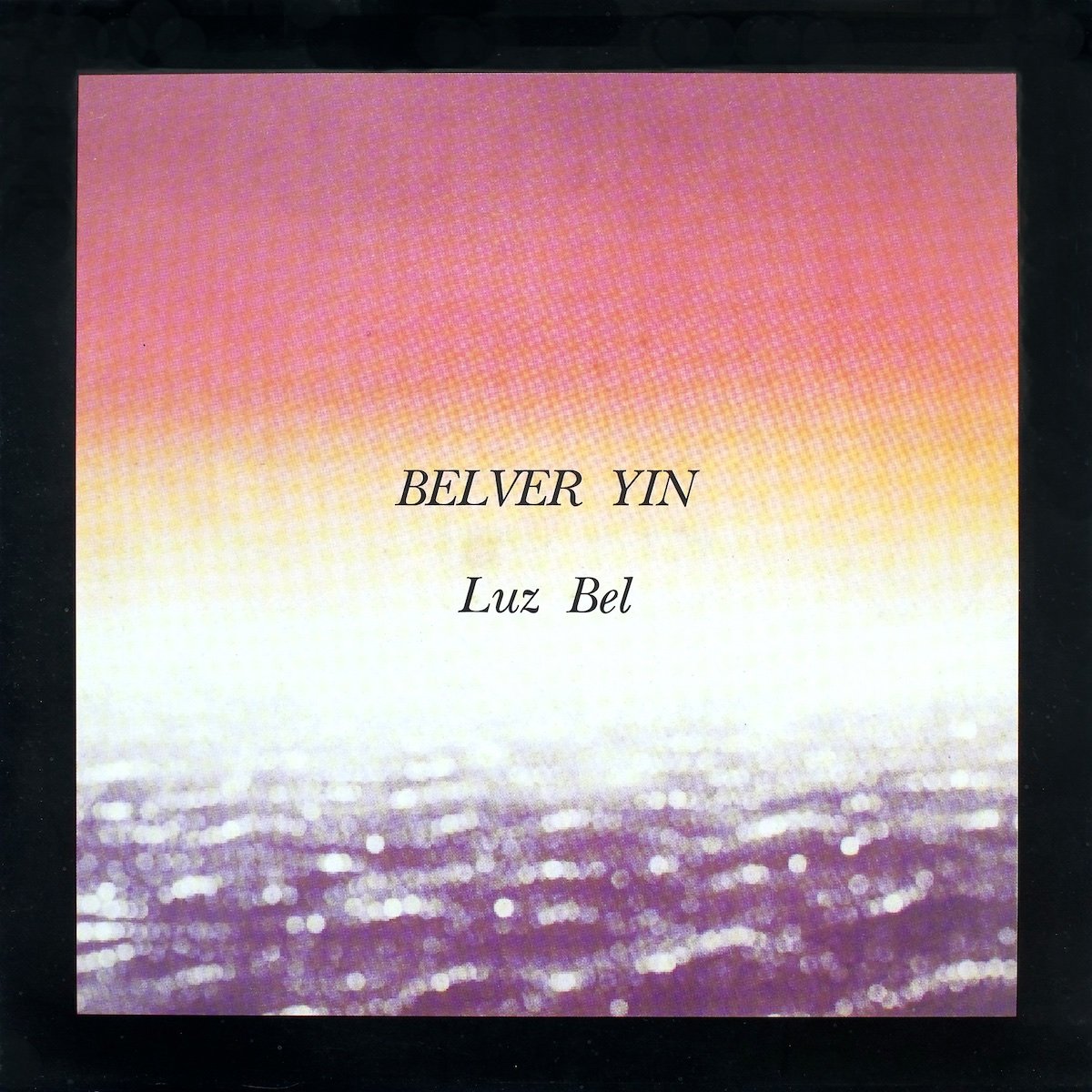
‘Bélver Yin's soul mining odysseys have been unjustly overlooked for three decades. An anomaly in the Spanish alt-pop scene, their forlorn instrumentals and ethereal romanticism would have struck a chord in the British league of Felt, The Chameleons, Cocteau Twins and Dif Juz, leaving their 1991 debut Luz Bel deserving of reappraisal.
While coining their band name from a Jesús Ferrero novel and quoting Laozi philosophy on album sleeves, Bélver Yin create illuminating textures that unlock a wordless language of memory and adolescent emotion. Formed in Salamanca by self-taught musicians Pedro Ortega Sánchez and José María Martín, the guitar-bass duo spent two years crafting their divine interplay with interim drummers before submitting a demo to Noisex Music, their only attempt at label courting. The phone rang mere days later with owner and producer Bernar Marks (Dust Sessions) offering to cut an album and the band ventured to Valencia with cloud-touching optimism soon after.
Championed by local press, the release fell short of expectation, fueling the mythology of a vanished band known only to the initiated. Varying lineups would, however, continue to work in the shadows under Pedro's direction, recording two spatially arranged follow-ups at their own pace in 1996 and 2005.’ - Marco Kucyk (Efficient Space)
EX - Unplayed original deadstock copy
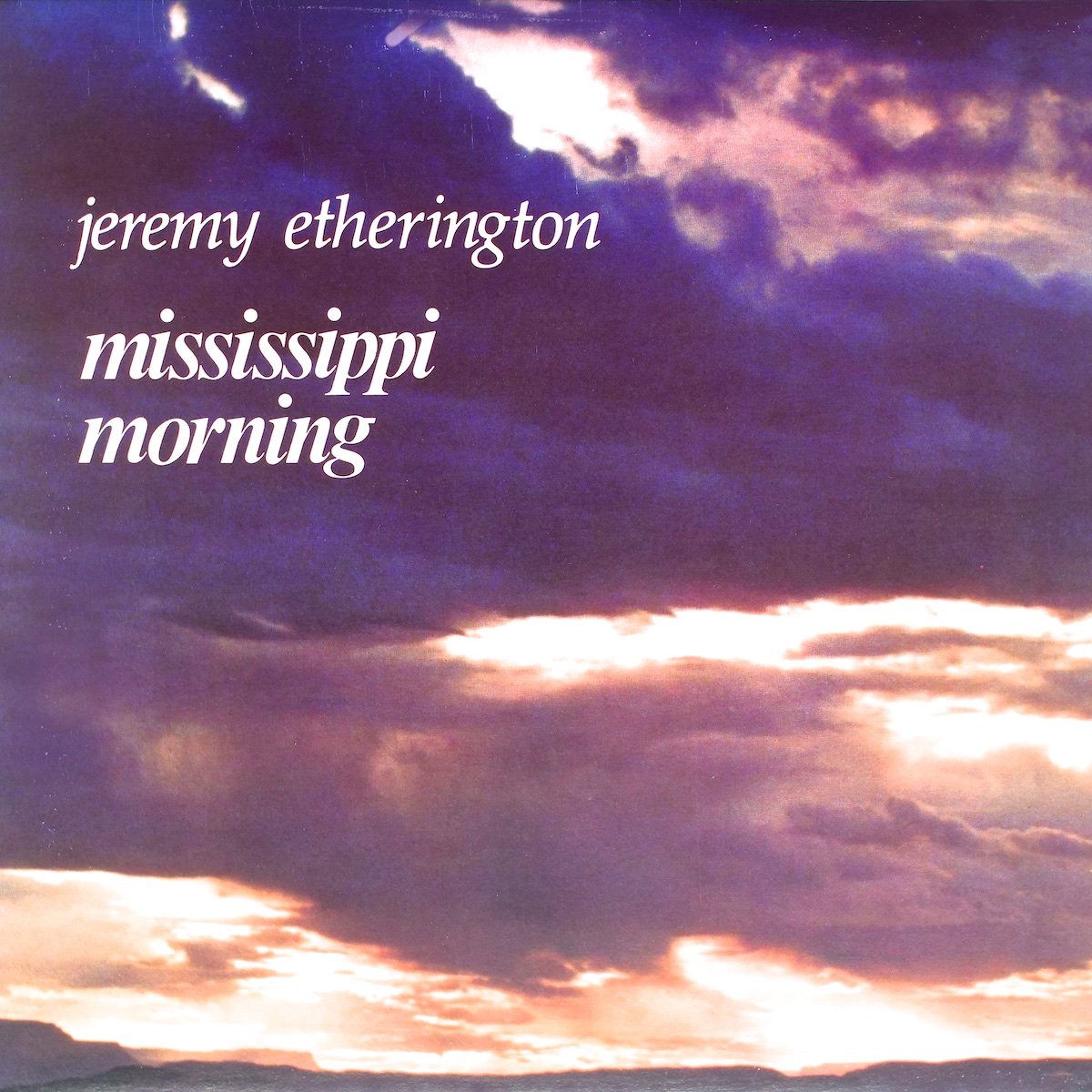
Mississippi Morning is Lethbridge, Alberta’s best kept sonic secret. In 1978, future emergency physician Jeremy Etherington recorded and released his sole album on his friend Dave Filchak’s Paradise Records. The tiny pressing was never distributed and only given out to a few friends. On the fugitive album, Etherington’s moods shift between overcast loner psych ballads adrift in tape delay to tipsy late afternoon soft rock. ESSENTIAL CANADIANA.
EX - Sealed deadstock copy. May have small storage warp dnap.
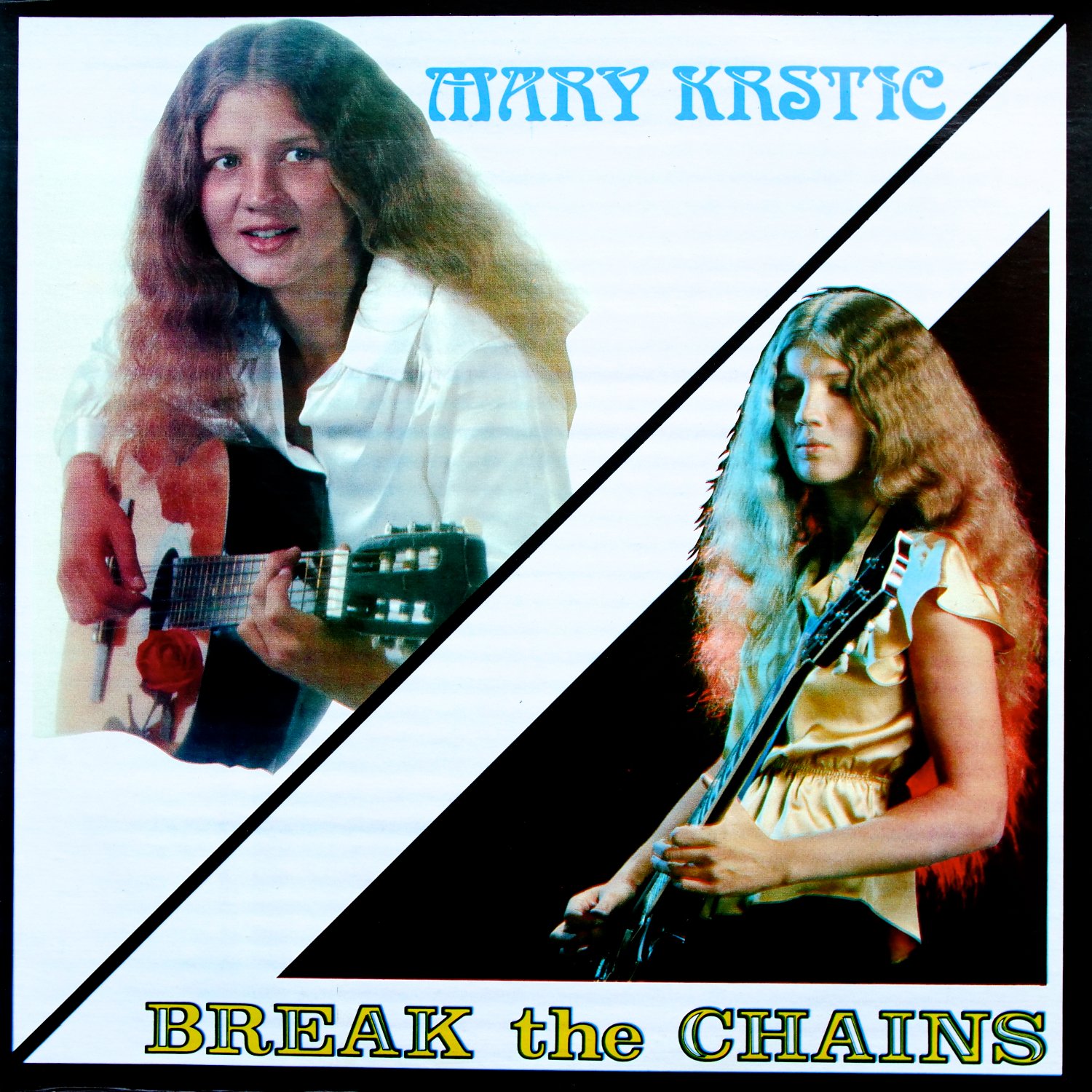
Mary Krstic grew up in Southern California obsessed with music from a very young age and started playing guitar when she was 5. She started her first band at age 13 with some of her school classmates. They played Kiss cover songs, Aerosmith, Lynyrd Skynyrd, Led Zeppelin, Bad Company, Bachman Turner Overdrive, and some originals. She was determined to make it and at 16 her parents allowed her to use her college savings to make a recording in a local studio. That recording became Break the Chains and besides selling copies to a few friends and relatives it helped her realize her dream of being admitted into the Guitar Institute of Technology in Hollywood. All the players on the album were friends and family between the ages of 14 and 17. Krstic divided the album styles by side, putting all the acoustic songs on the A-side and gathering the heavy rockers on the B-side. The cover, designed by Krstic’s 14 year old sister, shows her two opposing sonic personas, a teen rocker Janus. Lyrically, the album reveals a wisdom that exceeds her years, exploring the difficulties of being a teenage girl in a patriarchal world, navigating love, loss, sexuality, isolation, ecological turmoil, and living a just life. The album is a masterpiece of adolescent experience.
She continues to play music in several projects including an all-female Led Zeppelin cover band called Lady Zep.
RIYL: Lucia Berlin, Carson McCullers, Karen Dalton, Linda Perhacs, The Shaggs
Please see dropdown for condition. There were two small pressings of this album, unfortunately one pressing has flaws which created crackle for the duration of one side while the other side plays clean. We’ve opened and inspected all copies. The less expensive copies may have covers with a small seem split and a slight dishwarp that dnap.
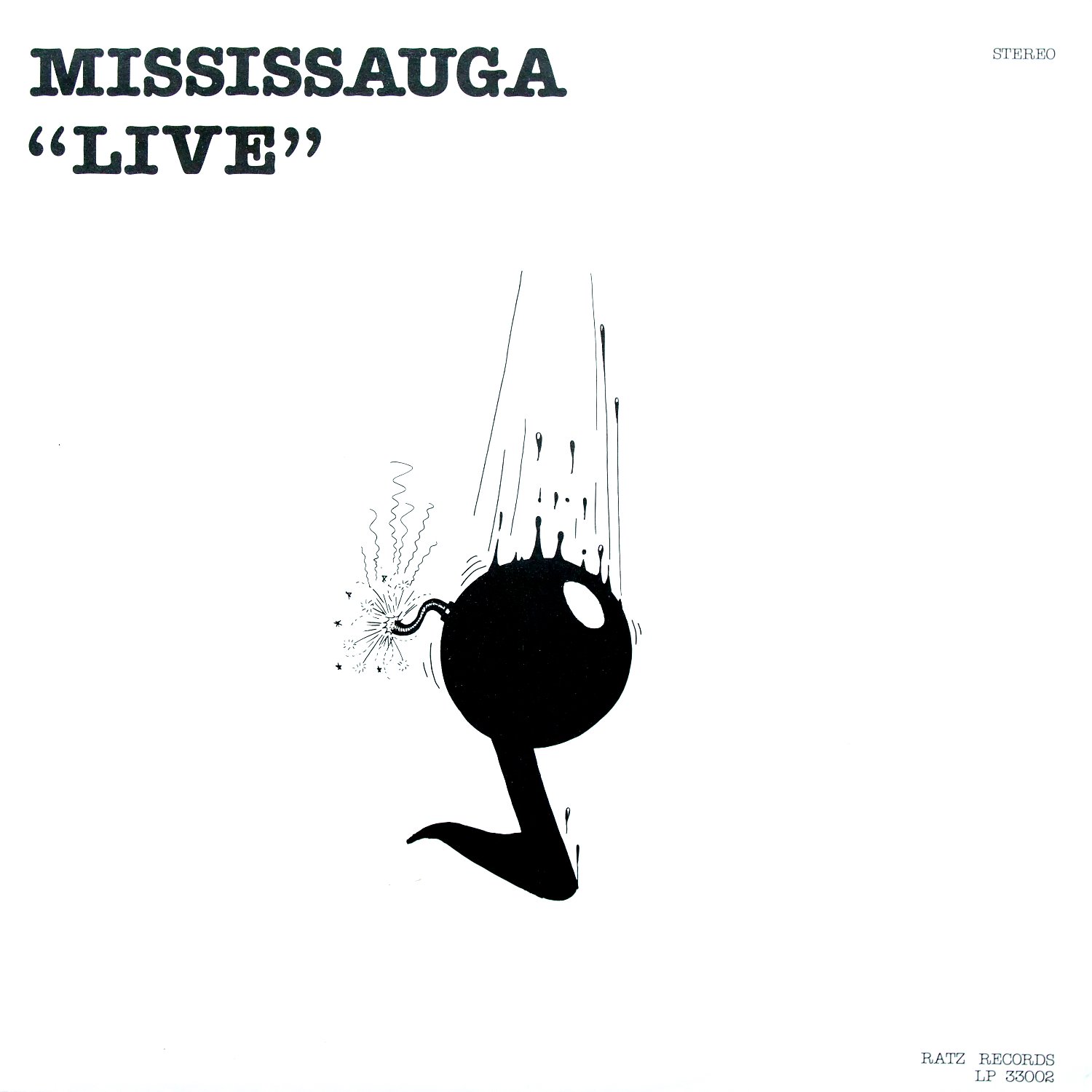
Mississauga "Live" was the brainchild of home-studio whiz, country songwriter, lounge proprietor, and business impresario Roy Sluiter. More of an audio collage than a real live recording, the faux performances on this album were in fact recorded in Sluiter’s apartment over the course of a month. The album is a portrait of a small local scene; a group of misfits and fledgling garage rockers that all felt the pull of Sluiter’s charming gravity and fell into his orbit, playing his shows and recording for his label, Ratz Records. The diversity of sounds, ranging from parody country to heavy psychedelic rock are all centred around a feeling of freedom to express themselves without reserve, partly due to Sluiter’s liberal vision, but also due to his quick & dirty DIY recording process. A wild ride from start to finish, and truly the sound of an underground vibration in Mississauga in 1980. Essential Canadiana.
VG+ vintage copy with minor wear on the cover and a small warp that dnap.
Hypnotic new wave aspiration from the unlikely cultural locus of Rensselaer, NY. Dub lasers, Strummer guitars, and Polysix posturing, a potent brew. The B-side is a phased & fuzzy rocker, a lovely little day-trip.
EX unplayed deadstock copy with very minor surface noise.

Unbelievable double-sider from the mysterious Shewry Stamper, released on Page Records from Johnstown, Pennsylvania in 1962. The A-side, Kansas City sounds like a Moe Tucker VU cut, with a primitive rhythm & blues feel. The B-side is a wrenching & raw downer garage ballad that wouldn’t sound out of place on the recent Ghost Riders compilation from Efficient Space. Highest recommendation.
RIYL: The Shaggs, Mystic Tide, Female Species, K Records, The Vaselines
Unplayed stock copy with minor surface noise from older pressing.
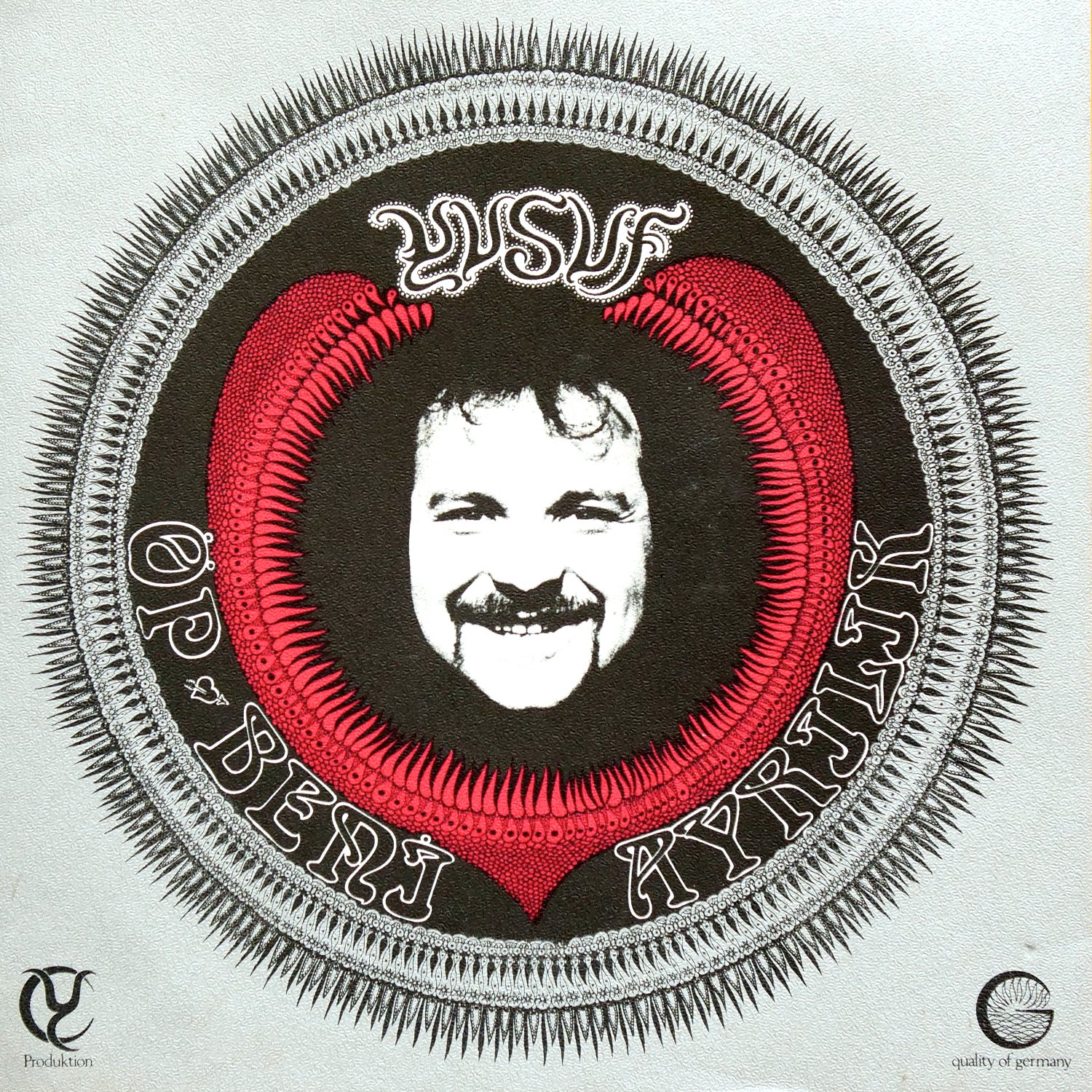
Anatolian acid folk missive from the Turkish diaspora, self-released in Germany by Yusuf Çavak in 1974. Both sides weave entrancing tapestries of love, loss, and longing with guitar, hand percussion, flute, and phased organ. Recommended!
EX vintage deadstock copy, cleaned on VPI — some copies have light surface marks from storage, dnap.
Another narcotic single from Gilles Valliquette, also from 1980 and released on his own Les Disques Maison. Spare and mesmerizing arrangement for guitar, drum machine and voice. Pop music for a Philippe Garrel film. A favourite from this great Québécois artist. Essential Canadiana.
EX deadstock copy with small promo drill hole.
Another fantastic single from legendary Québécois artist Gilles Valiquette, released in 1980 on his own Les Maison Disques. This time around Gilles turns on the fuzz and phaser to accompany his drum machine on this excellent downer psych single. Essential Canadiana.
EX deadstock copy with gold promo sticker.

Fantastic double-sider from legendary Québécois artist Gilles Valiquette released on his own Les Maison Disques in 1980. One side is a synthy psych-prog ballad and the other side is a stomper for drum machine, synth, and fuzz guitar. Essential Canadiana.
EX deadstock copy with a small promo drill hole.
For Martinician singer D'Jackson Suriam, the taxi is a vibrant space for modern cultural exchange, where our social, political, and economic boundaries dissolve — the beginning of a journey. We’ve all had these taxi rides, encountering music that seems like a doorway into another alluring world. Highest recommendation.
VG+/NM - very clean vintage copy
Fugitive UK loner folk from Ferney Fair, on their own ABCD Records.
EX - unplayed deadstock copy
Brilliant private press one-off from a group of art-school Eno acolytes from Middlesex, recorded over two days in 1979.
"Conceived by painter and generative music artist Paul Ramsey, 1979 LP Photographs Of Sound is a result of a two-day event in creating ‘Functional Background Music’. It’s a well-aged and agreeable suite of varied instrumentals that capture a complimentary scene, setting or function, such as Gymnastics, or the image of a Rockpool and the strain of sprinting. All this aside, musically the album flows. Shifting moods between dreaming atmospheric improvisation to quirky art-rock pieces with live drums and laid-back guitar skits. The canon of 70s / 80s private press LPs is certainly full of this sorta DIY library music - see the recent Italian Sandro Zane LP we had, although this is much better - although this isolated home-experimentation feels more in line with the likes of Terry Burrows, Berbel Nobodius and some of the Hamster Records scene" -- Tom Houghton
RIYL: Dominique Lawalrée, Rimarimba, Philip Sanderson, Gymnopédie, Naffi
Unplayed vintage deadstock copy with a tiny bit of wear and foxing on the jacket from age.
Stay-cation digi from Barrington Bennett on his own Morion Production label. If only every day could be a holiday.
VG+ lightly played copy with some noise from storage dust.
Books/Magazines
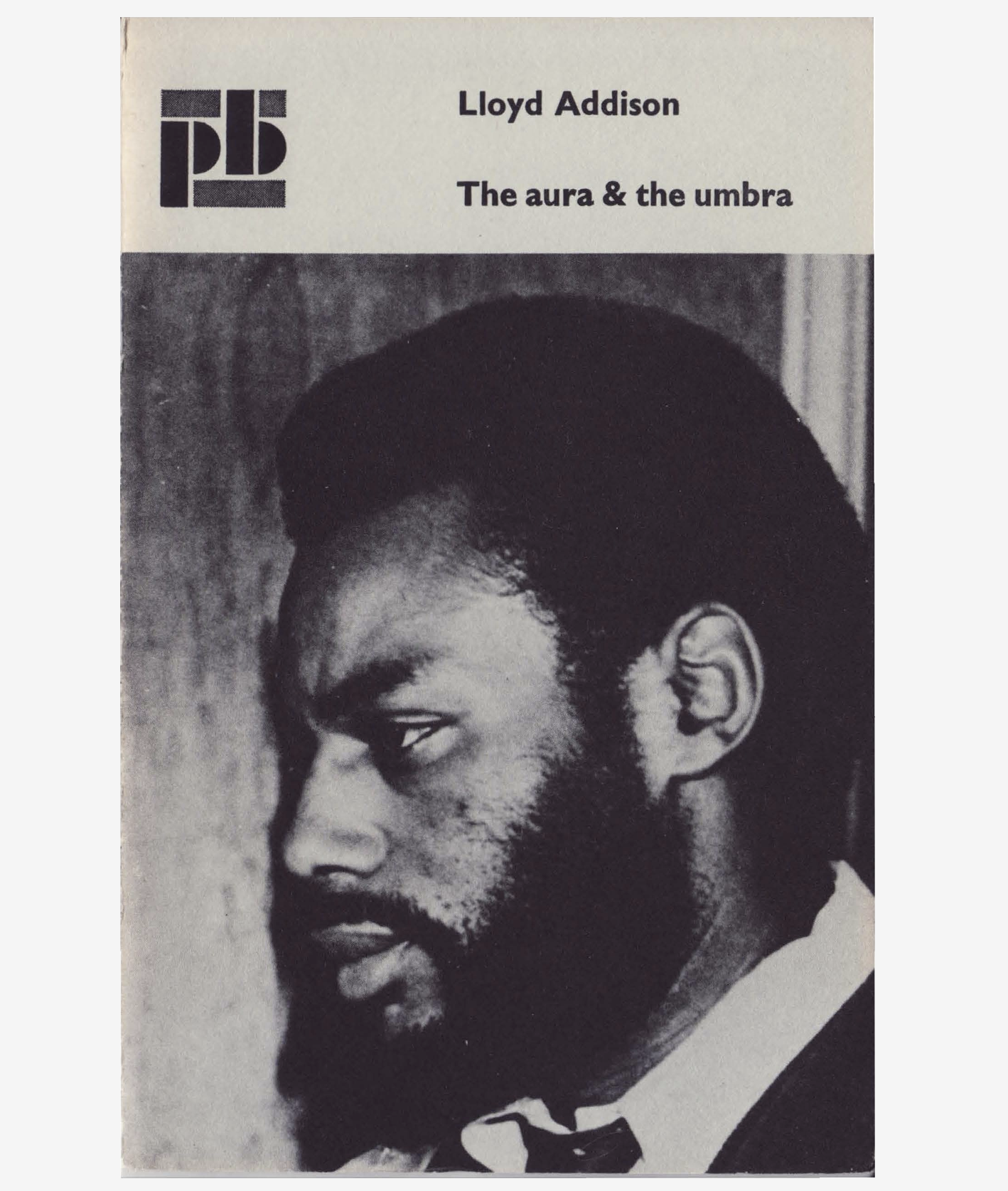
Fugitive publication from Umbra and Black Arts associated poet Lloyd Addison, founder of the legendary Beau Cocoa journal. Published as Volume Eight in the Heritage series by Paul Breman (London) in 1970. Saddle-stapled in card wraps on colored stock.
'I am basically a very humble person with a monumental ego, part of which Is artificial.' — Lloyd Addison
Lloyd Addison was born 10 March 1931 in Boston, Massachusetts, but went to school first in Virginia, later in New York ('we were one black family almost alone in an otherwise unintegrated disintegrating Italian neighbourhood in Brooklyn'), finally at Brooklyn College and the University of New Mexico ('I became a drop-out in 1956 because of the feeling pattern'). He served in the air force, mainly in the Pacific, went through two spells of marriage (1950, 1959) and divorce, now lives with his nine year old son in Harlem and works for the New York City Welfare Department. 'The urge to create (otherwise) and the urge to copulate are continually in a tug-o-war-two systems of creating one's world which must compromise their mutual exclusion for the optimal self-affirmation': on one level, the result is half a dozen lengthy novels, some plays, a number of prose poems, a score of short stories, and a considerable body of poetry (again much of it unfashionably long). 'I have devoted much (which is never much) of my spare time inking paper but of works in printer's ink (other than my own) I can scarcely at the moment exhibit a half dozen pages.'
The published work is mainly confined to poetry: In Rosey Pool's anthology 'Beyond the blues' in 1962 ('my only question is: which side of the Blues is she going beyond'), in the first Issue of the New York magazine 'Umbra' in 1963 itli (group and mag took their names from the central poem in this book), 'Rhythmic adventures beyond jazz into avowal sound seams' (a small brochure of 1965 which contained 'By line abdomen''It has always been one of my favourites, particularly because of the rhythms and the notes of ethos': one of Addison's most constant preoccupations Is 'working up a kind of black ethos' to displace 'this pathos Invitation that I loathe'-'the difference between the two Is as between the clinic and the bedroom for the perverted personality, as between an attempt at cur and resignation perhaps modified by a temporal note of ambivalence'), In the Afro Arts Summer Festival Book for Harlem's warm 1967 (Addison was poet-very-much-in-residence as well as editor), and lately In two Issues of his own magazine Beau-Cocoa (the 1969 volume Is taken up largely by two of his own works, the poem 'Black In search of beauty' which has obtained considerable underground fame since its writing in 1956-7 but which here makes Its first appearance in print, and the first part of 'R.S.V.P.'-'undressing for an autobiography'). 'As you may know, black yea-saying Is fashionable these days. And, as you may also know, I am the original black beauty yea-sayer here among the (younger?) poets. And no one has yet entered this province with nearly the enchanted fervor and beauty of my 50s poems.'
Deadstock copy from 1970.
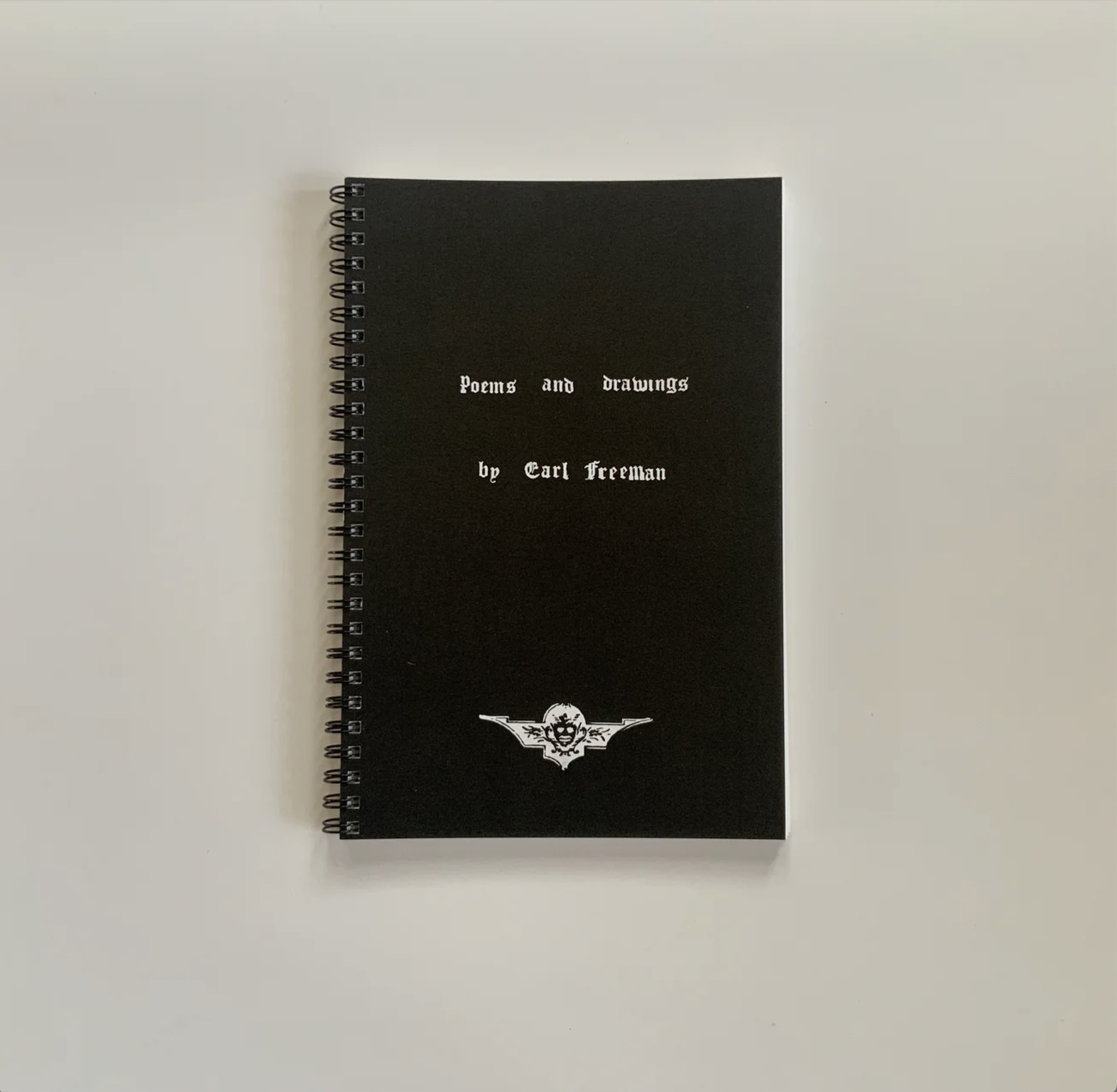
Poems and Drawings is a collection of recovered, fugitive works from the enigmatic musician, composer, artist, and writer, Earl Freeman (March 11, 1931 - July 25, 1994). Born in Oakland, California, over the course of his life he traveled widely and forged significant associations in the wave of U.S. free jazz musicians who relocated to France in the late 1960s. He played & recorded in both the United States and Europe with many significant contributors to the 1960s & ‘70s creative underground; Archie Shepp, Sunny Murray, Clifford Thornton, Kenneth Terroade, Noah Howard, Claude Delcloo, Arthur Jones, Selwyn Lissack, Gong, Brigitte Fontaine, Frank Wright, Alan Silva, Billy Bang, William Parker, Sonny Simmons, and Daniel Carter, amongst many others. His otherworldly approach to electric bass is heard to especially strong effect with The Freestyle Band, whose privately-pressed LP is a singular dispatch from the NYC free jazz scene of the 1980s.
Though primarily making his mark as a bassist, the pieces gathered here are taken from a small handful of manuscripts & drawings sent to friends, primarily while he was living in New York City and San Francisco over the course of the last two decades of his life. The poems hint at the peripatetic life of an avant-garde jazz musician, with an underlying sense of unease permeating many of them. His consistently idiosyncratic use of dashes and unusual punctuation give them the appearance of scores to song & music on the page. Indeed, many of these poems seem to sing at a strange frequency, and place Freeman’s work in a continuum with other avant-garde Black Arts Poetry Movement poets such as Lloyd Addison and N.H. Pritchard. His exquisitely worked drawings range from a portrait of Civil Rights icon George Jackson, to abstracted landscapes that chart the movement of air, to a nearly apocalyptic looking depiction of Paris.Second edition of 150 copies in a new, larger 6x9 wire-spiral-bound format, printed on super heavy duty Mohawk Superfine paper, 18 pages
Published by Wry Press & 50 Miles of Elbow Room
TWO VERSIONS AVAILABLE: please select in drop-down.

OEI # 90-91: Sickle of Syntax & Hammer of Tautology offers the first English language overview of the history of concrete and visual poetry production in socialist Yugoslavia between 1968 and 1983. By focusing on mass-produced examples of concrete poetry, this publication presents these poetic experiments as organically linked to social movements, critical theories, and youth cultural revolutions. In his extensive introduction, Sezgin Boynik, the guest editor of this special issue of OEI, discusses concrete and visual poetry in socialist Yugo-slavia as an uneven and combined development, and emphasizes its confrontational and organizational aspects. By means of interviews, translations, reproductions, and theoretical and historical statements, OEI # 90-91 offers a picture of a very lively scene of concrete and visual poetry in Yugoslavia, which unfortunately is not as recognized interna-tionally as it would deserve. Hoping that OEI # 90-91 could contribute to this task in a substantial way, we present episodes from the early years of OHO formation and its complex theories of words and things; an interview with Rastko Močnik on programmed art and political formalism; militant polemics of Goran Babić; Signalist contradictions; subjective structural devices of Judita Šalgo; zaum experiments of Vojislav Despotov; detective meta-texts of Slavoj Žižek; poetic self-management studies of Vujica Rešin Tucić; a feminist historicisation of Ažin school for experimental poetry; democratisation of visual poetry by Westeast; selections from special issues of the journals Pitanja, Problemi, Ulaznica, Dometi, Delo, Koraci, Vidik, Pegaz, and many other materials translated here for the first time and presented in one publication.
Author: Sezgin Boynik (Ed.)
Language: English
Pages: 304
Size: 19.5 x 30 cm
Binding: Softcover
Published by OEI editör
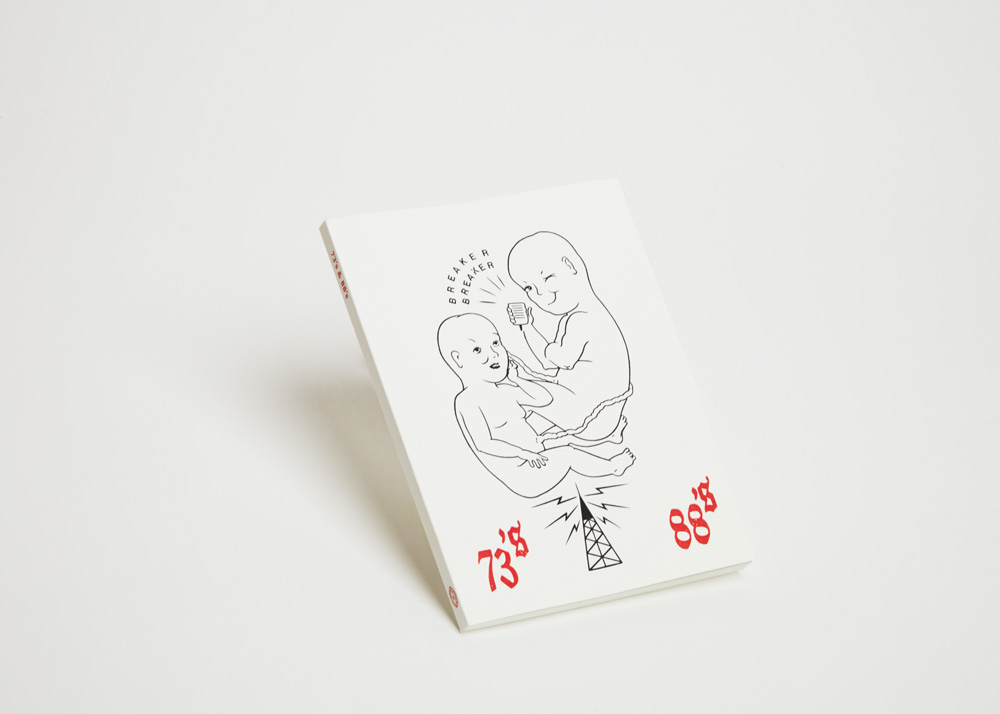
In the 1970s and 80s CB radios were used by truckers in North America, as well as amateur radio enthusiasts sat in their groovy carpeted basements. It was an unlicensed ‘lawless’ collective of disparate people who came together as a community over the airwaves long before mobile phones and the internet. There is one story of a 16 year old girl stuck in her parent’s suburban home in the late 70s who would talk to all the truckers driving by on the highway a few blocks away.
This community began trading postcard sized cards with each other that had the frequency you could find them on, the town they lived in, and their (usually made up) identity. These began simply enough, but slowly the artwork and text on them became more personalised. Bizarre, outlandish, and sexual, depicting copyright-infringing knock offs of pop culture figures and space-race victories, they were the definitely a product of their time. A perverted and subversive folk art, completely devoid of irony or artistic intent, they are rather amazing.
73’s and 88’s (CB radio codes for ‘best regards’ and ‘hugs and kisses’) is a limited run art book by Simon Mercer documenting this phenomenon with 100 full colour reproductions.
Editor: Simon Mercer / Cover illustration: Rob Whoriskey
THE C.B.’ERS PRAYER
The D.O.C. is my shepherd I shall not want
They filleth my mail with pink tickets
They maketh me to stand on full channels
They taketh away my linear amplifier with which I have made many enemies
They have reduceth my modulation
Yea though I walk through the valley of skip
I shall fear all breakers, for thou art with me
Their monitoring, stations and staffs they watch me,
My antenna height runneth over.
Surely skip and inspection shall follow me all the days of my life
And I shall dwell in fear of the Kingston Pen forever.
10.4
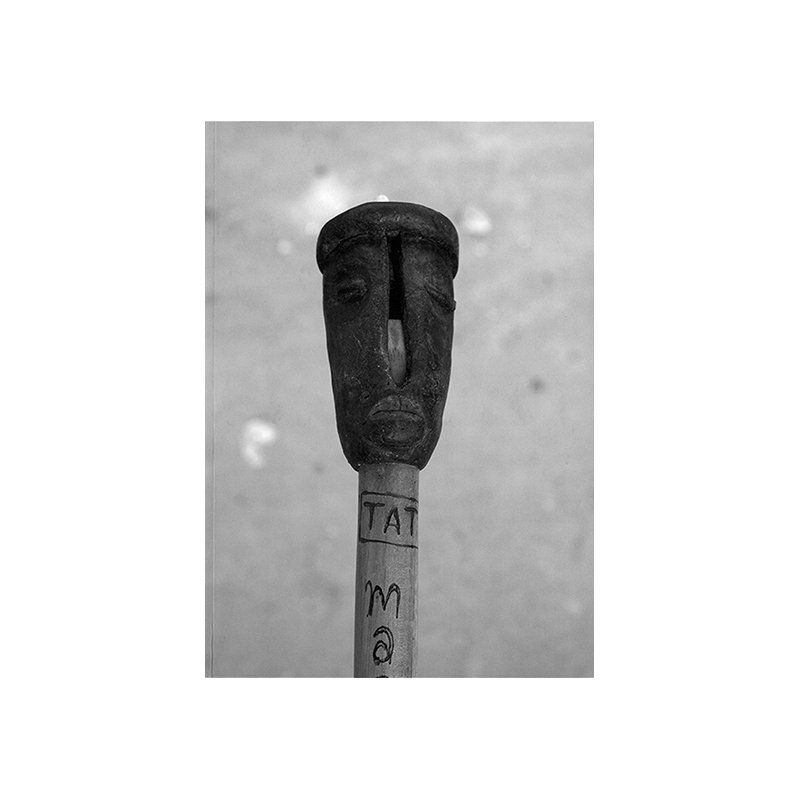
This book tells of a journey and a photographic research along the lower Magdalena river in Colombia in search of the origins of cumbia music.
The Magdalena river marks the birthplace and distribution system for cumbia music, which in its beginnings, dating back to the colonial era, was a prohibited ritual dance and one of the ways in which the indigenous and African populations interacted. Musically, it is made up of a combination of African rhythms, indigenous instruments, and Spanish lyrics. Since the 1950s cumbia has spread beyond Colombia to the working class neighborhoods in Latin America, taking on local specifics at each place.
The Magdalena river also stands for one of many rivers in the world that acted as distribution channels and speaks of water cultures, which, located along rivers, have absorbed very different influences from the interior of the countries and the world – making them multifaceted and thoroughly mixed, which is evident in the music as well.
The displayed material includes photographs, recordings of conversations with cumbia musicians and short texts about the journey.
Published by Mirjam Wirz
Designed by Pascal Alexander
A4, 256 pages, English/Spanish
2019

Efficient Space publication ENTHUSIASMS revives with Issue #03.
92 pages covering Aotearoa DIY folk proliferator Maxine Funke, the vocal magick of Cucina Povera, Australian devotional jazz mystery Singing Dust, Osaka portal EM Records, unsung dub specialist Sheriff Lindo and the living practice of e fishpool. View post-punk trailblazers through the lens of Rotterdam polaroid photographer Peter Graute, while Swiss artist Elise Gagnebin-de Bons exhibits her series of collages purposed for Ghost Riders. The issue also boasts imaginary mixtapes from Gavsborg, Greg Davis and Jefre Cantu-Ledesma, Mikey Young, Sonic Boom and Troth.
Perfect bound and illuminated by designer Steele Bonus.

Stay Cool Madonna, a paperback zine of Madonna ephemera from the late 1980s to the late 1990s compiled by (and published by) Rob Sevier of the Numero Group label. The materials were accumulated by Madonna’s management company and intended for disposal, however, an enterprising, anonymous employee rescued this bounty (leaving behind dozens of bags full of similar materials to be incinerated.) They remained in storage for over twenty years before emerging again.
“The details don’t really matter; some colorless office with some dreary acronym that certainly included an ‘A’ for agency or association or affiliate housed these works at the behest of the international Madonna corporation until they were no longer contractually obligated to. This accidental trove of visionary outsider art was quite literally rescued from the garbage shortly after the business entity that is ‘Madonna’ parted ways with her management company of nearly a decade. This is a unique document of the impression that the Madonna messiah left on the collective international psyche during the late 80s and through the 90s. Whether or not you like Madonna’s music isn’t really that important (I mean, you should, it’s all pretty great during this period.) This is the sort of document that tends to be cloistered away from the public eye… it’s the overdose victims who took too much of what was intended to be consumed only superficially, at a time when the reach of a megastar now extended into every aspect of everyday life and evening entertainment. To quote Theresa “My life got destroyed because of your force.” That pretty much sums up the experience of everyone included here. Primarily you will find the work of people who do not consider themselves artists; only through the magnitude of Madonna’s supernova-like intensity do they find themselves divinely inspired.” — Rob Sevier
160 full color, perfect bound pages.

This special issue, guest edited by writer, curator and sound artist Frédéric Acquaviva, is the very first comprehensive publication on Lettrist magazines. It describes, shows and contextualizes all issues of all 119 magazines created between 1946 and 2016 in, or in connection to, Lettrism – this vibrant and dynamic French avantgarde movement whose publishing adventures and efforts have, until OEI #92–93, been far too little known.
“The ‘unreasonable’ idea for this ‘catalogue raisonné’ came to me as an attemps to draw up a complete inventory of all the journals and periodicals of the Lettrist group, from its birth until today. Because the lifespan of the Lettrist movement has exceeded that of all the other avant-garde movements, we are undoubtedly in front of the most immense corpus ever produced in terms of magazines, coverin a period from 1946 to 2016. It presents more than a hundred different titles with more than one thousand items and hundreds of authors. . . . I hope that this comprehensive work will give the reader an opportunity to understand the different paths of the Lettrist groups and the many areas addressed, if not shaken, beyond the books of Isidore Isou and Maurice Lemaître. Since other Lettrists have published relatively few monographic books, and very little outside their own magazines, OEI #92-93 is a unique database for most of the Lettrist texts that we can access, also making it possible for new readers to come across Lettrism.”
—from Frédéric Acquaviva’s introduction
195 x 300mm, 512 pages, full colour printing, perfect bound, 2021
Published by OEI.
Back in mid-2021, the publisher, João Simões, delivered the marvelous “Three Essays on Spirituality and Art” by Henry Flynt, offering swirling insights into one of experimental music’s most philosophically visionary minds. The first publication of writings by Flynt to have appeared in years, it left us wanting for more. Now, thankfully, just a short way down the road, João Simões has attended to that need, bringing out a stunning second volume, “Ruinous Spirituality”, that Flynt describes as a sequel to the previous book. Building upon and farthing the inquires pursued in “Three Essays”, it pursues the effects and presence of the negative aspects of spirituality on society and its inhabitants. Issued in a beautiful 275-page edition of 500 copies, “Ruinous Spirituality” is yet another essential philosophical offering from the radical mind of Henry Flynt.
The narrative of Flynt’s creative life began unexpectedly in the mathematics departments at Harvard. It was there that he met Tony Conrad during the late 1950’s, and where the two like minds would embark upon a life in art and music that would change everything in their wake, eventually moving to NY, joining forces with George Maciunas, La Monte Young and Jack Smith.
He is also responsible for Concept Art, initially drafted in 1961, and published within “An Anthology of Chance Operations” (published by Jackson Mac Low and La Monte Young) in 1963. For Flynt, the acts of creativity have never been purely intuitive, but rather the consequence of complex and interweaving ideas that grow from writing and text as much as action. Like “Three Essays on Spirituality and Art” before it, in addition to earlier volumes like “Blueprint for a Higher Civilization”, “Ruinous Spirituality” delves deep into this incongruous world.
While primarily attending to ideas on affirmative spirituality, within “Three Essays on Spirituality and Art” Flynt stated that “ruinous spirituality needs to be studied as carefully as admirable spirituality: it discloses personness as much as admirable spirituality does”. It is precisely this that he pursues at length across the pages of “Ruinous Spirituality”, effectively the second side of the coin. Pertinently, this latest book is not a study of supernatural sources of evil, myths about impiety, or religion at large. Flynt is interested in something much more human and connected to direct behaviors and feelings: how ruinous spirituality is assembled in individual interiority. To Flynt, this is connected to five cases of spiritually ruinous interiority, “The SUFFERER, the PERFORMER, the WRECKER, the SEDUCER, the PARTICIPANT. The SUFFERER is a victim of themself. Three cases are agents acting on targets: their success is the ruin of the target. The PARTICIPANT is a SEDUCER who also participates in the revels”.
Heady, wild, and wonderful as Flynt always is, this essential text is a whirlwind of layered and complex ideas, further illuminating the radical contemporary thinking of one of the most important figures in experimental music that remains as invested in smashing institutionalized thinking as he was more than half a century ago. Published by João Simões as a beautiful 275-page edition of 500 copies, “Ruinous Spirituality” is a must for any fan of Flynt, philosophy, and the more unexpected extension of conceptual practice.
“Ruinous Spirituality can be seen as the sequel to my recent Three Essays on Spirituality and Art. The abstract for Three Essays on Spirituality and Art said that ruinous spirituality needs to be studied as carefully as admirable spirituality: it discloses personness as much as admirable spirituality does. Ruinous Spirituality is a lengthy and aggressive contribution to this study.
It goes without saying that myths about supernatural sources of evil, and myths about impiety, are rejected. Indeed, they are ignored: except when they comprise part of the object of study. There have been self-avowed Satanist enterprises for centuries. (And Satanic has a vivid metaphorical use in English. As shorthand for eerily malicious.) As for religion, it has to be appraised as a ruinously spiritual institution (more carefully, as an amalgam).” —Henry Flynt, NYC, Feb. 2022
Published by João Simões, Lisboa
Typeset by Ana Baliza in Linotype Univers
500 copies, softcover, 275 pp.
Printed and bound in Portugal

Astonishing suite of jazz-scape poems by Ray Bremster “writing in the idiom of Cecil Taylor.” Allegedly written by an inmate Bremster met in prison, now firmly established as a nom-de-plume. Published as Volume Fourteen in the Heritage series by Paul Breman (London) in 1970. Saddle-stapled in card wraps on colored stock.
Deadstock copy from 1972.

Last copies, already out of print!
The first text from the wild and wonderful mind of Henry Flynt, published in decades. "Three Essays on Spirituality and Art", issued in a beautifully produced edition of 500 copies, takes on a rarely explored subject in contemporary context, seeded in the anti-authoritarian positions that Flynt laid down at the dawn of Fluxus and has embraced ever since. Radical, vibrant, and fascinating, before us rests an essential illumination of the inner workings of one of the most important figures in experimental music that can't be missed.
Three Essays on Spirituality and Art caries on from the anti-authoritarian positions that Flynt laid down at the dawn of Fluxus and have remained steadfast within his thinking over the years since, revealing a mind as contentiously invested in smashing institutionalized thinking within history and artistic practice as he was at the beginning. Taking the position that there are two forms of spirituality, the affirmative and the ruinous, Three Essays delves into Flynt’s ideas on affirmative spirituality, he begins with the ancient Indian theatrologist and musicologist, Bharata-Muni, as a precedent and nods to Aristotle’s Poetics, as he lays an analytical groundwork for the topic within the arts, ranging from the sensitization of artistic languages, splendor, the dubiously revered, and commercial successes.
Heady, wild, and wonderful as Flynt always is, these essential texts illuminate the radical contemporary thinking of one of the most important figures in experimental music. Clocking in at 196 pages, and issued in a beautiful edition that has been co-edited by Joao Simoes and Christian Xatrec, this one is an absolute must.
Published by João Simões, Lisboa
Typeset by Ana Baliza in Linotype Univers
500 copies, softcover, 193 pp.
Printed and bound in Portugal
Reprint of an incendiary book—long out of print—from the Canadian artist, filmmaker, musician, and radical publisher G.B. Jones. Perhaps best known as a member of the legendary all-women post punk band Fifth Column, Jones is also known for producing the Toronto-based underground zine J.D.s featuring her infamous Tom Girls drawings. Her diverse projects intersect with queerness in a variety of mediums and have enlarged the awareness and social space of LGBTQ+ in Toronto and internationally.
G.B. Jones was originally published in New York in 1994 by Feature and Instituting Contemporary Idea. In 1995, copies sent to Canada were confiscated by customs officials. All seized copies were burned.
Edition of 500 by Kunstverein Toronto.
Sale

In the late 1960s, the American trumpet player and free jazz pioneer Don Cherry (1936–1995) and the Swedish visual artist and designer Moki Cherry (1943–2009) began a collaboration that imagined an alternative space for creative music, most succinctly expressed in Moki’s aphorism “the stage is home and home is a stage.” By 1972, they had given name to a concept that united Don’s music, Moki’s art, and their family life in rural Tagårp, Sweden into one holistic entity: Organic Music Theatre. Captured here is the historic first Organic Music Theatre performance from the 1972 Festival de jazz de Chateauvallon in the South of France, mastered from tapes recorded during its original live broadcast on public TV. A life-affirming, multicultural patchwork of borrowed tunes suffused with the hallowed aura of Don’s extensive global travels, the performance documents the moment he publicly jettisoned his identity as a jazz musician, and represents the start of his communal “mystical” period, later crystallized in recordings such as Organic Music Society, Relativity Suite, Brown Rice, and the soundtrack for Alejandro Jodorowsky’s The Holy Mountain.
The musicians in Don Cherry’s New Researches, hailing from Brazil, Sweden, France, and the US, converged on Chateauvallon from all over Europe. The five-person band—Don and Moki Cherry, Christer Bothén, Gérard “Doudou” Gouirand, and Naná Vasconcelos— performed in an outdoor amphitheater and were joined onstage by a dozen adults and children, including Swedish friends who tagged along for the trip and Det Lilla Circus (The Little Circus), a Danish puppet troupe based in Christiania, Copenhagen. The platform was lined with Moki’s carpets and her handmade, brightly colored tapestries, depicting Indian scales and bearing the words Organic Music Theatre, dressed the stage. As the musicians played, members of Det Lilla, led by Annie Hedvard, danced, sang, and mounted an improvised puppet show on poles high up in the air.
The music in the Chateauvallon concert aspired to a universal language that would bring people together through song. In a fairly unprecedented move, Don abandoned his signature pocket trumpet for the piano and harmonium, thereby liberating his voice as an instrument for shamanic guidance. The show opens with him beckoning the audience to clap their hands and sing the Indian theta “Dha Dhin Na, Dha Tin Na,” and the set cycles through uplifting and sacred tunes of Malian, South African, Brazilian, and Native American provenance—including pieces that would later appear on Don’s albums Organic Music Society and Home Boy (Sister Out)—all punctuated by outbursts of possessed glossolalia from the puppeteers. “Relativity Suite, Part 1” notably spotlights Bothén on donso ngoni, a Malian hunter’s guitar, prior to Vasconcelos taking an extended solo on berimbau. A vortex of wah-like microtonal rattling, Vasconcelos’s masterful demonstration of this single-stringed Brazilian instrument is a harbinger of his work to come as a member, with Don, of the acclaimed group Codona. The sounds of children playing on the ensemble’s achingly tender rendition of Jim Pepper’s oft-covered beacon of spiritual optimism, “Witchi Tai To,” lends the proceedings an especially intimate, domestic glow. Given the context of the star-studded international jazz festival, the concert’s laid back, communal vibe feels like an attempt by the Cherrys to show Don’s jazz audience that he was moving on. At the same time, however, Don was extending a warmhearted invitation for them to come along for the ride.
With liner notes by Magnus Nygren.
Release by Blank Forms Editions

In 1968, Don Cherry had already established himself as one of the leading voices of the avant-garde. Having pioneered free jazz as a member of Ornette Coleman’s classic quartet, and with a high profile collaboration with John Coltrane under his belt, the globetrotting jazz trumpeter settled in Sweden with his partner Moki and her daughter Neneh. There, he assembled a group of Swedish musicians and led a series of weekly workshops at the ABF, or Workers’ Educational Association, from February to April of 1968, with lessons on extended forms of improvisation including breathing, drones, Turkish rhythms, overtones, silence, natural voices, and Indian scales. That summer, saxophonist and recording engineer Göran Freese—who later recorded Don’s classic Organic Music Society and Eternal Now LPs—invited Don, members of his two working bands, and a Turkish drummer to his summer house in Kummelnäs, just outside of Stockholm, for a series of rehearsals and jam sessions that put the prior months’ workshops into practice. Long relegated to the status of a mysterious footnote in Don’s sessionography, tapes from this session, as well as one professionally mixed tape intended for release, were recently found in the vaults of the Swedish Jazz Archive, and the lost Summer House Sessions are finally available over fifty years after they were recorded.
On July 20, the musicians gathered at Freese’s summer house included Bernt Rosengren (tenor saxophone, flutes, clarinet), Tommy Koverhult (tenor saxophone, flutes), Leif Wennerström (drums), and Torbjörn Hultcrantz (bass) from Don’s Swedish group; Jacques Thollot (drums) and Kent Carter (bass) from his newly formed international band New York Total Music Company; Bülent Ateş (hand drum, drums), who was visiting from Turkey; and Don (pocket trumpet, flutes, percussion) himself. Lacking a common language, the players used music as their common means of communication. In this way, these frenetic and freewheeling sessions anticipate Don’s turn to more explicitly pan-ethnic expression, preceding his epochal Eternal Rhythm dates by four months. The octet, comprising musicians from America, France, Sweden, and Turkey, was a perfect vehicle for Don’s budding pursuit of “collage music,” a concept inspired in part by the shortwave radio on which Don listened to sounds from around the world. Using the collage metaphor, Don eliminated solos and the introduction of tunes, transforming a wealth of melodies, sounds, and rhythms into poetic suites of different moods and changing forms. The Summer House Sessions ensemble joyously layers manifold cultural idioms, traversing the airy peaks and serene valleys of Cherry’s earthly vision.
In the Swedish Jazz Archive quite a few other recordings from the same day were to be found. Some of the highlights are heard as bonus material on the CD edition of this album. The octet is augmented by producer and saxophone player Gunnar Lindqvist, who led the Swedish free jazz orchestra G.L. Unit on the album Orangutang, and drummer Sune Spångberg, who recorded with Albert Ayler in 1962. The bonus CD also includes a track without Cherry featuring Jacques Thollot joined by five Swedes including Lindqvist, Tommy Koverhult, Sune Spångberg, and others.
With liner notes by Magnus Nygren and album art featuring a cover painting by Moki Cherry: Untitled, ca. 1967–68.
Release by Blank Forms Editions

Edited by Lawrence Kumpf with Naima Karlsson and Magnus Nygren. Introduction by Lawrence Kumpf and Magnus Nygren. Text by Keith Knox, Rita Knox, Bengt af Klintberg, Iris R. Orton, Åke Holmquist, Pandit Pran Nath, John Esam, Michael Lindfield, Sidsel Paaske, George Trolin, Alan Halkyard, Moki Cherry, Don Cherry, Ben Young, Christer Bothén, Ruba Katrib, and Fumi Okiji. Interviews by Keith Knox and Rita Knox with Don Cherry, Terry Riley, and Steve Roney.
Avant-garde jazz trumpeter Don Cherry and textile artist Moki Cherry (née Karlsson) met in Sweden in the late sixties. They began to live and perform together, dubbing their mix of communal art, social and environmentalist activism, children’s education, and pan-ethnic expression “Organic Music.” Organic Music Societies, Blank Forms’ sixth anthology, is a special issue released in conjunction with an exhibition of the same name devoted to the couple’s multimedia collaborations. The first English-language publication on either figure, the book highlights models for collectivism and pedagogy deployed in the Cherrys’ interpersonal and artistic work through the presentation of archival documents alongside newly translated and commissioned writings by musicians, scholars, and artists alike.
Beginning with an overview by Blank Forms Artistic Director Lawrence Kumpf and Don Cherry biographer Magnus Nygren, this volume further explores Don’s work of the period through a piece on his Relativity Suite by Ben Young and an essay on the diasporic quality of his music by Fumi Okiji. Ruba Katrib emphasizes the domestic element of Moki’s practice in a biographical survey accompanied by full-color reproductions of Moki’s vivid tapestries, paintings, and sculptures, which were used as performance environments by Don’s ensembles during the Sweden years and beyond. Two selections of Moki’s unpublished writings—consisting of autobiography, observations, illustrations, and diary entries, as well as poetry and aphorisms—are framed by tributes from her daughter Neneh Cherry and granddaughter Naima Karlsson. Swedish Cherry collaborator Christer Bothén contributes period travelogues from Morocco, Mali, and New York, providing insight into the cross-cultural communication that would soon come to be called “world music.”
The collection also features several previously unpublished interviews with Don, conducted by Christopher R. Brewster and Keith Knox. A regular visitor to the Cherry schoolhouse in rural Sweden, Knox documented the family’s magnetic milieu in his until-now unpublished Tågarp Publication. Reproduced here in its entirety, the journal includes an interview with Terry Riley, an essay on Pandit Pran Nath, and reports on counter-cultural education programs in Stockholm, including the Bombay Free School and the esoteric Forest University.
Taken together, the texts, artwork, and abundant photographs collected in Organic Music Societies shine a long overdue spotlight on Don and Moki’s prescient and collaborative experiments in the art of living.
6 x 8 inches, 496 pages. 138 Color and 86 B&W images
Published by Blank Forms
Lush, emotionally-engaging ambient techno works from Mathematics PhD and occasional producer Niko Tzoukmanis presented to the highest standards by French imprint Libreville.
Originally released on CD in 2013 under his own Microphase alias, Hope Is The Sister Of Despair draws obvious influence from the halcyon days of UK ambient techno (Likemind, Peacefrog), Pete Namlook’s era-defining Fax imprint, Warp’s Artificial Intelligence series and the entire canon of Detroit techno, but there’s something that sets these recordings apart from the well-worn pastiche of 90’s electronica nostalgia.
At its core is the expression of human emotion, recalling the similar sense of slow-release melancholy found in John Beltran’s Placid Angels project or deeper parts of the early B12 records - soft, aching pads and pulsating rhythms traversing the happy/sad axis.
Listening through, Tzoukmanis’s background as a Mathematician comes into focus, his productions are thoughtfully arranged and constructed logically, though not at the expense of feeling. Pieces like ‘Floating Free’ captures the collective dance-floor euphoria and tension felt in the beatless breakdown, but runs with it for a weightless 7 min+ serotonin-rushing epic, whilst ‘Free Hugs’ taps into hazy, half-formed memories of sentimentality with its glassy melodies and palpitating rhythmic drive.
A genuinely special, time-capsule collection of human-focused electronic music. - All Night Flight
Release by Libreville Records

A beautifully fragile folk / soft rock daydream recorded in 1971 and unreleased until now.
Michigan quartet Flight was formed in the small town of Grayling by Phil Stancil and Doug Slater. The two teenagers, with no formal musical training, sat down for a year to explore a shared sense of vulnerability, and a new found freedom in expressing an emotional openness rarely seen in young American men at the time.
What resulted was an 8-track LP, recorded over two days, in two separate studios. Aside from a limited 45 pressing of 50 copies of the title track backed with Song For The Road, I’m Coming Home would wait a full half century to be released.
This music, recently uncovered and restored, provides a unique glimpse into the world that was 1971 America: a time when young men felt emboldened to abandon machismo, and explore the feelings of heartbreak, longing, alienation, and love in music.
Release by Forager Records

Another astonishing album from the community that put out the Old Saw LP, one of our favourites from last year. This time around it’s an expansive convergence of pedal steel, vibraphone, banjo, guitar, percussion, samples, and electronics from label head Sam Wenc & pals, under their Post Moves alias. Unmissable record.
If you dig the following then this is most certainly one for you… Susan Alcorn, Alice Coltrane, Phil Cohran, Bobby Hutcherson, Henry Flynt, Jon Gibson, Mind Over Mirrors, Natural Information Society, Johnny Coley, Oren Ambarchi, Tortoise, Yasuaki Shimizu, Califone.
Sam Wenc is a composer and multi-instrumentalist working with sound, text, and objects. He utilises guitar, pedal steel guitar, vibraphone, electronics, field recordings, and found objects to compose both structured and formless pieces that attempt to blur concepts of what constitutes “folk music”. He has released music on labels such as Noumenal Loom, Obsolete Staircases, Moon Villain, and his own label, Lobby Art. Below are Wenc’s own thoughts on his work and approach, which frankly do a far better job of capturing the essence of his spiritual, minimal, and transcendent pieces than we could…
“‘Heart Music’ was recorded over the course of 2019 and 2020. The initial intention was not necessarily to produce an album, but rather to explore composing from a percussive perspective and trying to avert relying heavily on the pedal steel guitar and guitar as primary modes of composing. The pedal steel guitar lends itself to such a soft sound palette so even in pieces that are highly structured (Always for Pleasure, Going Right to the Praying Mantis), I wanted to avoid the propensity to let the composition amble along, and rather create a brisk, biting percussive component. This can particularly be heard on "Del Mero Corazon", which pulses along with the droning bowing of the banjo and marimacho before drums kick in and later on the vibraphone.
Thematically, much of the music (to me) takes on a somewhat ceremonial feeling and explores the trajectory of exploring intrapersonal contradictions and what it means to navigate a disharmonious public sphere. Films was also a major inspiration for songs and their titles: Wiilka & Phaxsi (named for the characters in the film Wiñaypacha), Always for Pleasure (named for the Les Blanks film) was an attempt at writing something akin to a processional march, "Going Right to the Praying Mantis" & "That's the Boss, Not Some Human!" was a quote of Milford Graves pulled from the film "Full Mantis". On that note, the title of the album, "Heart Music", is in recognition of Milford's exploration of the internal data, knowledge, and ultimately music that is present within our bodies. More so than on previous albums, I felt myself letting rhythm, intuition, and improvisation guide the work, often resulting in longer form pieces that allows myself (and hopefully the listener) to listen deeply, observing moments of tension and harmony tangled, dependent, and resolved by one another.
One other noticeable addition is the introduction of poetry into "Madness is a Fully Instrumented Score" and "Evidence" (both spoken by Anna Jeters of the band Ancient Pools). This was touched on in my last album on the track "David's Death", but by bringing in the voice to create both parallel and perpendicular narratives, it creates another line to follow and bring the listener into a deeper state of listening. I like playing with blurred narratives, homespun ideas of conventional thoughts that are ever changing in a climate where fixed ways of relating to sound and composition can become something new and mangled in its own right.”
New release from Where To Now.
Take Me With You is a revelatory voyage through the captivating universe of voice artist and poet MJ Lallo. The works on this 2LP compilation were all recorded in her home studio between 1982 and 1997, primarily using drum computer, synth and her own voice processed through a Yamaha SPX 90 digital effects unit. They range from wordless harmonizer mantras and primitive drum computer meditations, to psychedelic latin dance-floor anthems and synth-drenched end-of-the-nighters.
Lallo has created her own inimitable galaxy of sound where the human voice, liberated from the constraints of language and abstracted using digital technology, is able to explore the outer realms of human expression, like Joan La Barbara with an Eventide and a new-age sensibility. Although Lallo’s flight path is distinctly her own, her journey converges with other travellers as diverse as Jon Hassell, Laraaji, Stereolab, William Aura, Laurie Anderson, Meredith Monk, Gertrude Stein and even Terry Gilliam (whose film Brazil was a big influence on Lallo). Like something beamed in from another planet, Lallo’s work is both fascinatingly strange and strangely familiar, and will leave a lasting impression for lightyears to come. Double gatefold LP, remastered DMM pressing.
For EU distribution contact: info@rushhour.nl
For NA distribution contact: info@seance-centre.com
Design by Alan Briand.
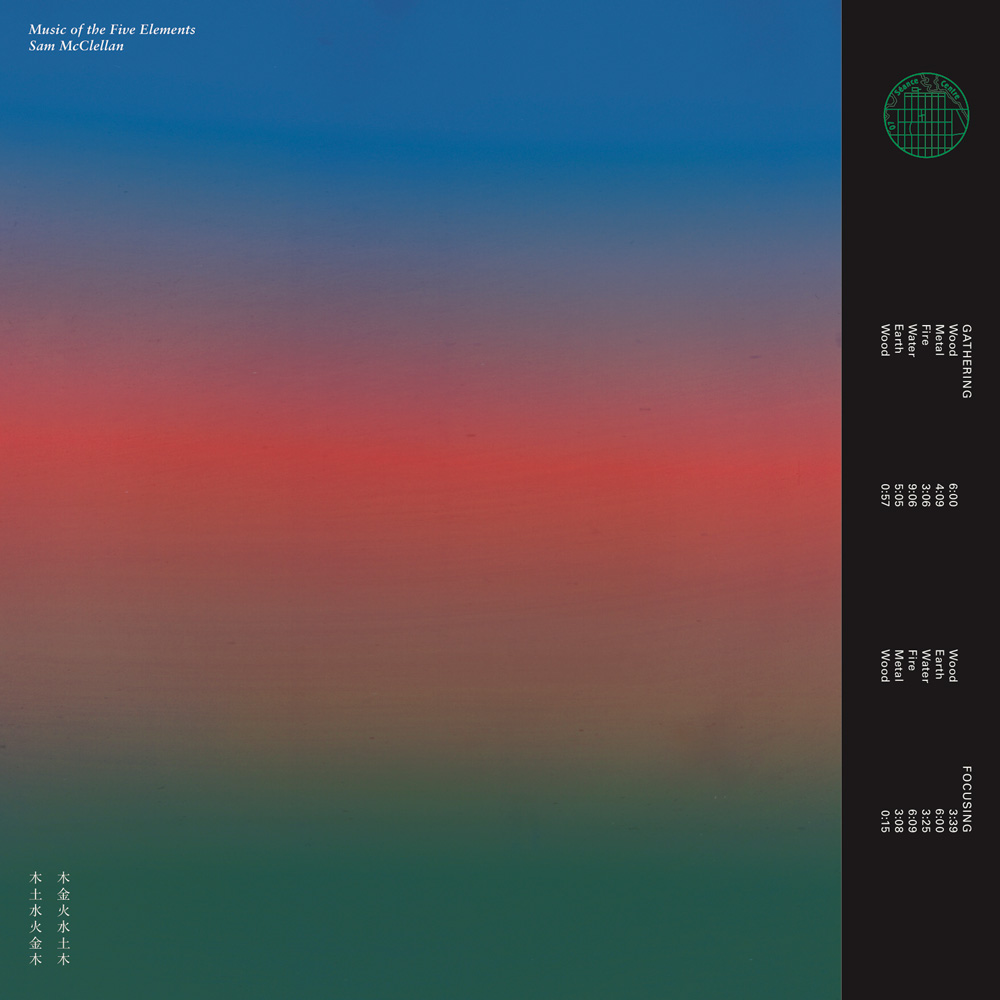
Music is the healing force of the universe. It’s an ancient idea bandied about by Pythagoras and Plato. In the last century, music as medication has been explored by musicians as diverse as Albert Ayler, Spacemen 3 and Pauline Oliveros. Nowhere did this concept gain more traction than in the so-called realm of New Age Music, an entire movement of synth droners and echoey flautists recording home-baked healing mantras on 4-track. In recent years, thanks to cassette collecting devotees and open-minded music journalists, New Age has shed its flowing robes and is being mined for the truly incredible music that swells under its pastel surface. Musician/acupressurist Sam McClellan’s 1982 Music of the Five Elements is one of those revelatory discoveries, an unrivalled work of intense research and focus, simultaneously a near perfect work of art and a scientifically sound elixir for body and mind.
After studying electronic composition at Hampshire College with Randall McClellan (no relation), Sam McClellan became intrigued with the possibilities of healing through music. He explored this idea by applying the ancient Chinese philosophy of medicine to the principles of musical composition. Using the pentatonic scale (the traditional scale of Chinese music), McClellan related each of the notes to one of the five elements (Wood, Fire, Earth, Metal Water), and created five variations for each. He experimented with tempo, beat, pitch, duration, and sound quality, studying the effect on people’s energy levels. Using the results of his tests he developed a comprehensive theory of sonic healing and spent the next year composing an album designed to help people achieve inner balance, reducing anxiety and energy depletion.
Music of the Five Elements is not only the “acoustic massage” that McClellan set out to make, but is a fully realized and peerless piece of music. Taking cues from Minimalism (Tony Conrad / La Monte Young), American Primitive guitar (Fahey & Basho) and even psychedelia, the album is a continuous sound voyage for voice, synthesizer, guitar, bowed bass, piano, effects and ciao (Chinese flute) all played by McClellan himself. Although divided into sections, the journey is best undertaken as a whole, without distraction. As McClellan himself wrote in the original liner notes:
“The optimum effect of Music of the Five Elements will be achieved if each side of this recording is played through, from beginning to end without interruption. Music of the Five Elements, when used as a meditational or body work tool, rather than entertainment, will increase in effect over time. Overplaying or improper use, however, may eventually diminish its designed effect”
The prescription for this album: play it loud and heal yourself. Remixed and remastered from the original reels and cut using DMM for the purest dose possible.
Design by Alan Briand.
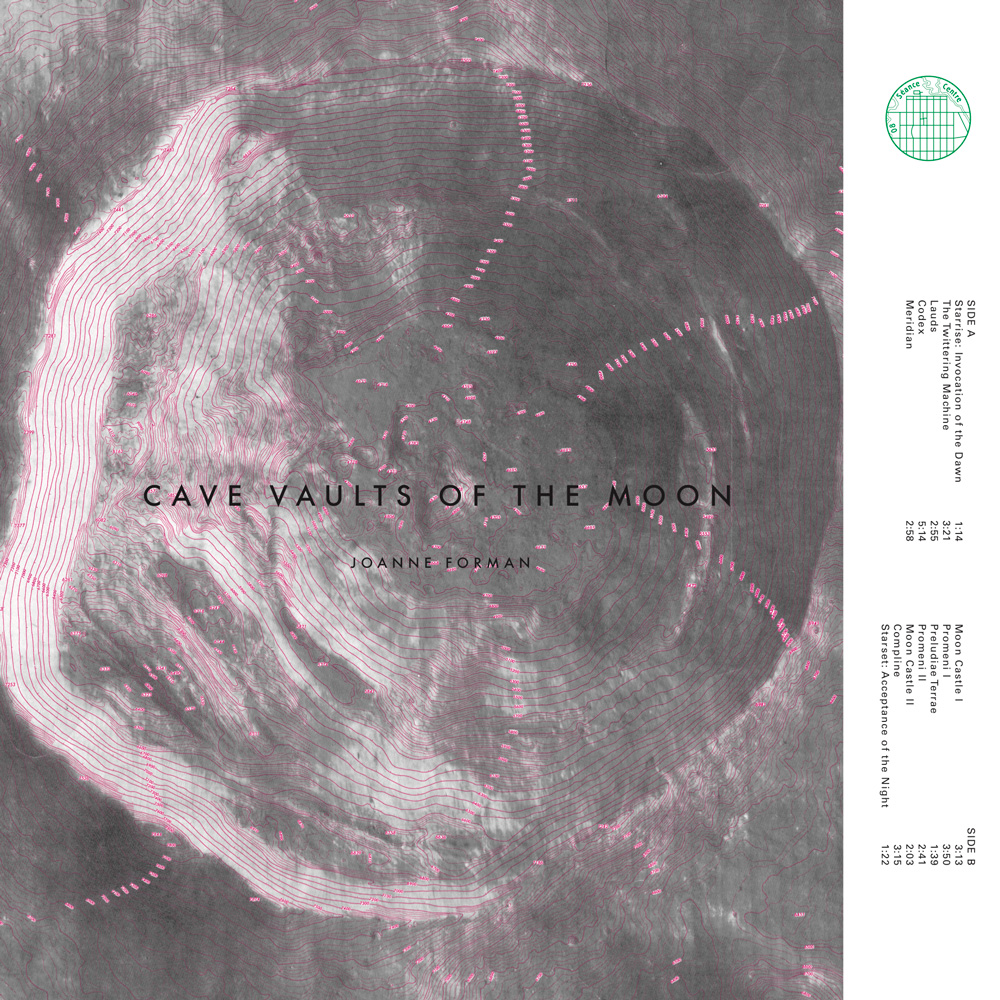
We humans, the nascent beings that we are, still haven’t quite figured out the full potential of music. Dancing, meditating, emoting, protesting; these are all pretty basic. But what if we communicated more complex ideas with music? What if we codified all of our activities with music? This idea came to composer Joanne Forman when she was commissioned to create the soundscape for an environmental exhibition of sculpture called Artifacts from an Alien Civilization in 1987. The sculptures, elaborate ruins that had been found on the moon, begged the question: who created them and for what purpose?
Joanne Forman imagined that Earth’s moon was a vacation spot for advanced beings from another galaxy. Cave Vaults of the Moon became a collection of sonic texts describing the fun things that went on there; earth-viewing, collecting information, building and playing. In her mind the sculptures in the exhibit were the remnants of a deserted playground of moon castles.
Forman’s playful score for voice, Ensoniq Mirage, Juno 106, flute, guitar and effects, wafted through the exhibit every day for a month and then lay dormant for nearly 30 years. Unearthed here, Cave Vaults of the Moon sounds prescient and timeless, as if the Wicker Man had been scored by Iasos and Pep Llopis, and we now have the opportunity to reimagine the messages contained within it. Restored and remastered and cut using DMM.
Design by Alan Briand.
In 1982, a group of friends deep into post-punk, jazz and dub got together in Mad Professor's legendary Ariwa studio and lay down their youthful interpretation of a NYC disco cut. Their unique take included trombone, vibraphone, piano and an ital dose of tape delay. They called the song Trouble and released two versions (vocal and dub) on their friend Tony McDermott's !Drum! label with artwork inspired by Russian Constructivism. The group, comprised of Justin Langlands, Chrysta Jones, John Schofield, Tom Dixon, and Dave Killen, decided to call themselves A-Team, having no idea that Mr. T and Co. would make them almost totally un-google-able 30 years later. The result of their adolescent studio idealism sounds akin to other disco misfits like Arthur Russell, Maximum Joy, Talking Drums and wouldn't sound out of place on legendary NYC label 99 Records. Remastered with an extended Club Dub for maximum dance-floor action.
For EU distribution contact: info@rushhour.nl
For NA distribution contact: info@seance-centre.com
Design by Alan Briand.
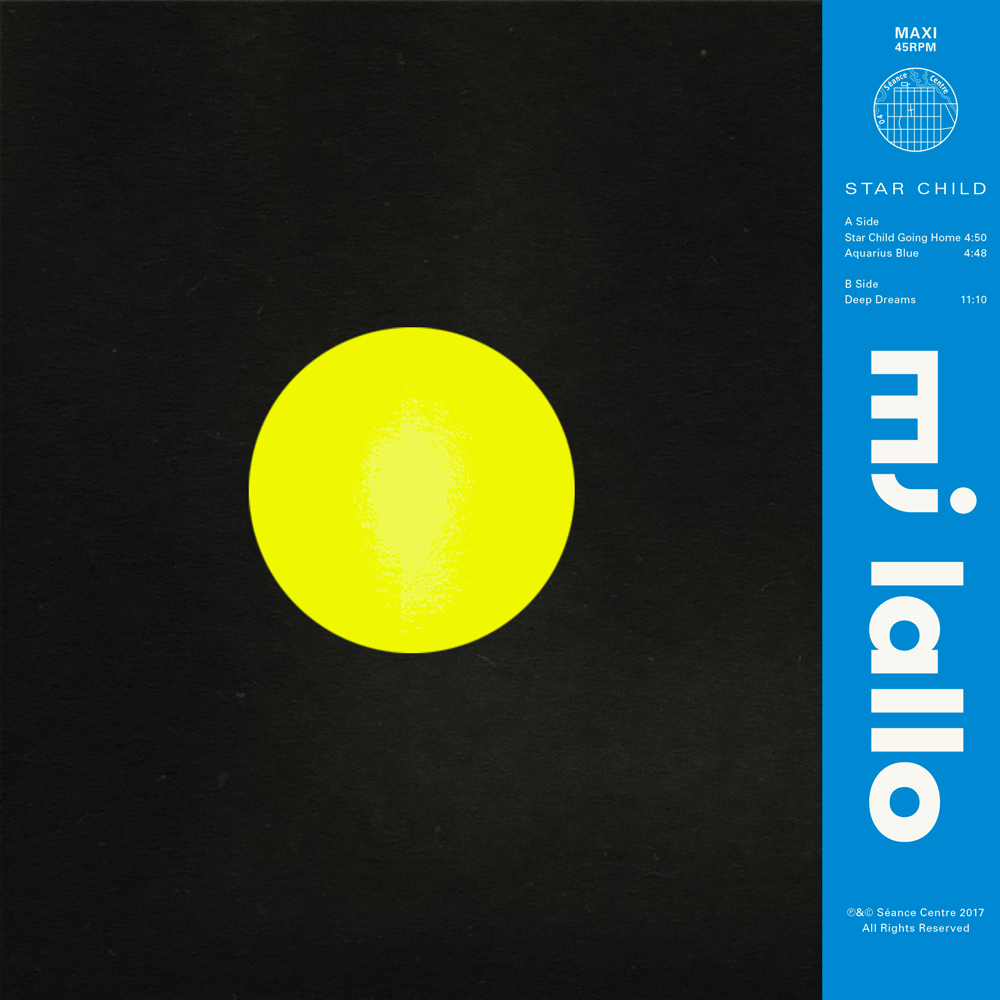
MJ Lallo sings to trees and distant planets, plays drum machines, synthesizers and processes her voice to sound like percussion, space ships, trumpets, birds and words from an unknown language. Lallo works in post-production music and SFX, and founded her own company MJ Productions in 1983. Although she has been creating music for films and other projects for over forty years, she only released one Hi-NRG 12” under a pseudonym, a small-run cassette in the late 80s and a CD in the early 2000s. Séance Centre is exploring Lallo’s unique and fascinating body of work with this maxi 12” and a forthcoming 2LP compilation.
The Star Child 12” focuses on Lallo’s love of movement in body and mind. Star Child Going Home is a late-night FM boogie transmission, a soaring wordless ode to an interstellar visitor departing. The song conveys a complex synthetic love beyond the realm of language, using voice, Juno 106 and deft LinnDrum programming. Aquarius Blue moves languidly, a sun-soaked Californian cosmic cruiser. Lallo’s voice swims and plays in waves of synth and drum-current, like sun-rays across the sea at magic hour. Filling the entire B-side of the 12” is Deep Dreams, an epic entrancing meditation for synth, drums and voice. A journey and transference of the mind from verbal consciousness to pre-lingual dream-state. Remastered and pressed loud at 45rpm.
Design by Alan Briand.
Plus or Minus Two compiles 4 songs from Kansas City wave pioneers Short-Term Memory’s first cassette album, Every Head Needs Cleaning, with with a song each from their last cassette release Cinema Mind, and their digital retrospective, Flub Dub and Other Love Songs. This EP focuses on the group’s prescient dance-floor DIN-sync workouts which share sensibilities with contemporaneous early Detroit experiments by Juan Atkin’s Cybotron, Ron Hardy’s visionary Kikrokos tape edit, Shoc Corridor’s extended 808 exercises, and 90s Techno Pop by Haruomi Hosono. Rounding off the EP is the existential electronic soul ballad Words. Remastered from the original reels, 45rpm DMM pressing.
Kansas City, 1983: a band formed, wires connected and synapses fired. Three friends, tired of guitar/bass/drums rock started jamming with newly acquired synths and Roland TR 606. They called themselves Short-Term Memory. Thanks to the vanguard technology of the time, these electronic instruments spoke to each other, and Jim Skeel, Kevin Dooley & Jon Paul could program their instruments and ride the DIN-sync wave. Weekly jams became more ambitious, and in 1983 they released their first album Every Head Needs Cleaning on their own Silly Poodle Music label. Over the 80s members drifted in and out of the group, and they released 2 cassettes, an LP and a 7” EP. By the 90s Jim Skeel was at the helm, the only original member, and joined by Tim Higgins he continued to record in MIDI mode for a few years before pulling the plug, leaving recordings and memories that resisted the great fade-out of time, and today sound vibrant and more visionary than ever.
Tracklist:
A1 Twitch & Jerk (4:53)
A2 Yelping Doggies (2:57)
A3 City in Mind (3:30)
B1 Hysteria (4:11)
B2 The Veldt (4:14)
B3 The Words (5:08)
Release date January 19th 2019
For EU distribution contact: info@rushhour.nl
For NA distribution contact: info@seance-centre.com
Design by Alan Briand.



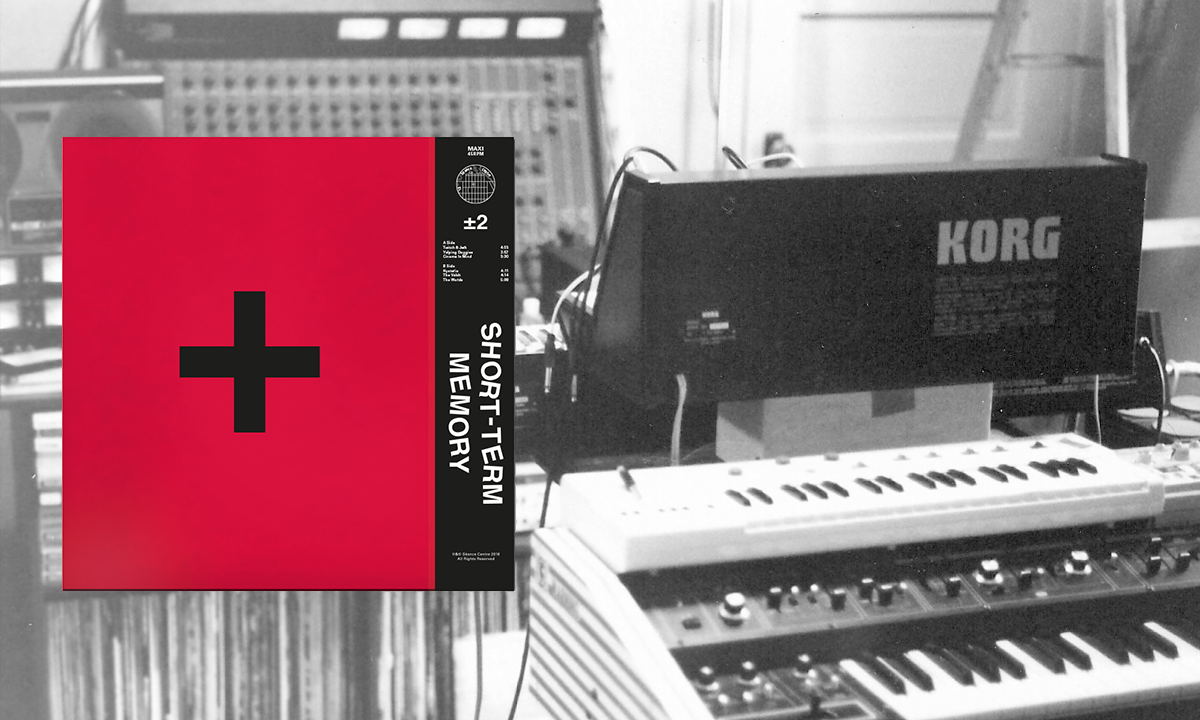

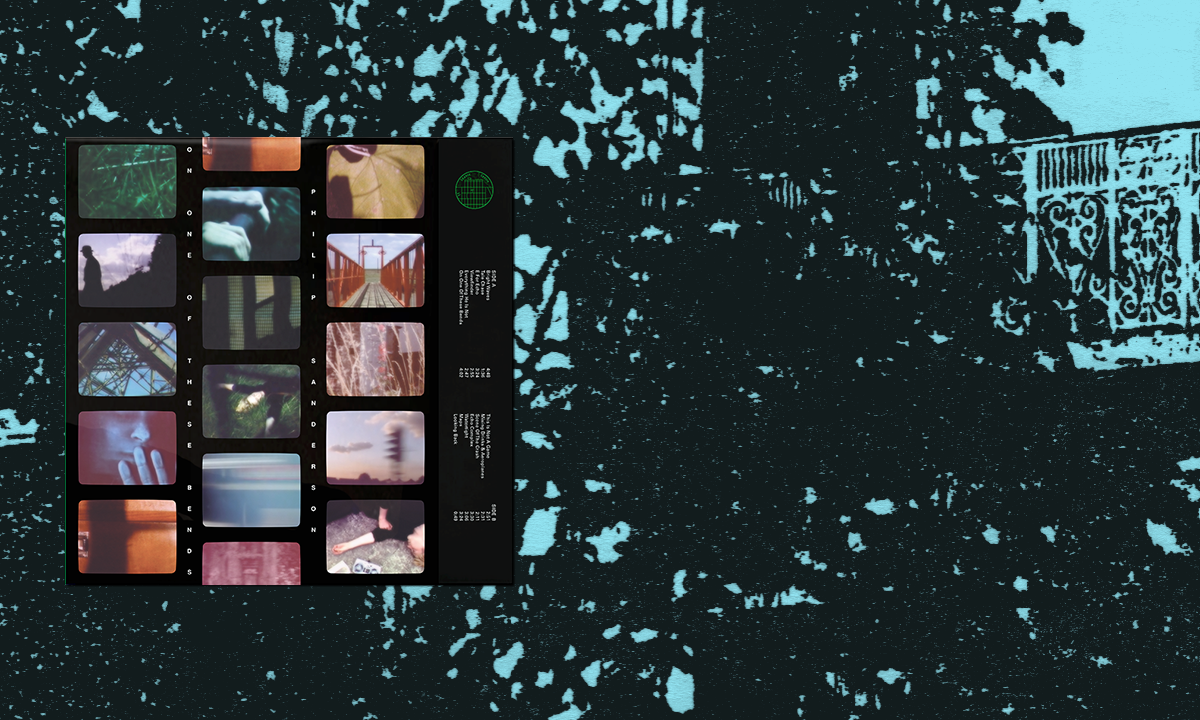


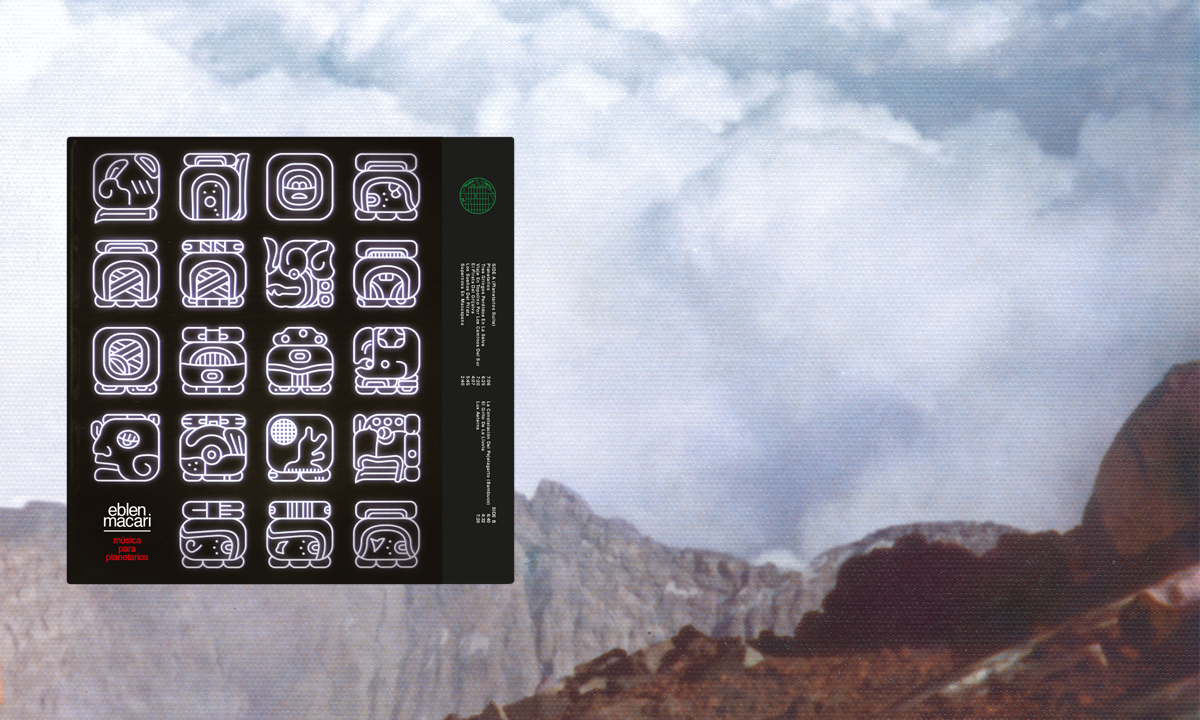

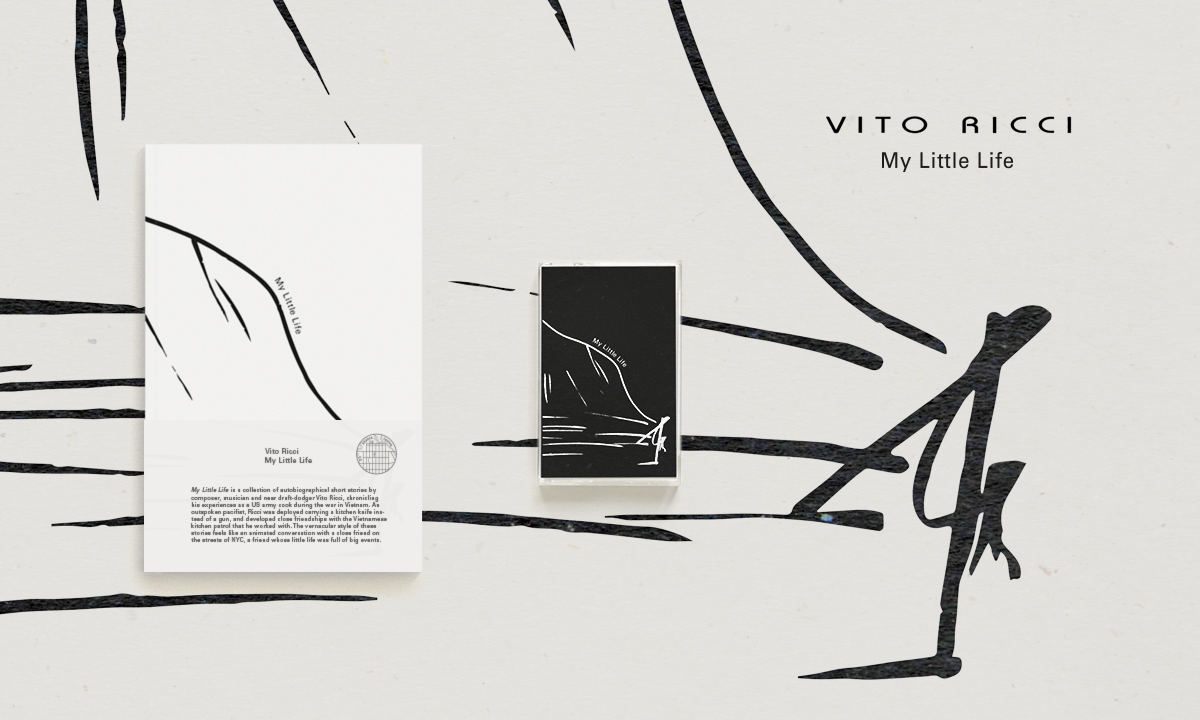
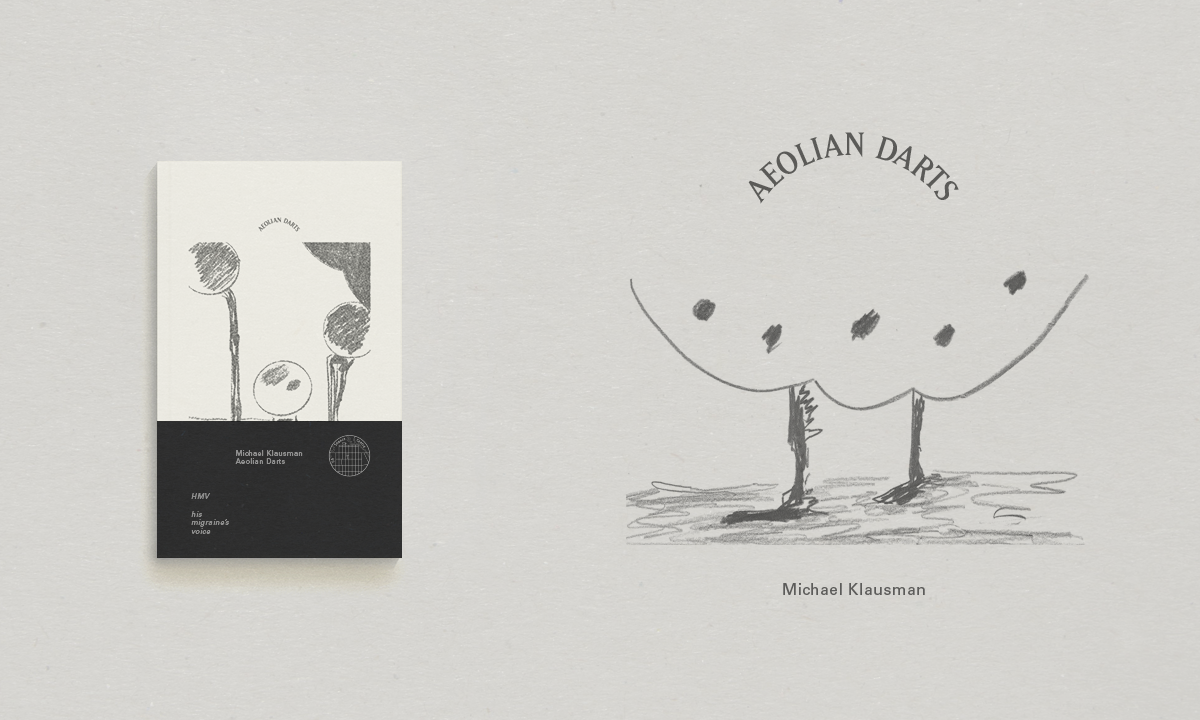
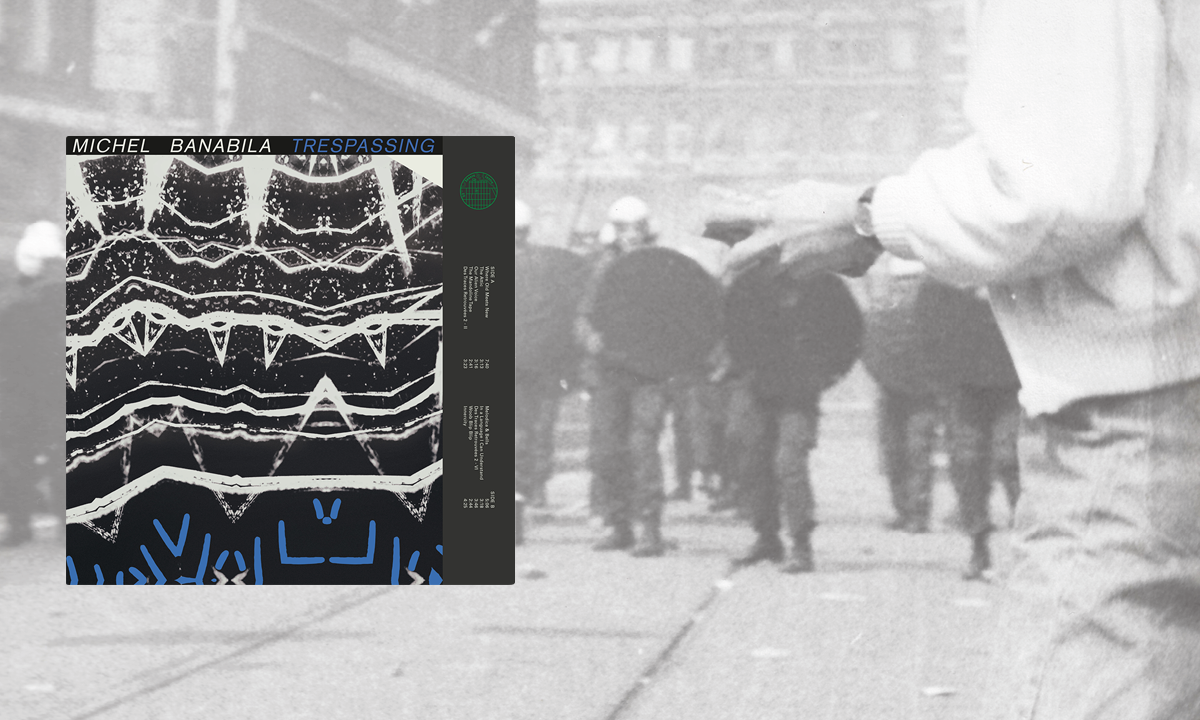

THE LAKE SUTRA: Beverly Glenn-Copeland's Keyboard Fantasies
A short documentary produced by Séance Centre
Canadian artist Beverly Glenn-Copeland returns to the environment where he recorded Keyboard Fantasies and reflects on how the wilderness influenced his sound and psyche at the time. The album was recorded in 1986 while he was living near Huntsville (3 hours north of Toronto), and only a handful of the self-released cassettes sold back then. Now in his seventies, Glenn's music is being rediscovered by a new generation through a vinyl reissue, and his prescient vision has found its audience at last.
Limited and hand-stamped collaborative publication between Séance Centre, BlackMass Publishing, and The Strangeness of Dub. Includes a published transcription, collaged booklet of poetry and images by Yusuf Hassan, and cassette.
In April 2022, Brandon Hocura huddled in the Séance Centre inventory closet to block out traffic noise and recorded a three hour conversation with Edward George. The exchange was modelled on The Wire magazine’s Invisible Jukebox where artist’s improvise responses to a number of songs, drawing out themes, memories, and critical reflections from their sonic praxis. In this case, the discussion sprung from George’s lauded TheStrangeness of Dub series as well as his longstanding work with Black Audio Film Collective and Hallucinator (Chain Reaction).
From the introduction: “In the 1996 film The Last Angel of History Edward George plays the Data Thief, a sonic archaeologist who travels back in time in search of fragments of Black musical technologies that hold the keys to the future of mankind. In life, as in fiction, he is a theorist of vibration, reading the melodic codes and subaltern tales embedded in sound for clues about the past, present, and future. In The Strangeness of Dub, he uncovers and elevates the discourses encapsulated within dub music — he reads King Tubby, Burning Spear, Don Drummond, and Lee ‘Scratch’ Perry alongside Foucault, Benjamin, and Derrida. In this capacious methodology of listening, knowledge is non-hierarchical and non-linear — Jah Shaka is as much a metaphysician as Wittgenstein.”
Edward George is a writer and broadcaster. Founder of Black Audio Film Collective, George wrote and presented the ground-breaking science fiction documentary Last Angel of History (1996). George is part of the multimedia duo Flow Motion, and the electronic music group Hallucinator. He hosts Sound of Music (Threads Radio), Kuduro – Electronic Music of Angola (Counterflows). George’s series The Strangeness of Dub (Morley Radio) dives into reggae, dub, versions and versioning, drawing on critical theory, social history, and a deep and wide cross-genre musical selection. Edward George lives and works in London.
Co-release by Séance Centre, BlackMass Publishing, and The Strangeness of Dub